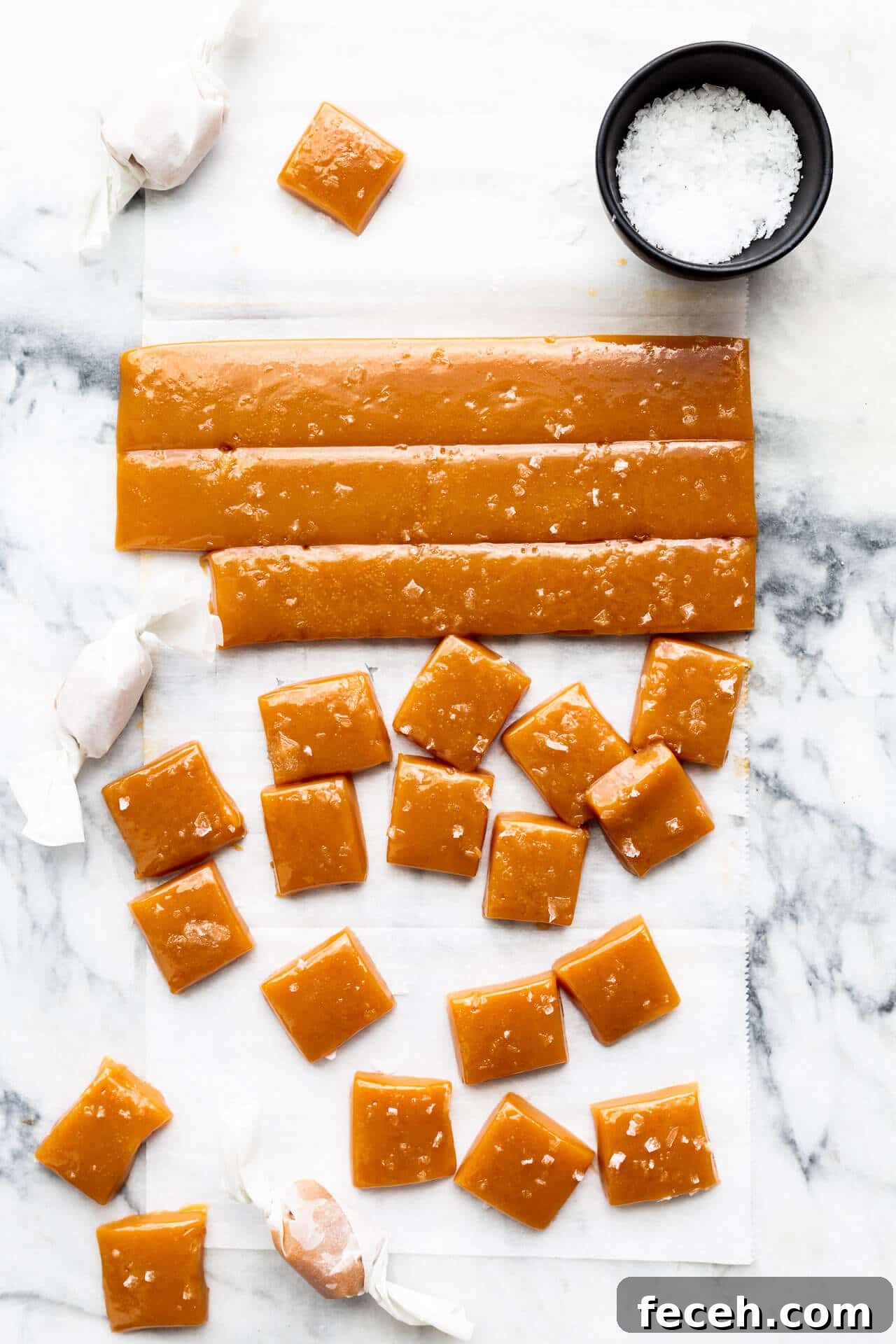
Making homemade sea salt caramels without corn syrup is straightforward if you follow a few basic rules and use a reliable thermometer. Below you’ll find everything you need to know to make soft, chewy salted butter caramels from scratch, plus tips on ingredients, tools, troubleshooting and the full recipe.
When I was testing salted caramel sauce recently, one batch remained quite pale because I didn’t caramelize the sugar long enough. That was a useful reminder: caramel sauce and soft caramel candies are closely related. Soft caramels are essentially a caramel sauce cooked a second time to concentrate and set it into a taffy-like candy. With the right temperature and ingredients—sugar, butter and cream—you get a soft, pliable caramel that still cuts into neat squares and holds a chewy texture.
What You Need To Make Homemade Caramel Candies
If you can make salted caramel sauce, you can make salted butter caramels. The difference is that caramels are cooked a little further to reach the correct sugar stage and set into candy.
Soft caramels rely on a combination of water, sugar, butter and heavy cream (35% fat). Butter and cream add fat and protein that shape the texture—making the final candy soft and chewy rather than brittle. The cooking temperature determines how much water has evaporated and how concentrated the sugar is, which sets the final texture.
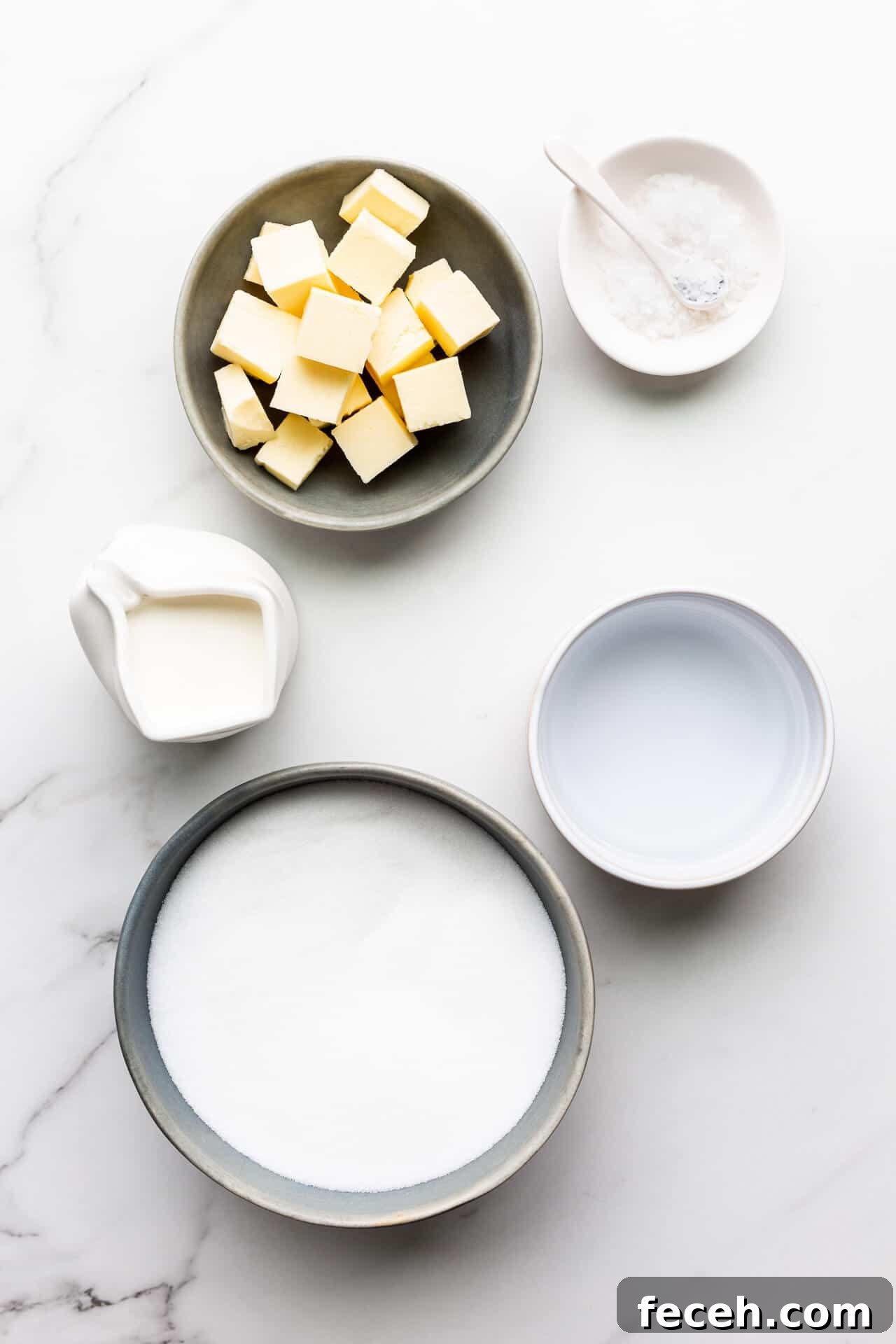
- Some recipes use unsalted butter and then add salt to the caramel and as a finishing garnish; both approaches work.
- Some cooks add brown sugar in place of some granulated sugar. I avoid that here because brown sugar tints the mixture from the start, making it harder to judge the caramel colour as it cooks.
- Honey, glucose, invert sugar or corn syrup are sometimes added to prevent sucrose from crystallizing and producing grainy caramels. For this recipe, careful technique makes those additions unnecessary: dissolve the sugar fully and add butter and cream at the right moment to reduce the chance of crystallization.
Exact ingredient quantities are provided in the recipe card below.
Tools To Make Perfect Soft Caramels
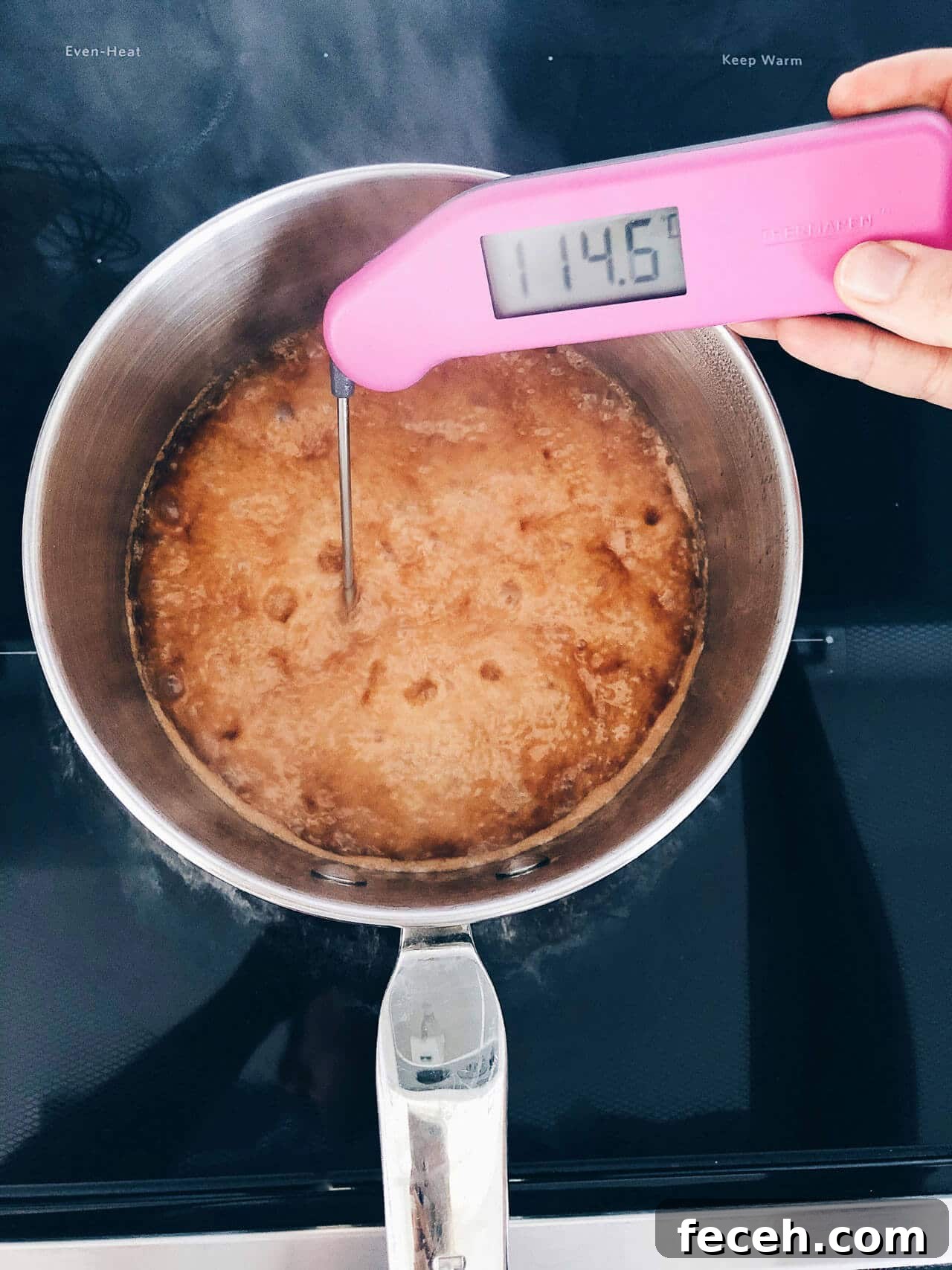
A thermometer is highly recommended. Soft caramels are typically cooked to 121 °C (250 °F), a temperature between firm ball and hard ball stages. An instant-read digital probe that responds quickly makes it far easier to hit the target temperature without overcooking.
Helpful equipment:
- Medium saucepan (at least 2 L / 1.9 qt) — avoid a small pan; hot caramel can boil over and make a mess.
- Wooden spoon or heatproof silicone spatula for stirring and scraping the pan.
- Instant-read or candy thermometer — fast-reading digital probes are preferred to track rapid temperature changes.
- 8×8-inch pan with straight edges for an even slab that’s easy to cut.
- Metal bench scraper to cut the cooled caramel slab into neat squares.
- 4×4-inch squares of parchment or wax paper for individually wrapping caramels.
Making Caramels Without A Thermometer
In pastry training we learned to test sugar stages using an ice-water bath: drop a small sample of the boiling syrup into ice water. If it forms a soft ball, you’re at the soft-ball stage; if it disintegrates it’s undercooked; if it forms a hard ball you’ve gone too far. If you don’t have a thermometer, repeatedly test tiny samples in ice water until the piece forms a ball that’s between firm and hard. That said, buying an accurate thermometer is the easiest way to ensure success.
Ingredients and substitutions
Do you actually need corn syrup?
Corn syrup or other glucose-based sugars are used in some recipes to inhibit sucrose crystallization. They act like a controlled impurity so the pure sucrose molecules are less likely to recrystallize and create graininess. However, when you dissolve the sugar thoroughly and add butter and cream at the right time, crystallization is much less likely. For this sea salt caramel recipe I skip corn syrup and rely on technique—if you use quick brown-sugar caramel recipes, a small amount of corn syrup can help reduce crystallization.
Caramel Troubleshooting And FAQs
Homemade caramels are too soft
Undercooking is the most common cause. If the mixture never reached 121 °C (250 °F) the caramels may remain too soft. At the correct temperature most water has evaporated, the sugar is concentrated, and the mixture reaches a stage between firm-ball and hard-ball. Because stove power varies, time alone is unreliable; use a thermometer and target the proper temperature.
How to salvage caramels that are too soft
Return the undercooked caramel to the saucepan, gently melt and homogenize it, then bring it back to a boil and continue cooking until the thermometer reads 121 °C (250 °F). Pour back into the prepared pan and allow to set.
Caramels set too hard
Overcooking will yield firmer caramels. If you exceed 121 °C (250 °F) the cooled candy becomes progressively harder. You can attempt to dissolve hard caramels in water and re-cook to the correct temperature, but this can be difficult. The safest approach is to monitor temperature closely during cooking to avoid going past the target.
Caramels too dark
When making caramels you start with a caramelized sugar. If you start with a darker caramel sauce, the final candies will be much darker after the second cook (due to additional browning and Maillard reactions from the dairy). For lighter-coloured caramels, remove the pan from heat and deglaze with cream when the caramel is a light amber rather than a deep brown. Dark caramels still taste excellent, but they will have a richer, deeper flavour.
Recipes With Caramel
If you enjoy homemade salted caramels, try including caramel in other desserts such as apple tarte Tatin, an apple bundt cake with caramel glaze, or dulce de leche for filling cookies like alfajores. Caramel pairs well with apples, nuts and rich dairy-based desserts.
If you tried this sea salt caramels recipe, please leave a star rating and share how it turned out in the comments. I love hearing from you!
📖 Recipe
Sea Salt Caramels
Soft, chewy caramels made without corn syrup and finished with flaky sea salt. Perfect for gifts or a sweet treat.
Equipment
- Pastry brush (for washing down sugar on pot sides)
- 8×8-inch pan
- Bench scraper for cutting
- Instant-read or candy thermometer
- 4×4-inch parchment or wax squares for wrapping
Ingredients (makes about 49 pieces)
- 125 mL water, plus more for brushing the pan sides
- 400 g granulated sugar
- 115 g salted butter, cut into cubes
- 250 mL whipping cream (35% fat)
- Flaky sea salt for sprinkling
Instructions
- Measure all ingredients and have them ready—this is important.
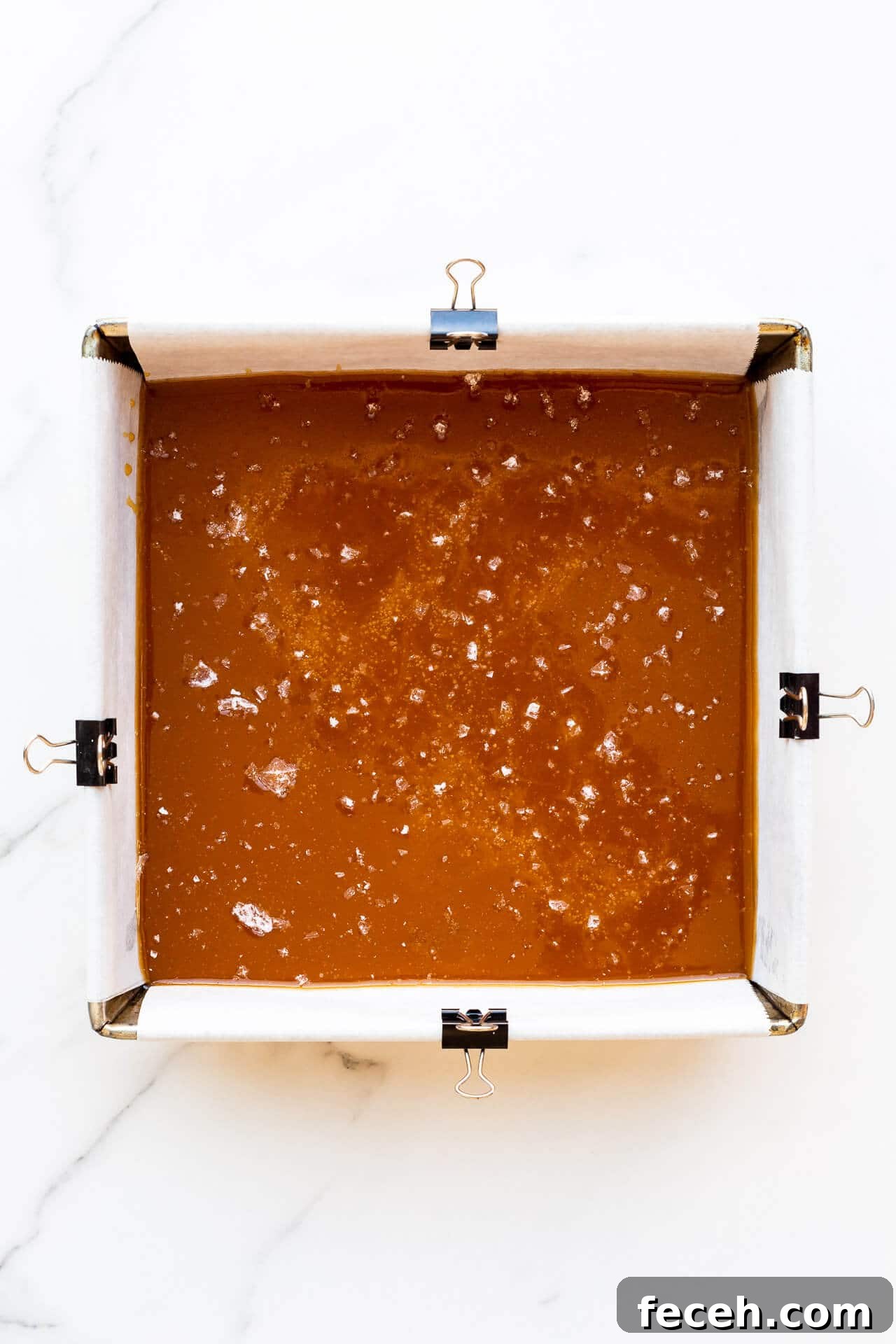
- Brush an 8×8 pan with a thin layer of neutral oil. Line the pan with two sheets of parchment with an overhang to form slings; this will make it easy to lift the caramel slab out when set.
- In a deep 3‑quart (or similar) saucepan, combine the water and granulated sugar. Do not stir initially—bring to a simmer so the sugar dissolves.
- If sugar collects on the pan sides, brush it down with a little water using a heat-resistant brush. Swirl the pan gently if desired, but avoid vigorous stirring that can encourage crystallization.
- When the sugar is fully dissolved and the mixture begins to bubble, increase heat to medium-high (or keep medium for a slower cook). Continue to boil until the syrup turns a light amber colour—do not let it become too dark.
- Remove the pan from the heat. Carefully add the cubed butter a little at a time—the mixture will bubble and steam—and then slowly pour in the cream. Be cautious: the mixture will bubble strongly.
- When the bubbling subsides, whisk gently until the caramel is smooth and uniform.
- Return the pan to medium-high heat, bring back to a boil, and cook until the mixture reaches 121 ºC (250 ºF) on an instant-read thermometer.
- Once the temperature is reached, remove from heat and carefully pour the hot caramel into the prepared pan.
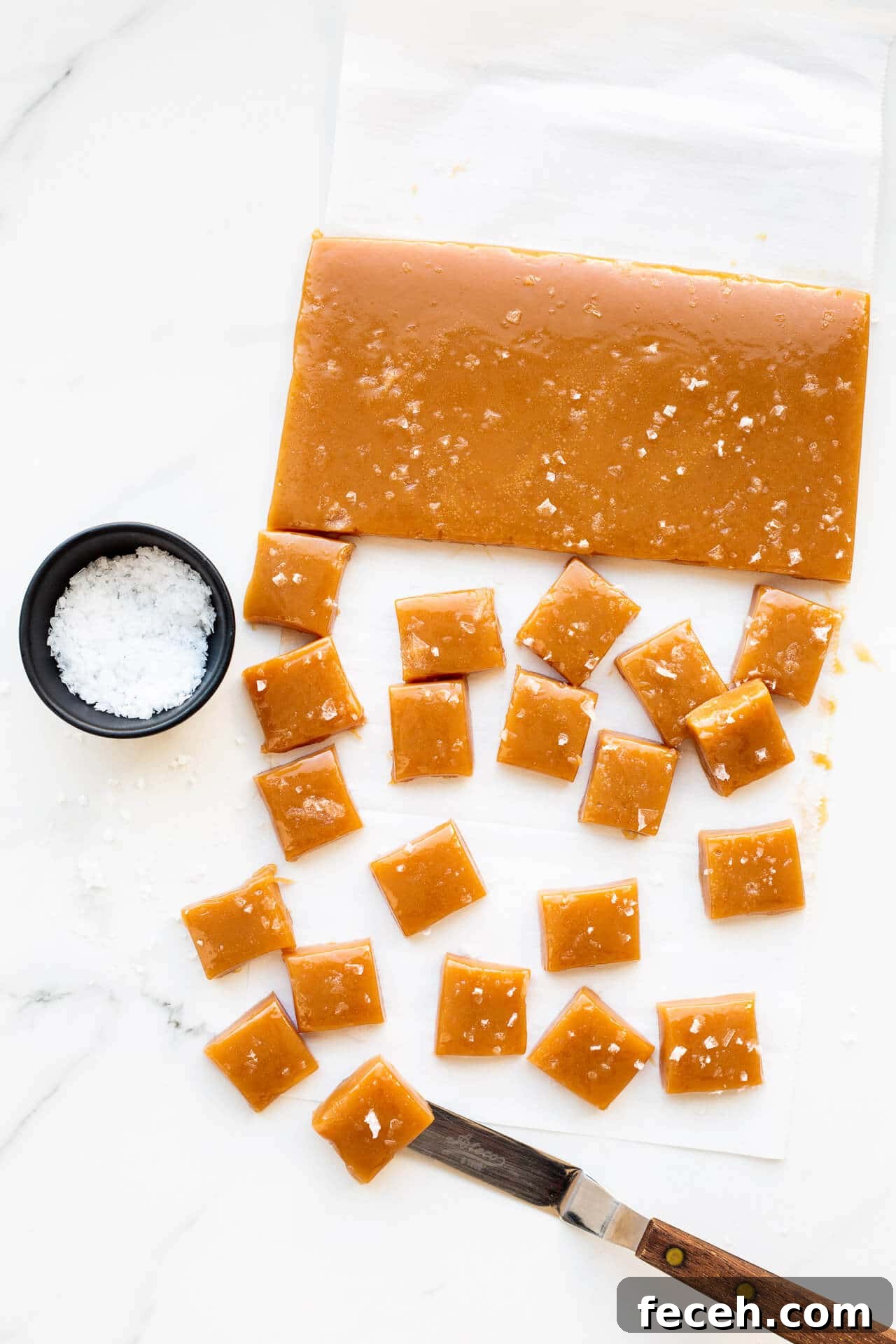
- Let the caramel sit for about 30 minutes, then sprinkle generously with flaky sea salt. Allow the caramels to set overnight.
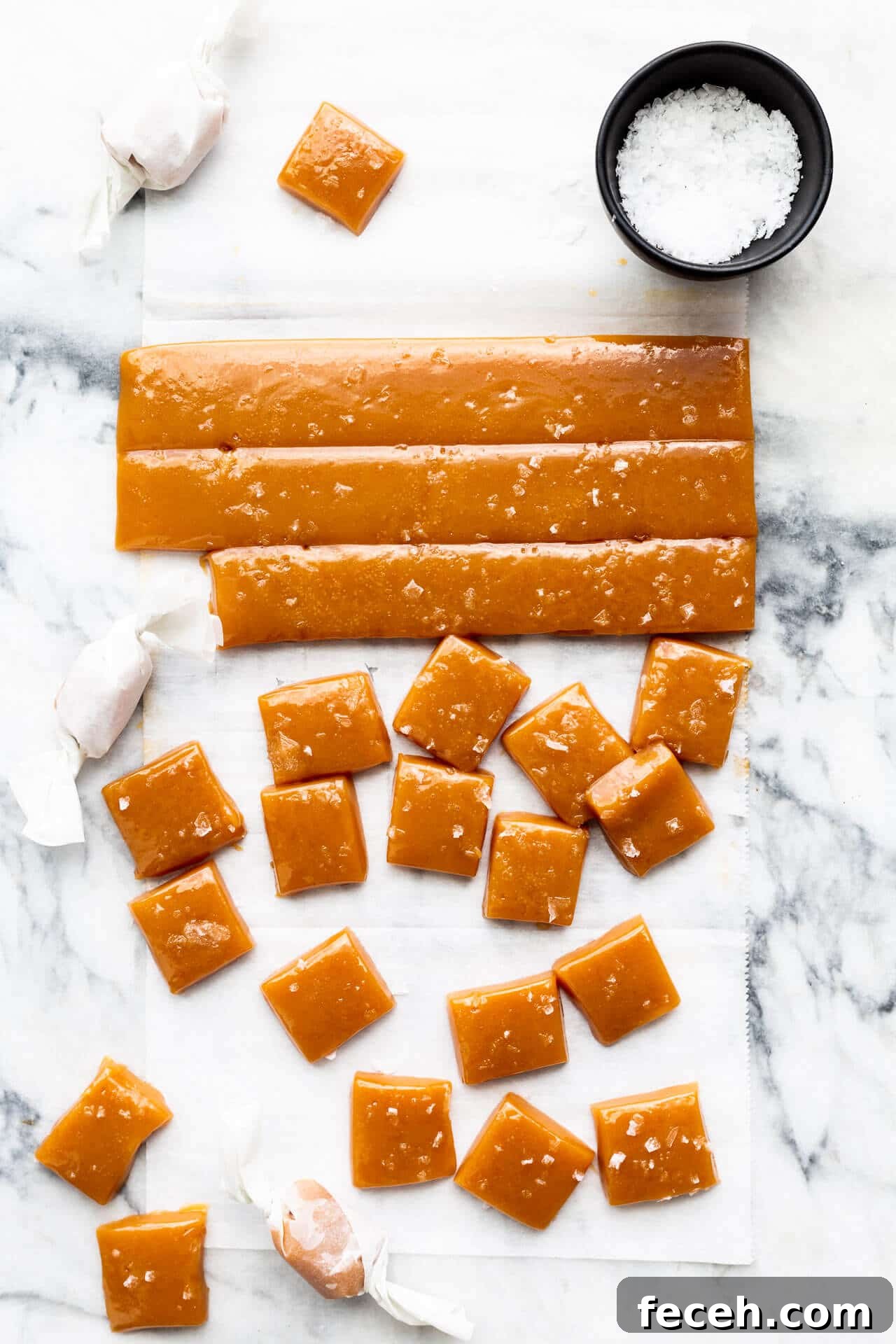
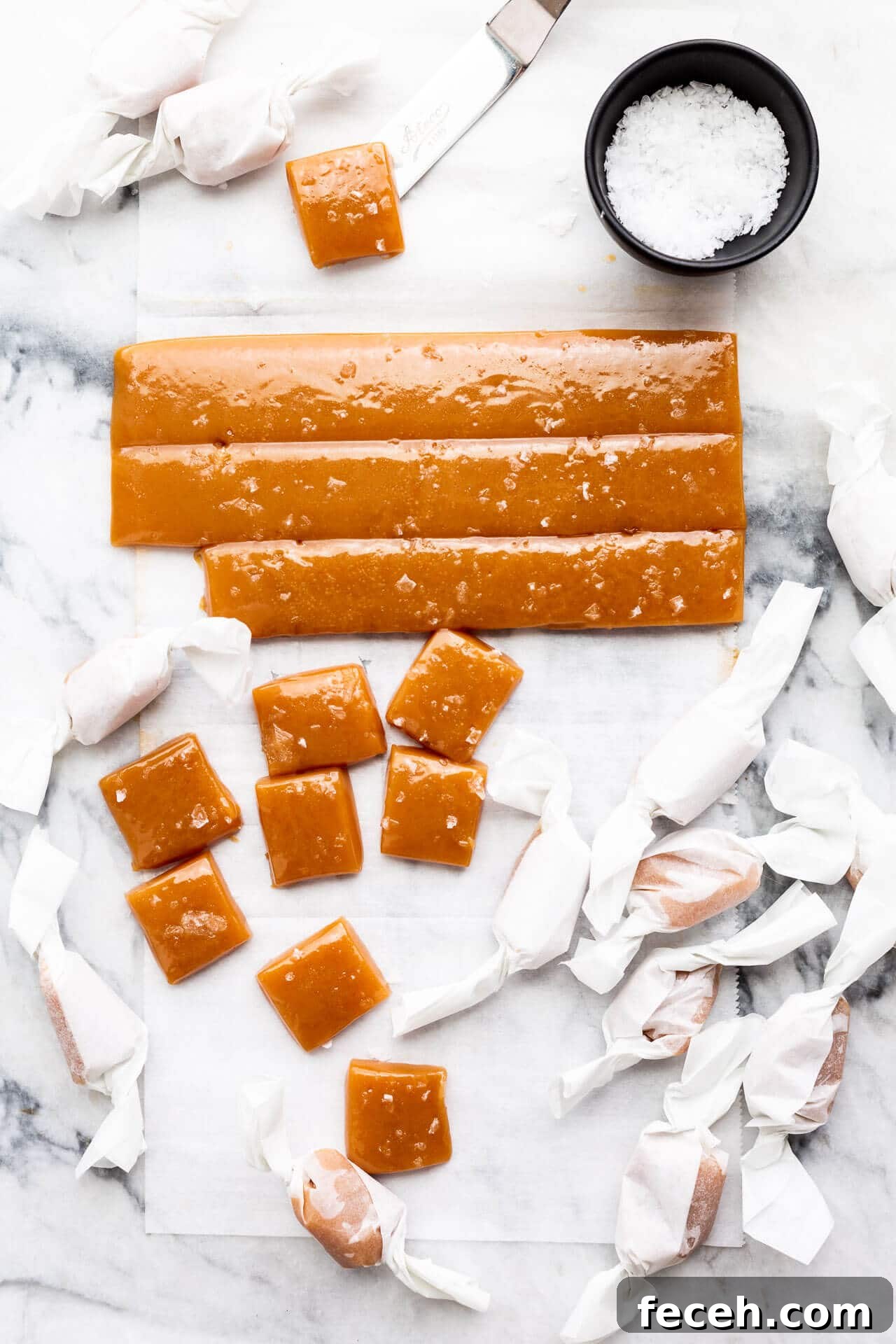
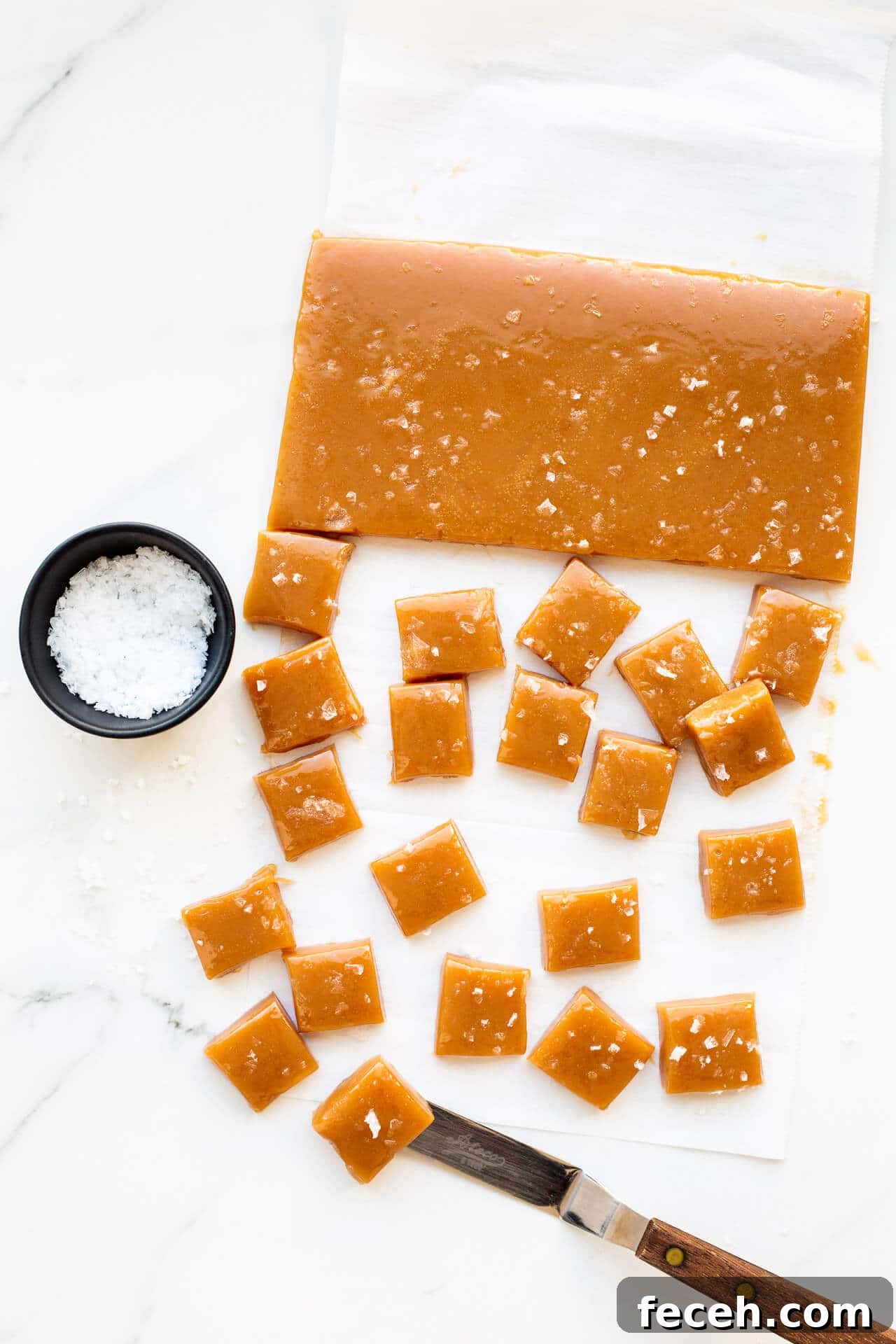
- When fully set, lift the slab from the pan using the parchment sling and place it on a cutting board. Brush a metal bench scraper with a little oil and cut the slab into 49 pieces (7×7 grid).
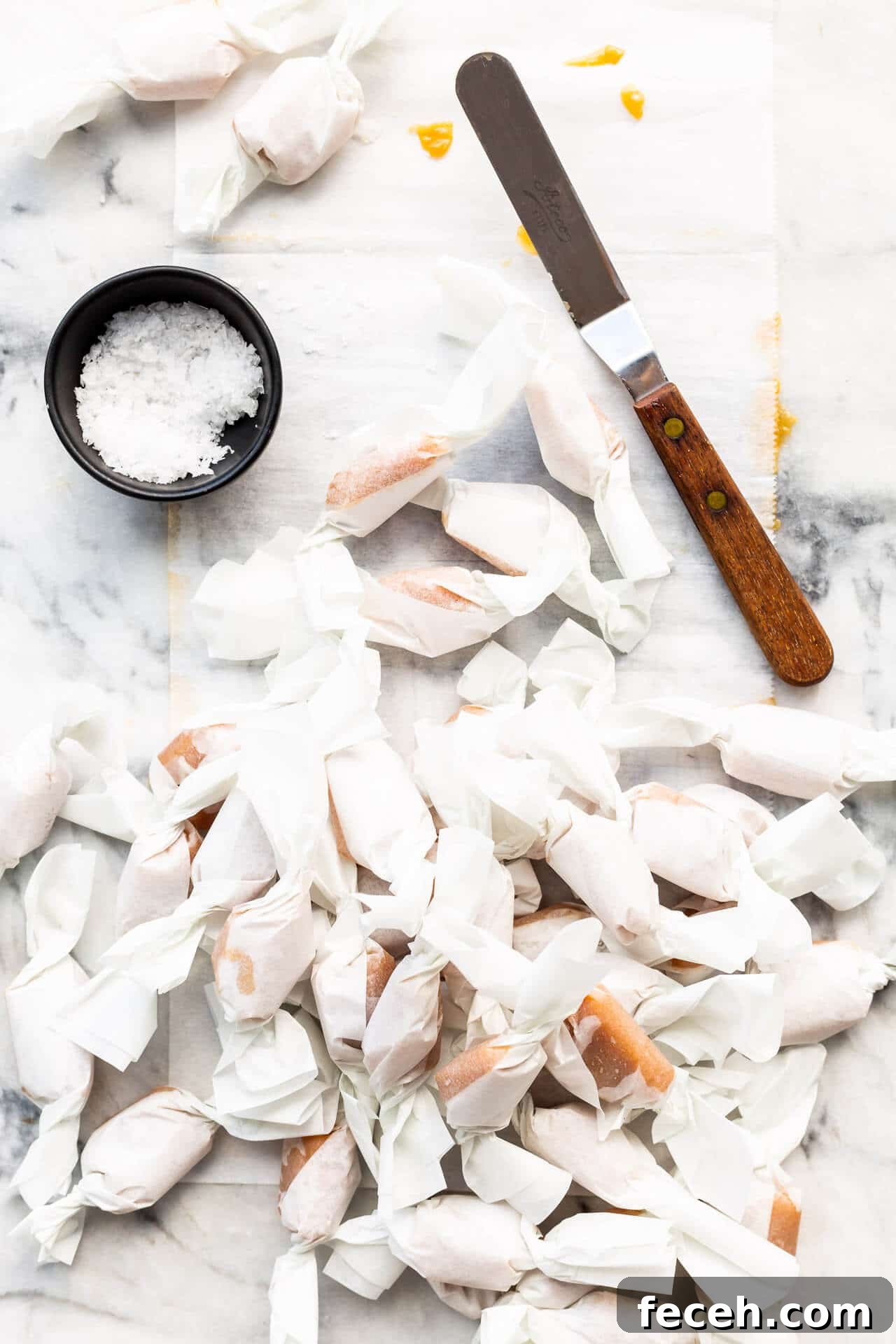
- Wrap each piece in a 4×4-inch parchment or wax square, twisting the ends to secure.
Notes
- Accuracy matters: use a fast-reading probe thermometer to hit 121 °C (250 °F).
- If caramels are too soft, reheat and cook to 121 °C (250 °F). If too hard, they were likely overcooked.
- Store wrapped caramels in an airtight container at room temperature for up to two weeks, or refrigerate for longer storage.
Nutrition (approx. per piece)
Calories: 66 kcal; Carbohydrates: 8 g; Protein: 1 g; Fat: 4 g; Sugar: 8 g. Nutrition is an estimate and should be used as a guideline only.