Before I learned better, I once used a store-bought oven spray labeled “fume free.”
It was not fume free.
Minutes after spraying, my throat burned, breathing felt tight, my eyes watered, and air purifiers in the house triggered full alert.
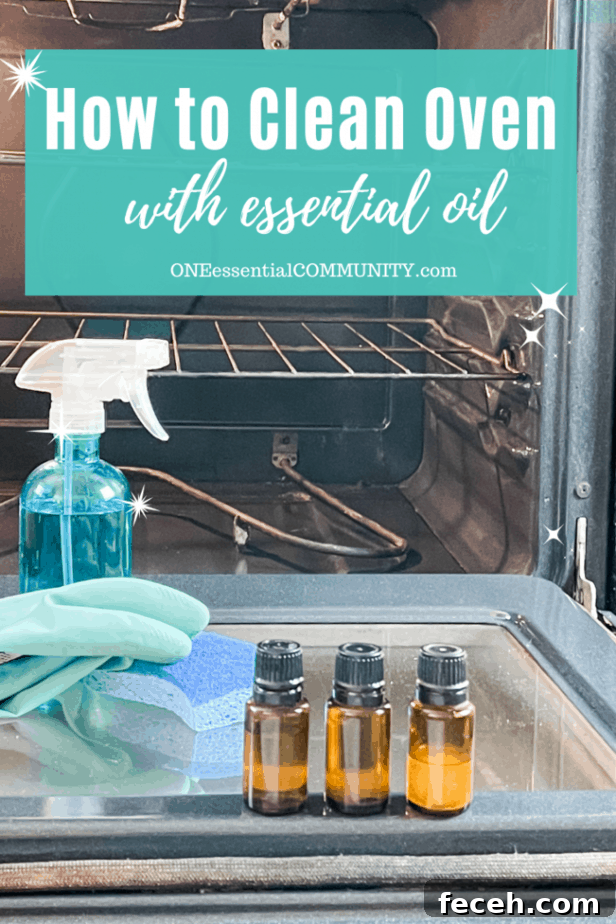
That experience pushed me to research and experiment. I developed a natural oven cleaner that works: baking soda, vinegar, and a few drops of essential oils.
These common household ingredients surprisingly cut through grease, baked-on food, and spills without harsh chemicals. The result is fume-free, non-toxic, and my oven comes out sparkling.
Below is a clear, step-by-step method that’s simple to follow and effective.
Which essential oils work best?
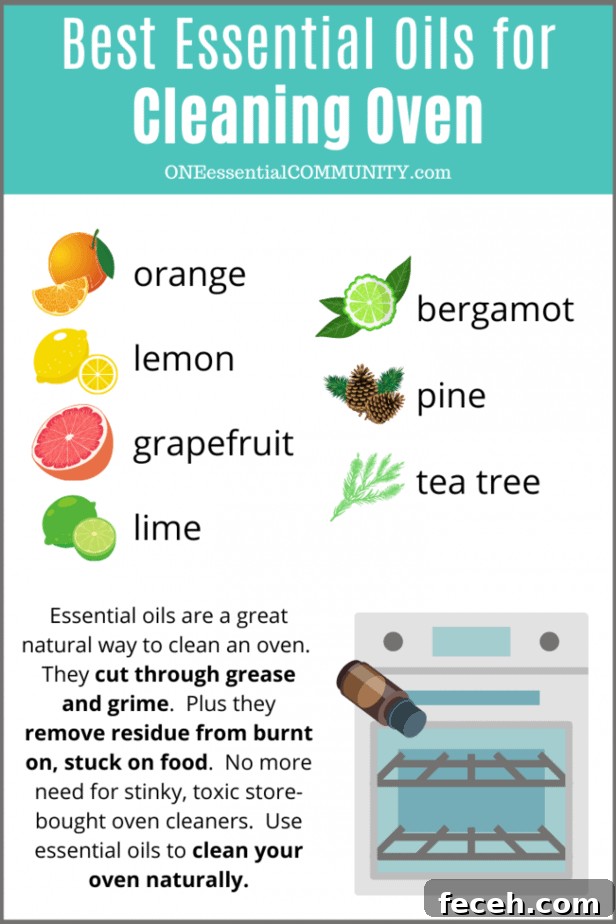
Citrus oils, pine, and tea tree (melaleuca) are the most effective for cutting oven grease and baked-on food. Try the following:
- Orange
- Lemon
- Grapefruit
- Lime
- Bergamot
- Pine
- Tea tree
Can a homemade cleaner really work?
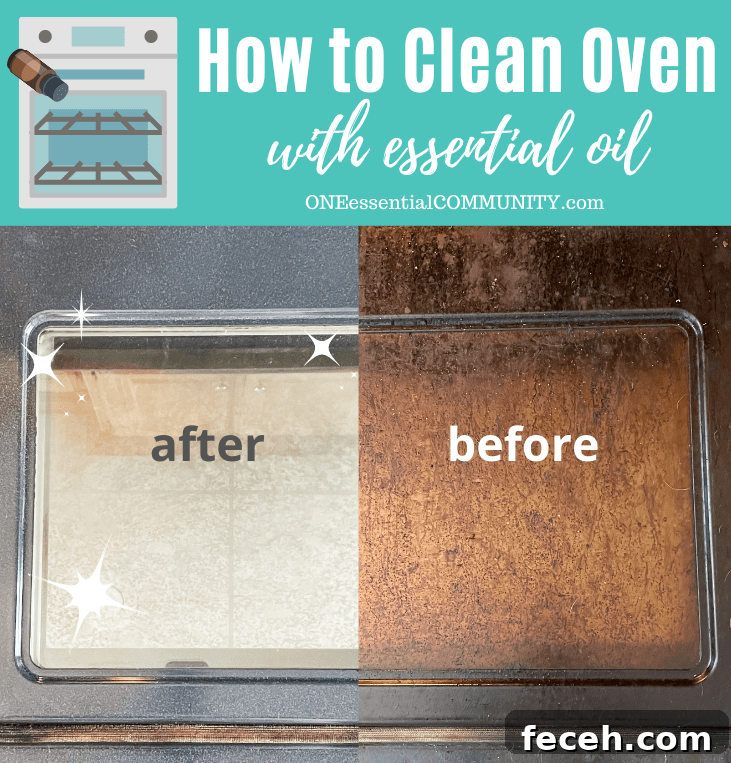
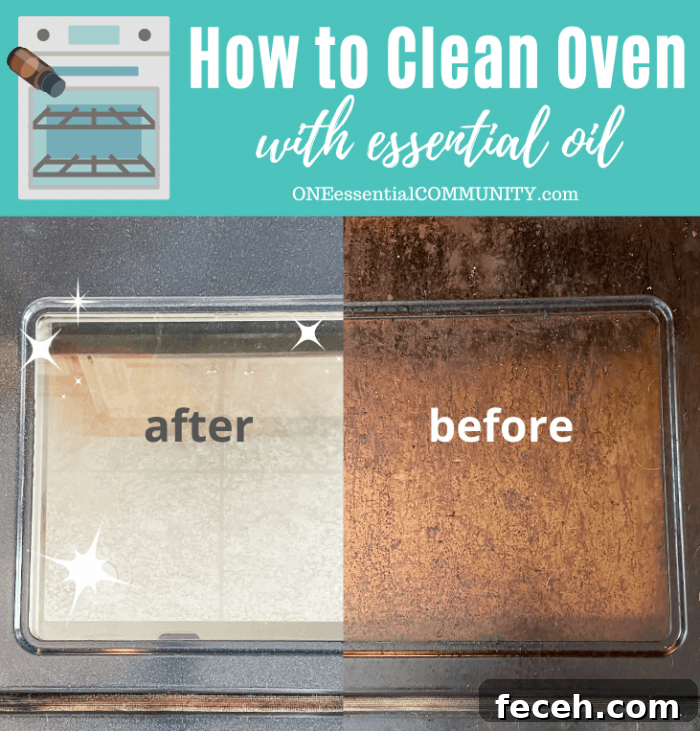
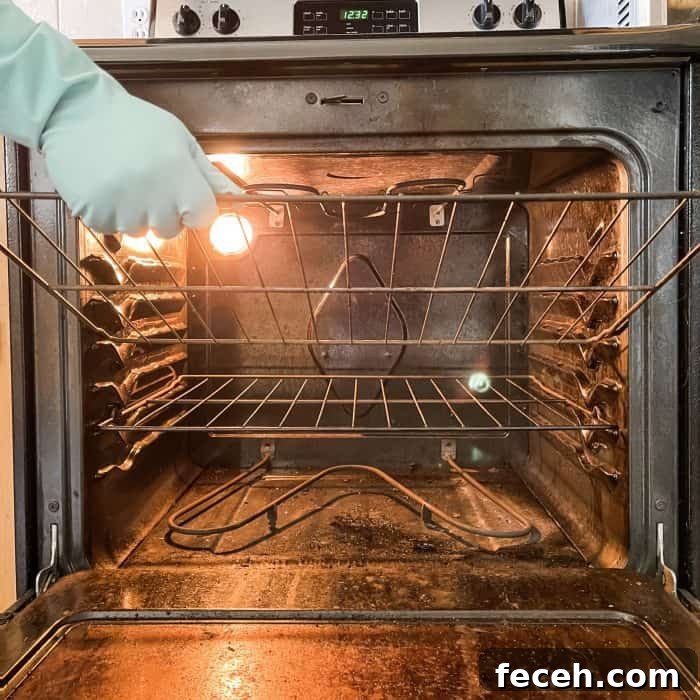
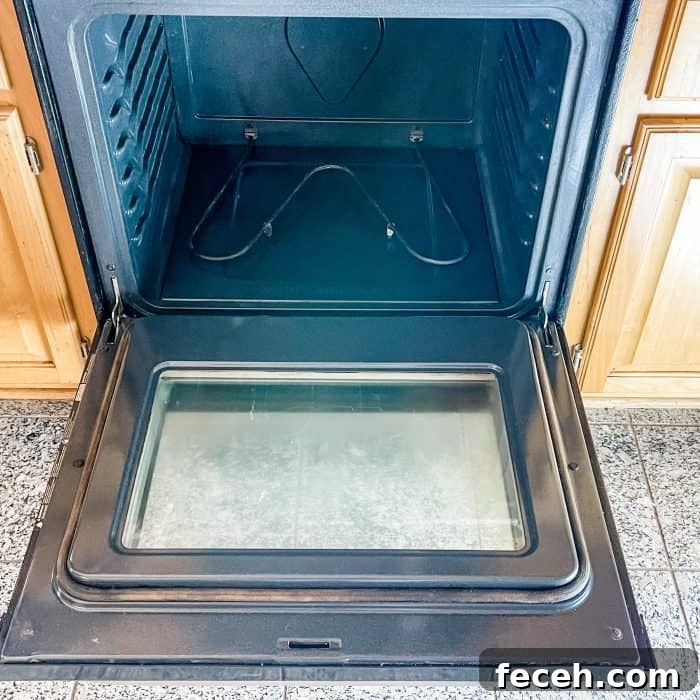
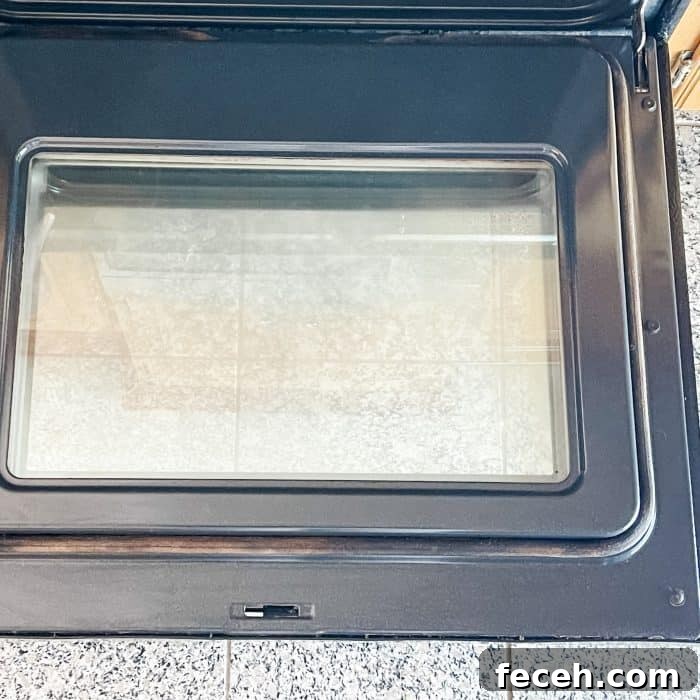
Yes. The photos in this post show how much of a difference the method made on my oven door. What was once blackened with grease became clear and reflective after cleaning with baking soda, vinegar, lemon and pine essential oils, and some scrubbing.
Step 1: Clean the oven interior
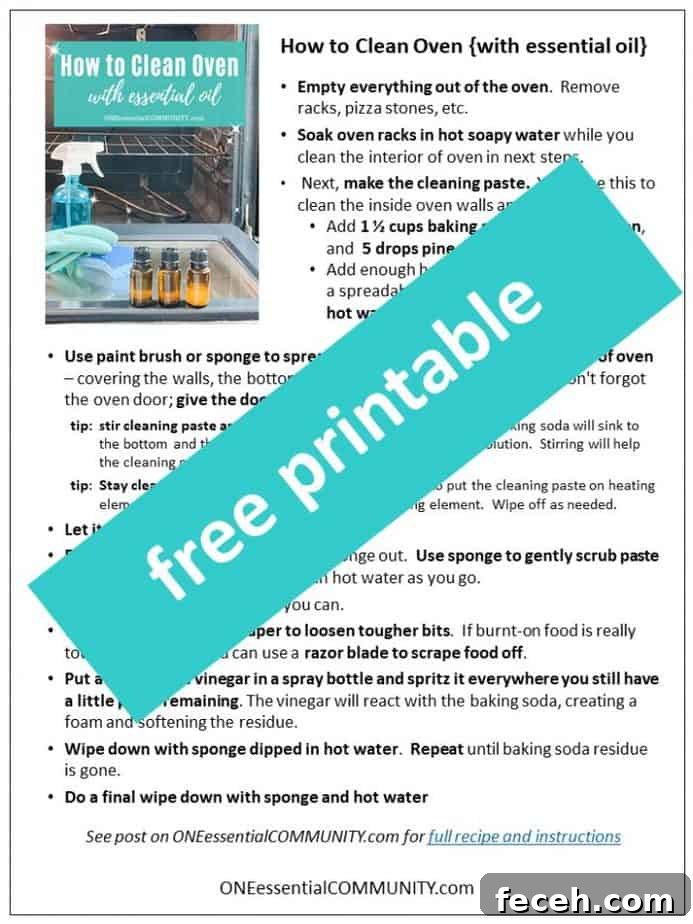
- Empty the oven. Remove racks, pizza stones, and any accessories.
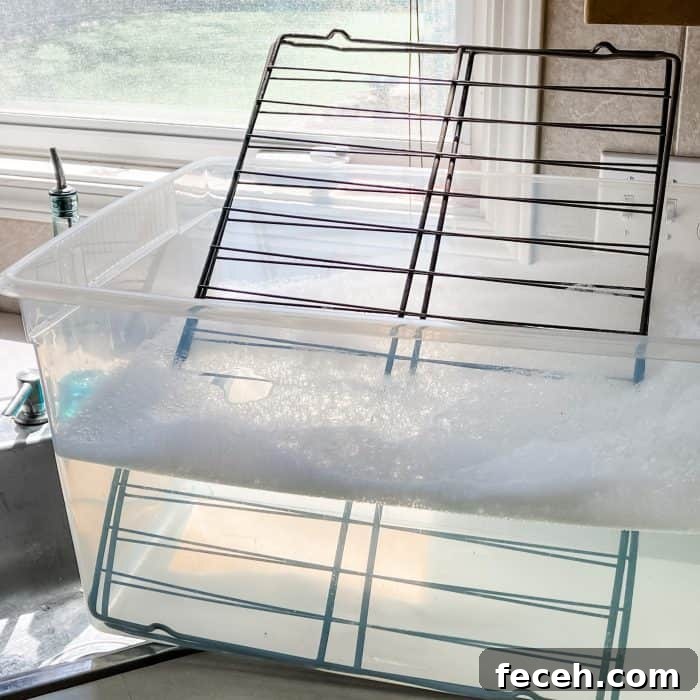
- Soak the racks. Place racks in hot, soapy water while you work on the oven interior.
- Make the cleaning paste:
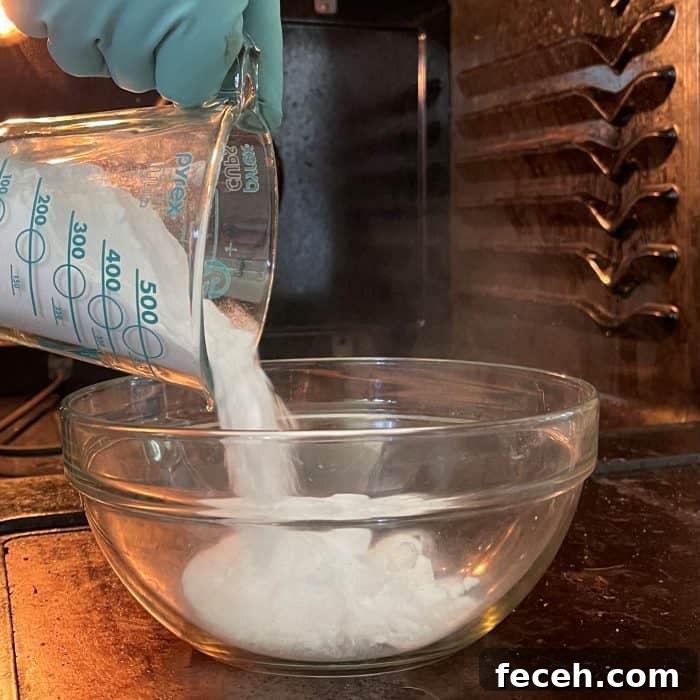
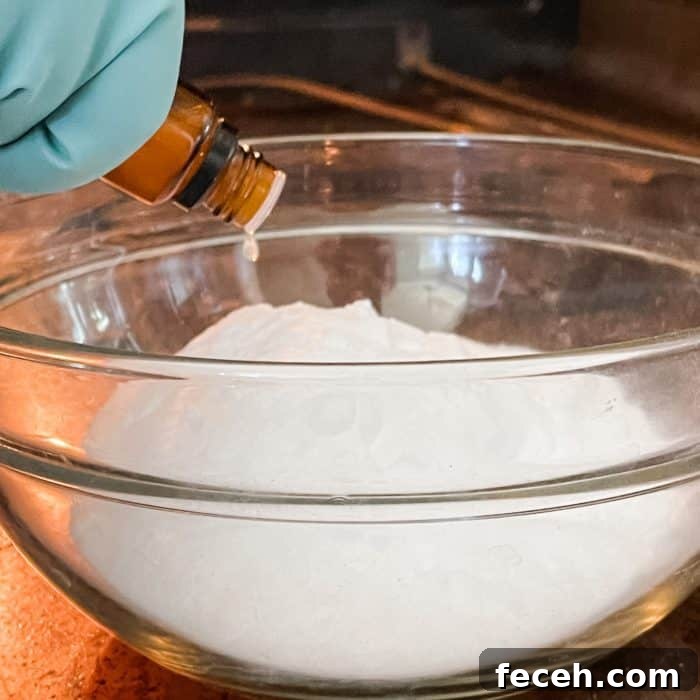
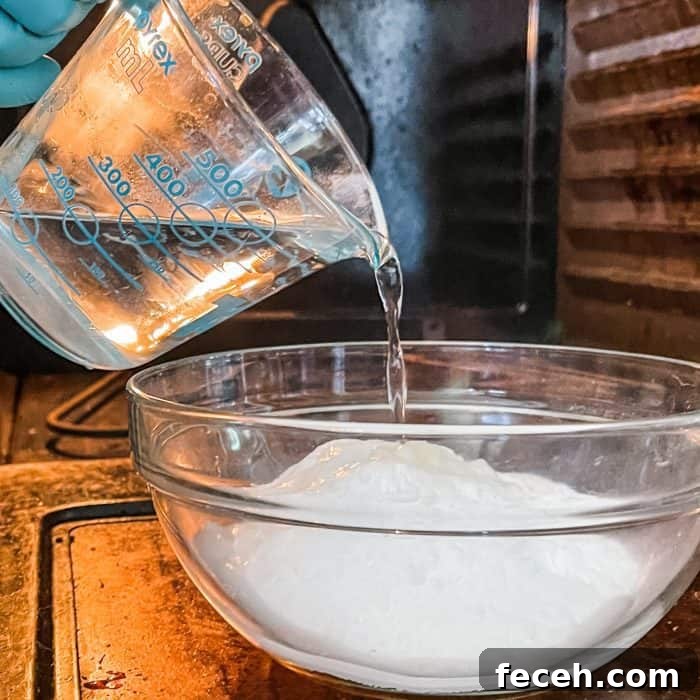
- Combine 1 ½ cups baking soda, 10 drops lemon essential oil, and 5 drops pine essential oil in a bowl.
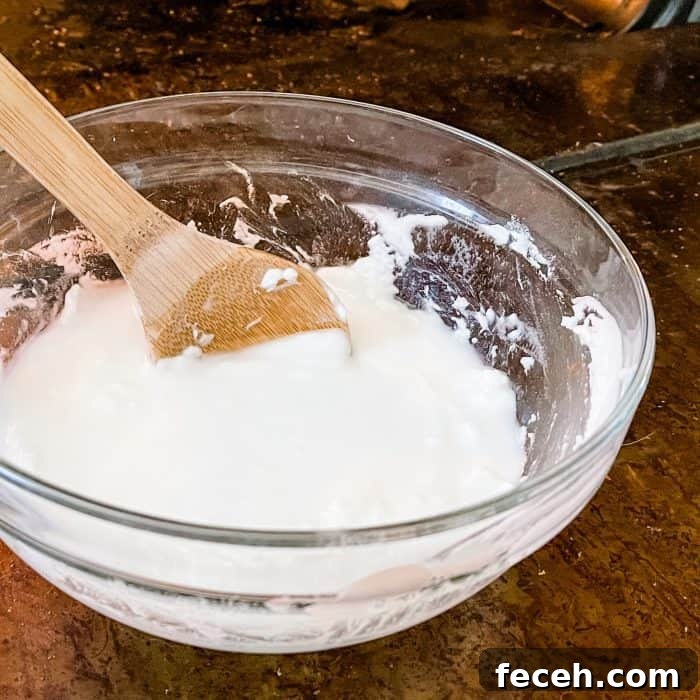
- Add about ½ cup hot water and stir to form a spreadable paste; add more water or baking soda to adjust consistency.
Tip: If the paste becomes watery while you work, stir and add more baking soda. Make extra paste if your oven needs it.
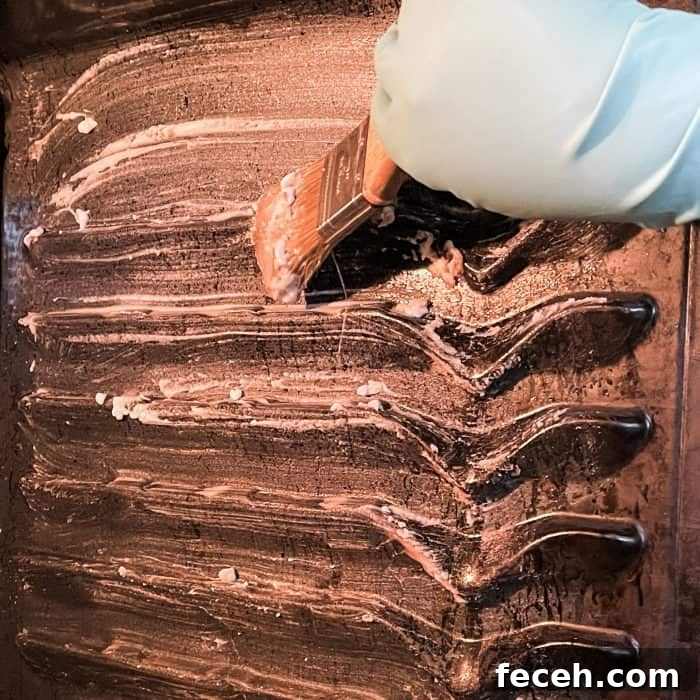
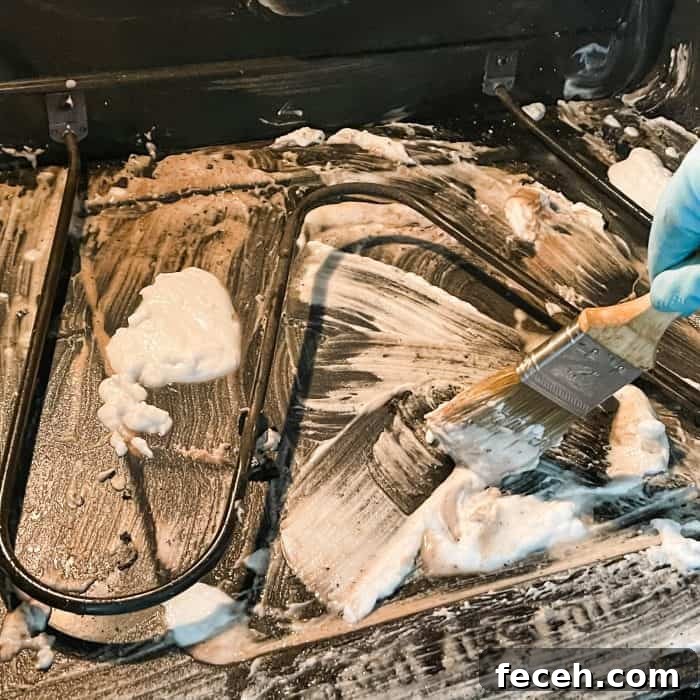
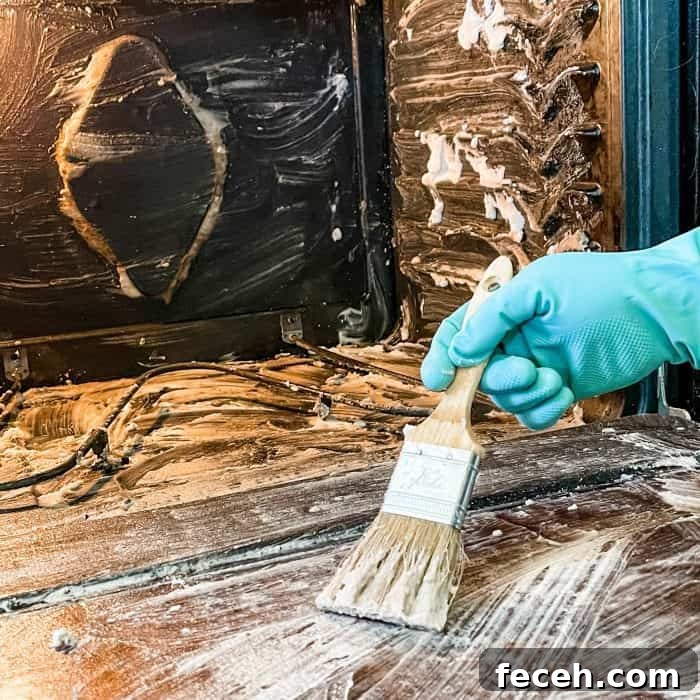
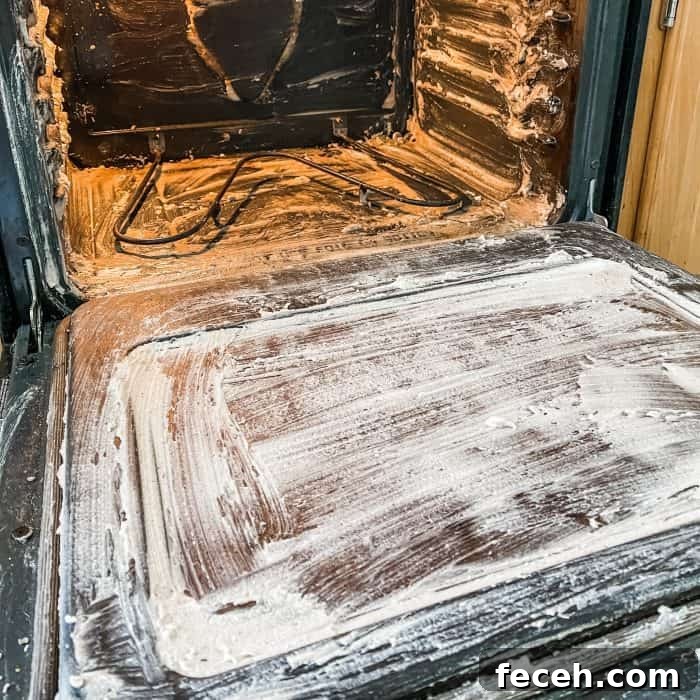
- Apply the paste. Use a paintbrush or sponge to spread the paste over the oven walls, bottom, corners, and door. Avoid direct contact with heating elements.
Tip: Scoop paste onto surfaces and then brush it out. Stir the mixture occasionally so it stays uniform. If the heating element is in the way, lift it gently to reach underneath; wipe any accidental residue from elements immediately with a damp cloth.
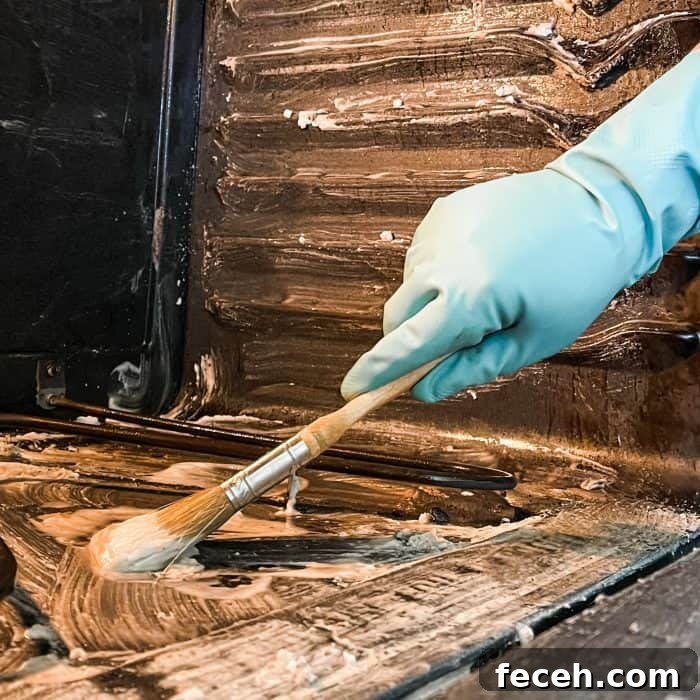
- Let it sit for about one hour. You can close the oven door during this time.
- Sponge and scrub. Dip a sponge in hot water, wring it out, and scrub the paste in circular motions, rinsing the sponge often. Wipe away as much paste as possible.
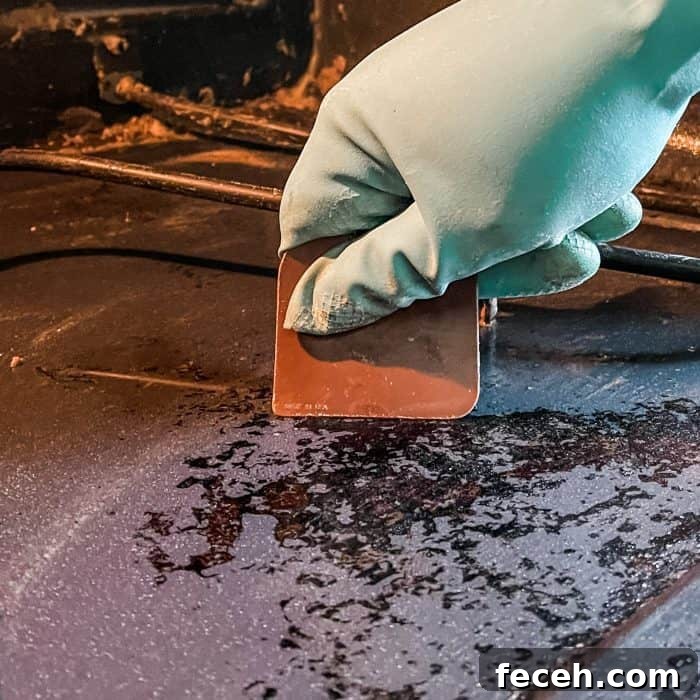
- If needed, use a plastic scraper or a razor blade at a shallow angle to remove stubborn, burnt-on bits.
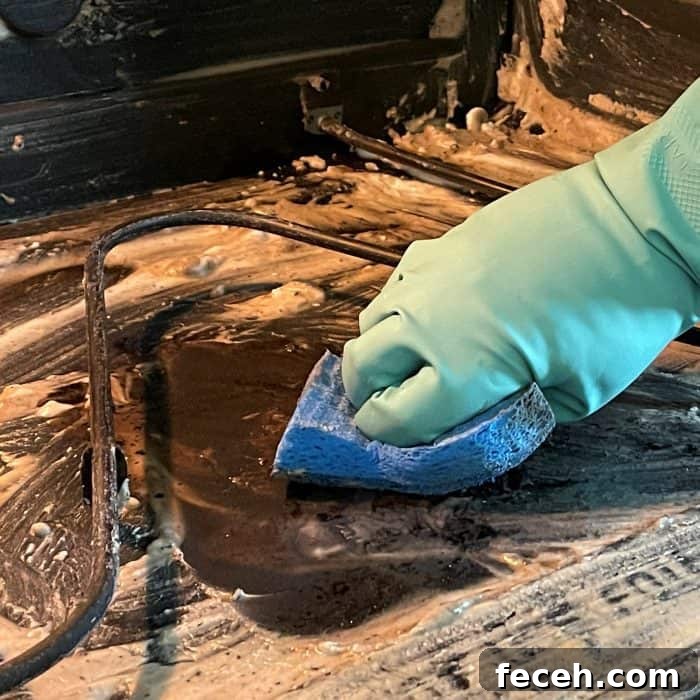
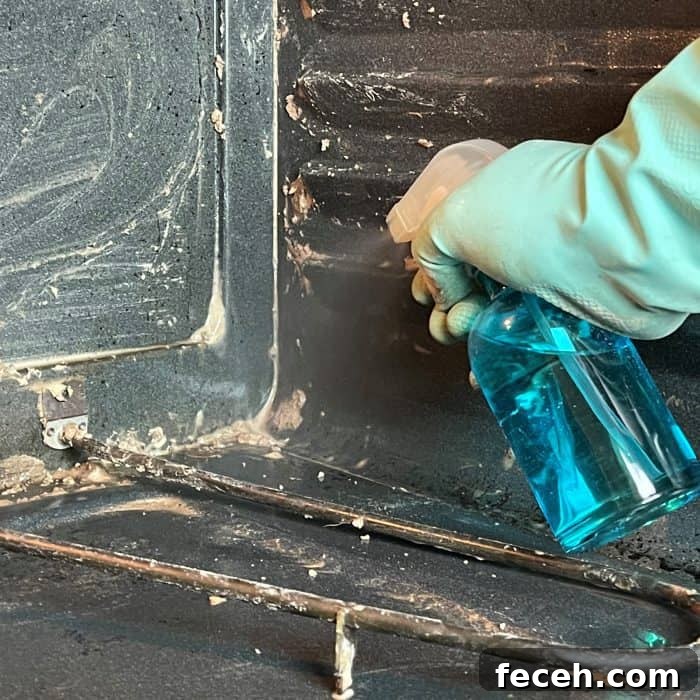
- Use vinegar to remove residue. Fill a spray bottle with white vinegar and mist any remaining paste. The vinegar will foam and help lift baking soda residue. Wipe with a hot, damp sponge and repeat until all residue is gone.
- Finish with a final hot-water wipe. Make sure the oven interior is free of baking soda residue.
If the oven door still has stubborn gunk, a citrus-based degreaser followed by another baking soda scrub can help remove it.
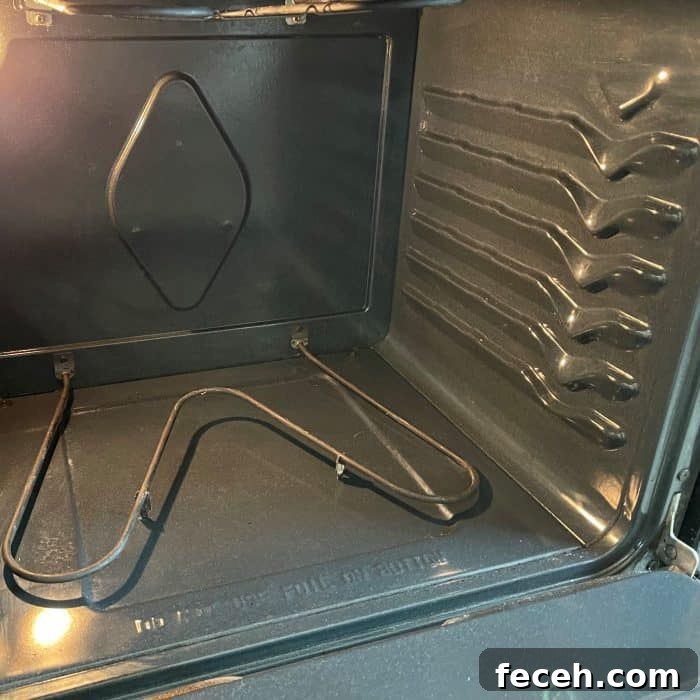
- Scrub the soaked racks, rinse, dry, and return them to the oven.
Step 2: Clean the stovetop and oven exterior
- For regular stovetop cleanup, a DIY citrus degreaser works well—spritz and wipe.
- For deep stovetop cleaning, give the surface a more thorough treatment following a stovetop deep-clean method.
- Use a mild stainless-steel polish or gentle cleaner on the oven control panel, door front, and broiler pan to clean, shine, and protect finishes.
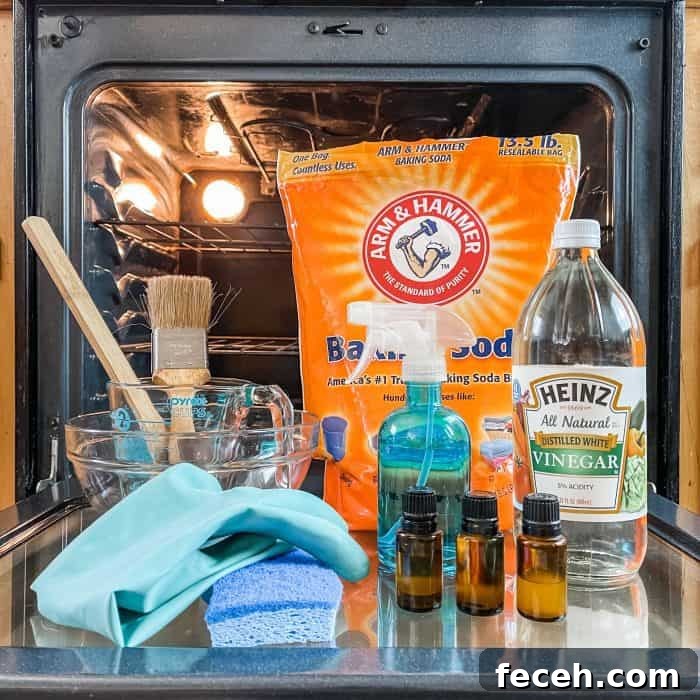
Where to find supplies
Baking soda — buy in bulk at warehouse stores or find it at grocery stores and big-box retailers.
Vinegar — white vinegar is inexpensive and available in large and small bottles at most stores.
Cleaning gloves — available at supermarkets, drugstores, and retail stores.
Sponges — a scrub-side sponge helps remove burnt-on messes.
Spray bottle — any reusable spray bottle will work for the vinegar solution.
Please note: Products mentioned here have not been evaluated by the FDA. Information on this page is not intended to diagnose, treat, cure, or prevent any disease. This website is not a substitute for professional medical care. Always consult a medical professional with health concerns.
Disclaimer: This website may contain affiliate links. If you purchase a product through an affiliate link, the site owner may receive a small commission at no extra cost to you.