The hammer curl is a versatile biceps exercise that strengthens, tones, and sculpts the upper arms. Unlike a traditional biceps curl, the hammer curl uses a neutral grip and recruits complementary muscles, helping you build balanced arm strength and a more defined silhouette.
Below you’ll find clear instructions for performing hammer curls correctly, how they differ from standard biceps curls, the main benefits, and simple ways to add them to your workouts.
Hammer Curl Instructions
Follow these steps to perform a safe, effective hammer curl:
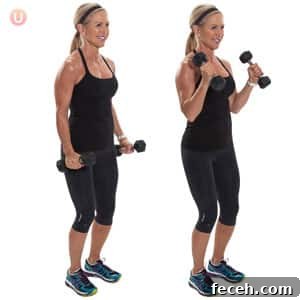
- Stand tall with your feet about hip-width apart, knees slightly bent, and core engaged. Hold a dumbbell in each hand with your arms fully extended at your sides and palms facing each other.
- Keeping your upper arms steady, curl the dumbbells upward by bending at the elbow until the weights reach shoulder level. Keep the thumbs on top and maintain the neutral (palms-in) grip throughout the movement.
- Lower the weights back to the starting position slowly and with control. Avoid swinging or using momentum; focus on the muscle contraction.
You can perform hammer curls with both arms moving at the same time or alternate arms for a more controlled, unilateral focus. In either approach, maintain a strong stance and keep your core braced to prevent back arching.
Hammer Curl vs Bicep Curl
A traditional biceps curl is performed with the palms facing upward (supinated), which places primary emphasis on the biceps brachii. In contrast, the hammer curl uses a neutral grip (palms facing each other), shifting more load to the brachialis and forearm muscles as well as different fibers of the biceps. This makes hammer curls a useful complement to standard curls for fuller development and improved functional strength.
Hammer Curl Benefits
Hammer curls offer several advantages that make them a valuable addition to many training programs:
- Targets multiple muscles: In addition to the biceps, they engage the brachialis and forearms, promoting balanced upper-arm development.
- Improves grip strength: The neutral grip increases forearm activation, helping to build a stronger, more reliable grip over time.
- Functional movement pattern: The neutral hand position closely resembles everyday lifting mechanics, aiding performance in daily tasks and sports.
- Gentler on the wrists: For those with wrist discomfort, hammer curls can be a more comfortable alternative to palms-up curls.
- Enhances arm appearance: Hammer curls add thickness and definition to the outer portion of the upper arm, improving side profiles.
Easy Ways to Incorporate Hammer Curls Into Your Workouts
Here are a few simple ways to include hammer curls in your routine. Add them to an arm-focused session, integrate them into an upper-body workout, or use them as an accessory movement after compound lifts.
- Perform 3 sets of 8–12 reps as a primary arm exercise on upper-body days.
- Use lighter weight for higher-rep sets (12–20) to focus on endurance and toning.
- Alternate single-arm hammer curls for improved unilateral strength and to correct side-to-side imbalances.
- Combine hammer curls with compound moves—such as rows or presses—to round out a balanced upper-body routine.
Consider pairing hammer curls with other targeted routines for best results, including short biceps-focused circuits, arm-toning sessions, or anti-aging arm routines tailored to your goals. Adjust weight and volume based on your experience level and always prioritize controlled form over heavy loads to reduce injury risk.