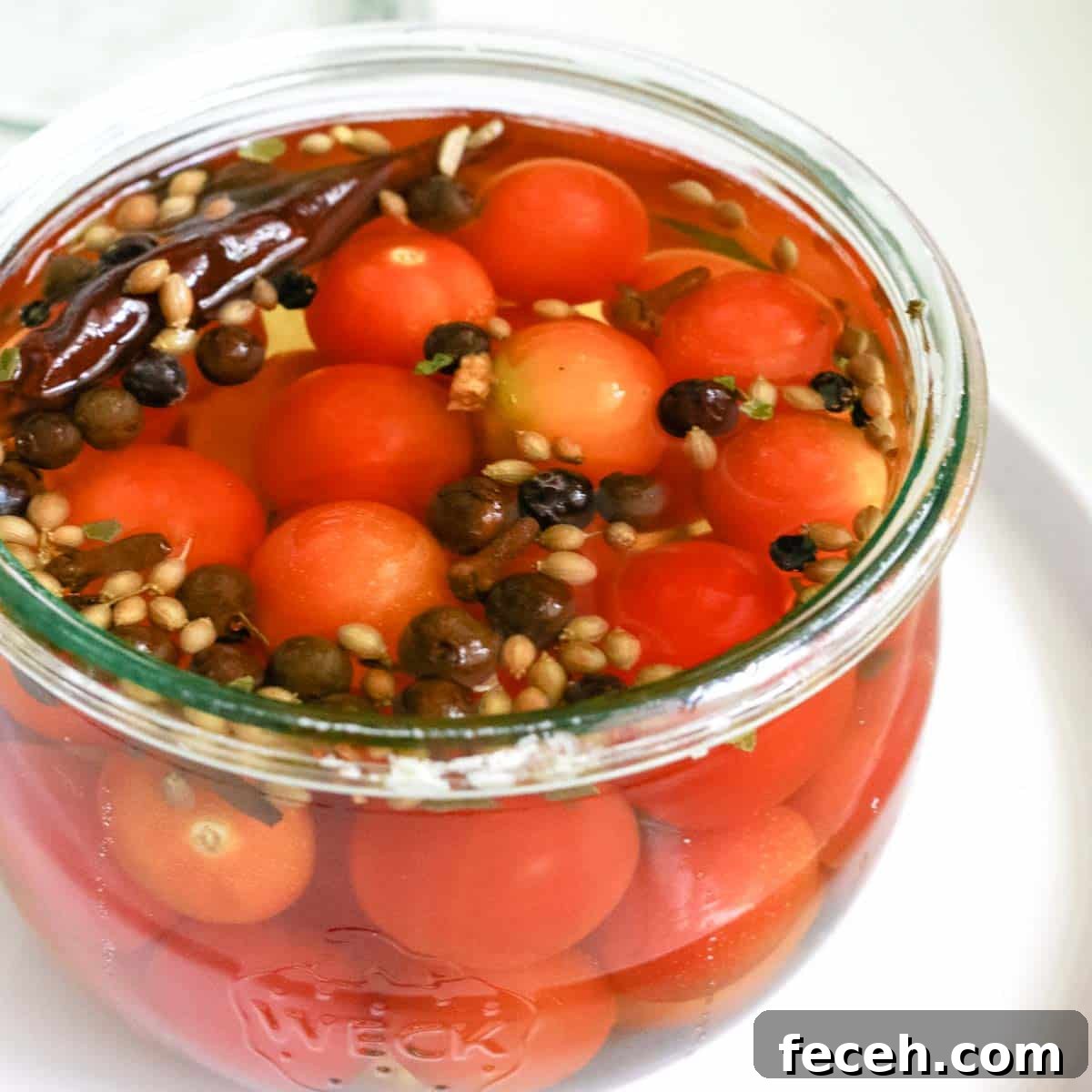
Fermented cherry tomatoes are an easy way to preserve summer produce while adding gut-friendly probiotics to your meals.
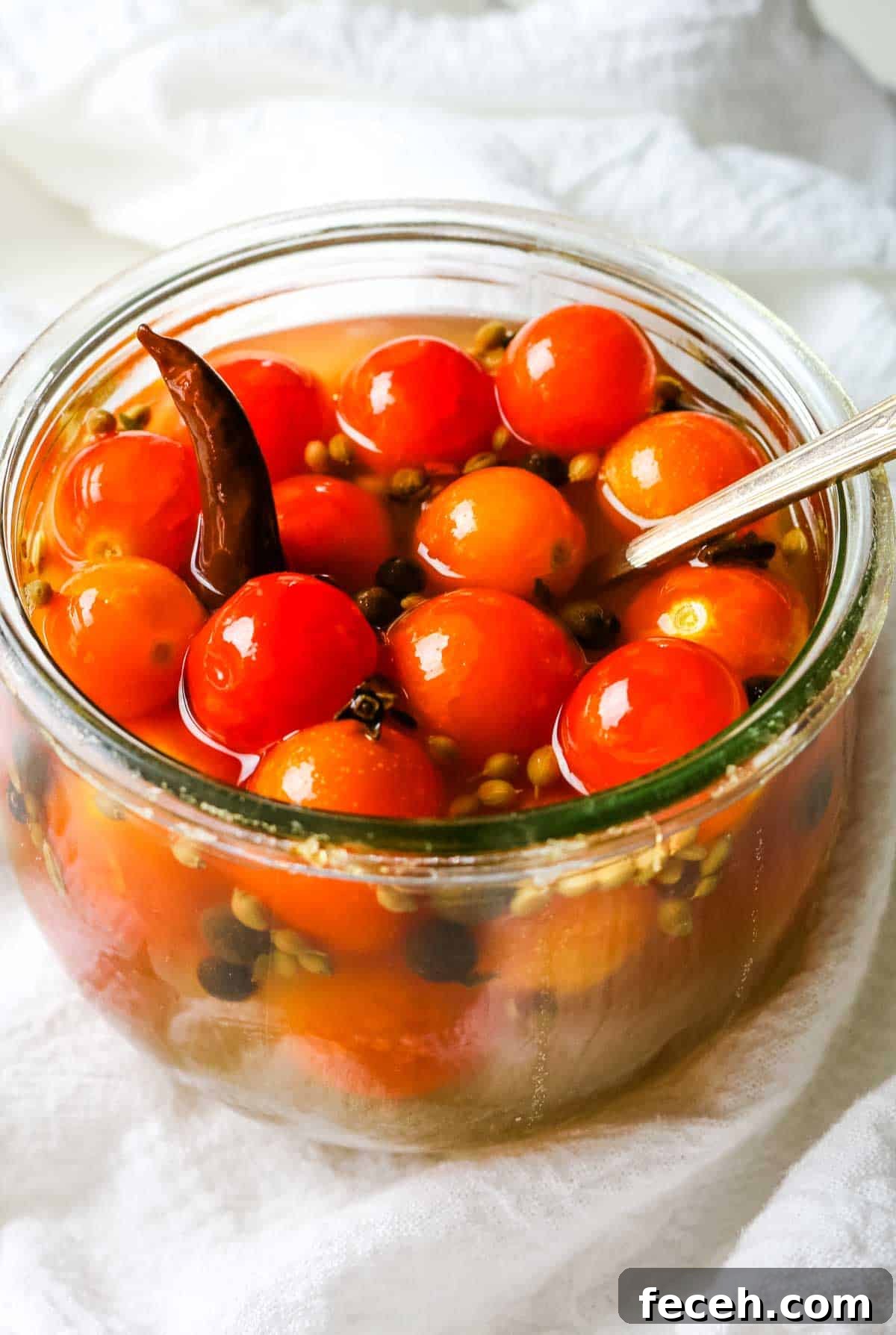
This fermented cherry tomato recipe started as a way to preserve an abundant harvest, but you don’t need garden tomatoes to make it. Cherry or grape tomatoes from a CSA box, farmer’s market, or grocery store work beautifully.
The method is simple and adaptable — I’m already looking forward to trying it with slightly larger tomatoes. If you value fermented foods, this is a tasty, practical addition to your kitchen repertoire.
Properly fermented foods are an important part of traditional diets and can be a soothing, rewarding way to enjoy preserved seasonal produce weeks after you’ve put in the work. These tomatoes offer bright tang and natural probiotics that support gut health and overall wellness.
🍅 What are Fermented Tomatoes
Fermented tomatoes use lacto-fermentation, an age-old preservation method that transforms fresh tomatoes into tangy, nutrient-rich preserves. This style of preserving—common across Eastern Europe—relies on naturally occurring lactic acid bacteria rather than vinegar.
Lacto-fermentation delivers beneficial bacteria, enzymes, and gentle probiotic support for digestion and immunity. The finished tomatoes are flavorful, lightly effervescent, and an easy way to add fermented foods to your meals.
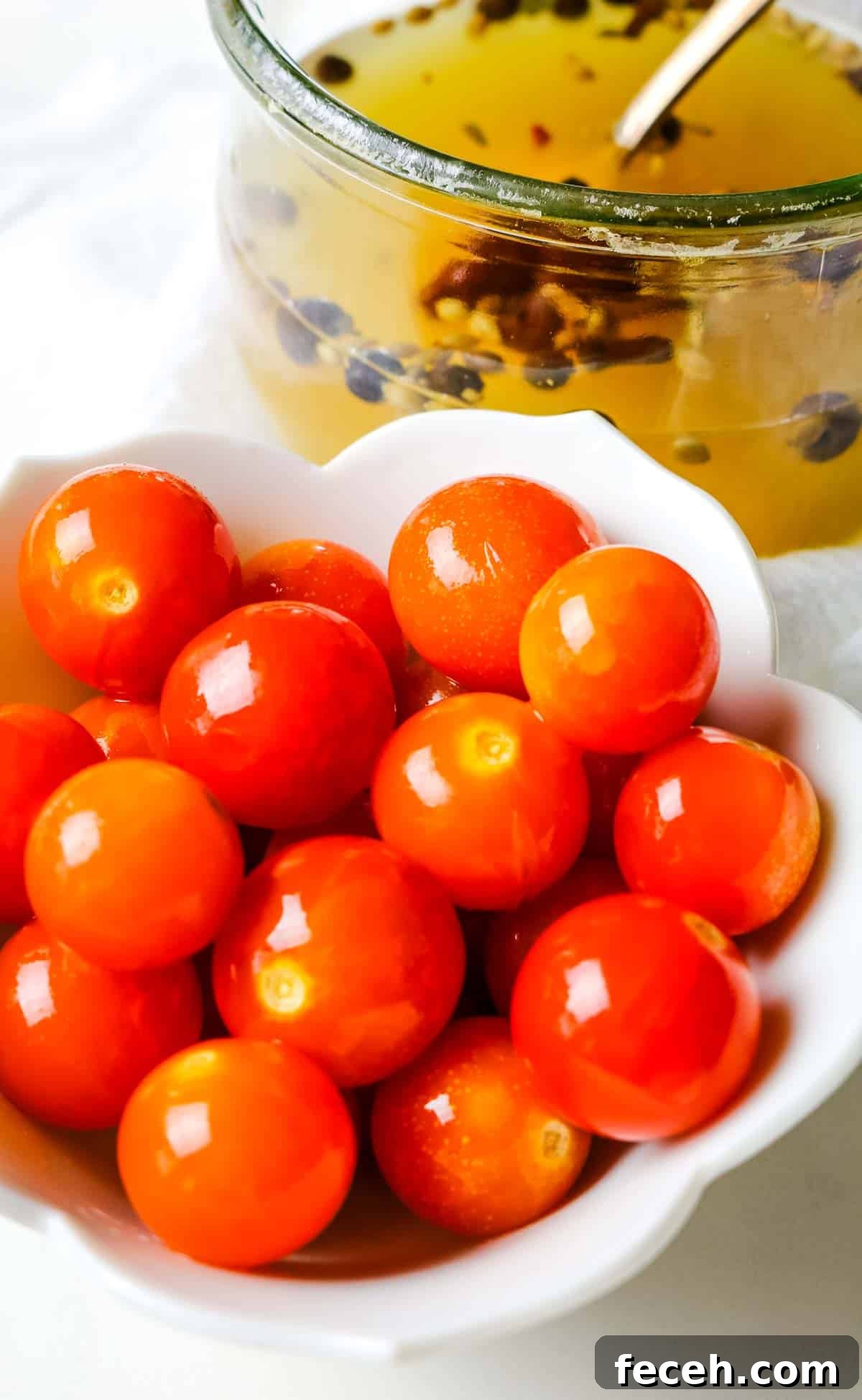
❤ Why you’ll love this recipe
- Taste: mildly spicy with a bright pickled tang, balanced and not overly funky.
- Texture: the tomato skin holds up, and each bite releases a burst of briny, effervescent flavor.
- Difficulty: very easy—great for beginners. Pack a jar and let fermentation do the work.
- Health benefits: a small amount of fermented vegetables as a condiment adds probiotics and live enzymes to meals.
- Preservation: an excellent way to extend plenty of small tomatoes through the colder months.
🍲 Ingredients
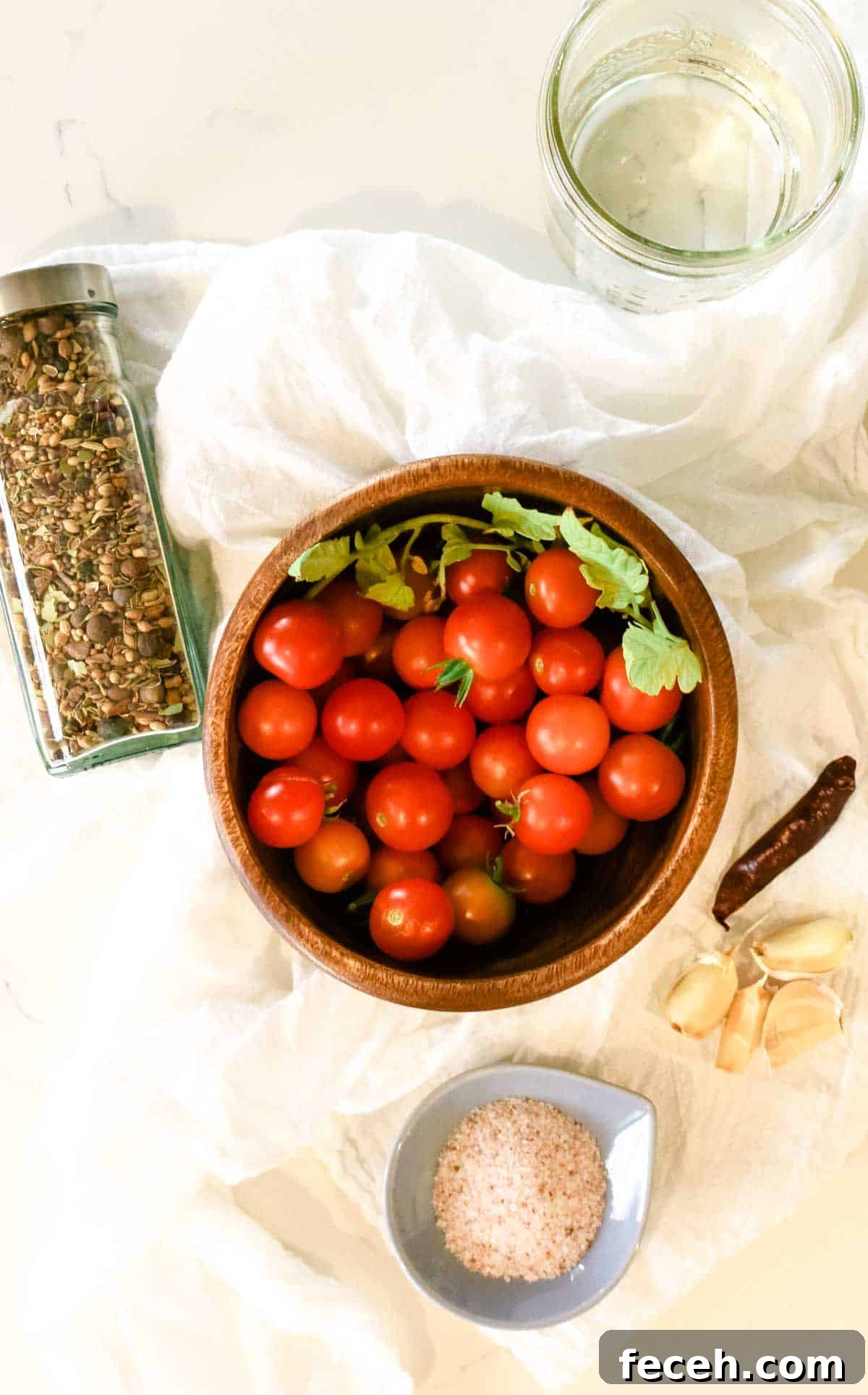
- Tomatoes: any small whole tomatoes work well—cherry or grape are ideal.
- Pickling spice: adds savory, aromatic depth and works well through fermentation.
- Fresh garlic: gives flavor and ferments into a mellow, delicious bite.
- Hot pepper: dried pepper or red pepper flakes for heat, optional.
- Unrefined salt: essential for reliable lacto-fermentation.
See the recipe card for exact quantities.
💭 Make it nutrient-dense: Spoon a few fermented tomatoes over fish or chicken to add natural probiotics and live enzymes to your meal.
🧂 What is Pickling Spice
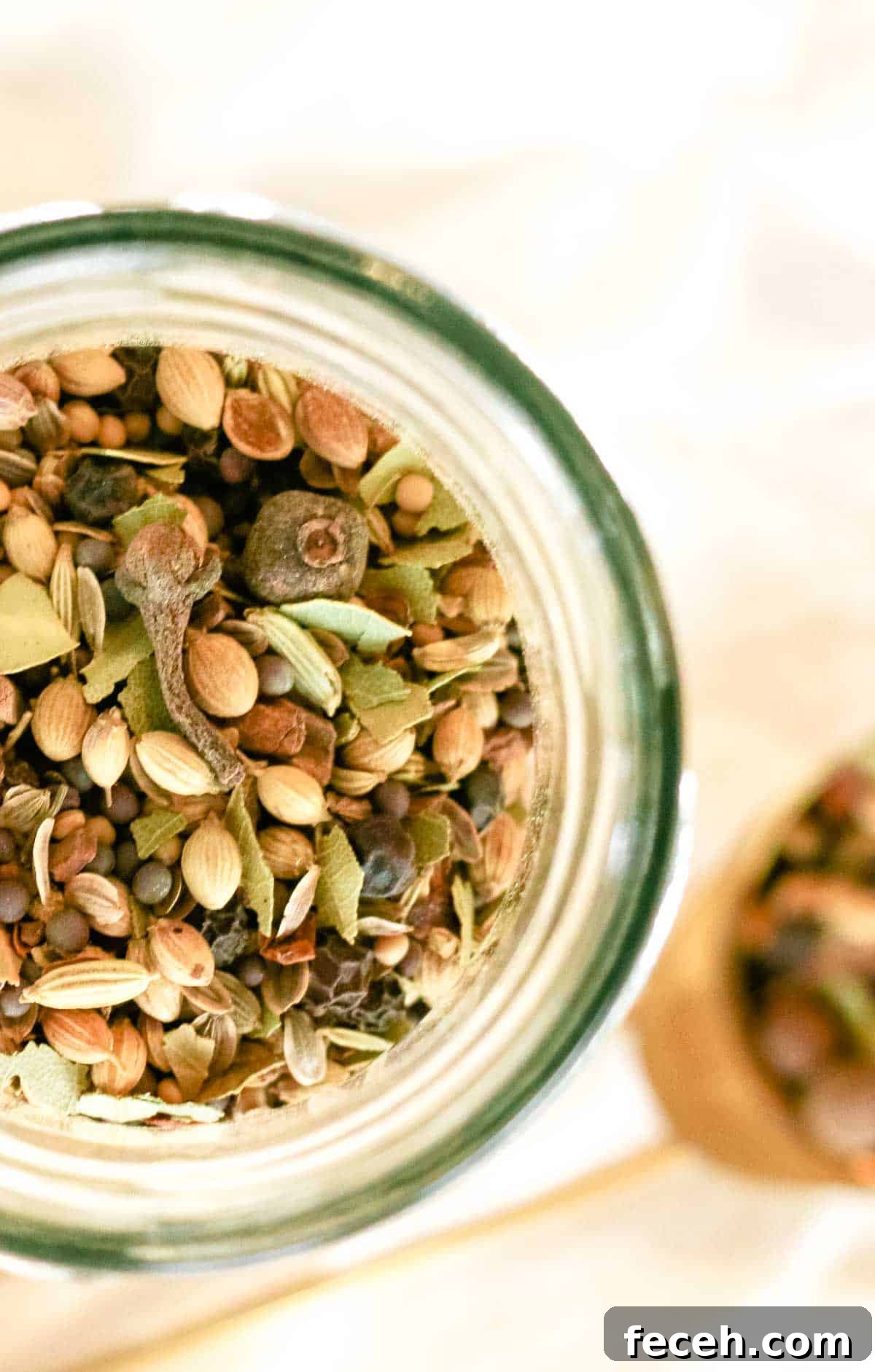
Pickling spice is a blend commonly used for canning and pickling. Typical components include black peppercorns, mustard seeds, allspice berries, coriander seed, crushed bay leaves, and dill seed. The exact mix varies, but the blend adds complex savory and aromatic notes that infuse into the brine.
Pickling spice holds up well over long ferments and lends a rich, layered flavor to fermented vegetables.
📖 Substitutions and Variations
- No pickling spice? Combine black peppercorns, mustard seed, coriander seed, a pinch of allspice, crushed bay leaf, and dill seed to make about 2 teaspoons.
- Tomato types: cherry and grape tomatoes are best, but small campari or cocktail tomatoes can also work. Choose organic when possible and avoid triple-washed container tomatoes if you want more surface microbes.
- Fresh herbs: omit pickling spice and use basil, dill, parsley, oregano, or thyme for different flavor profiles.
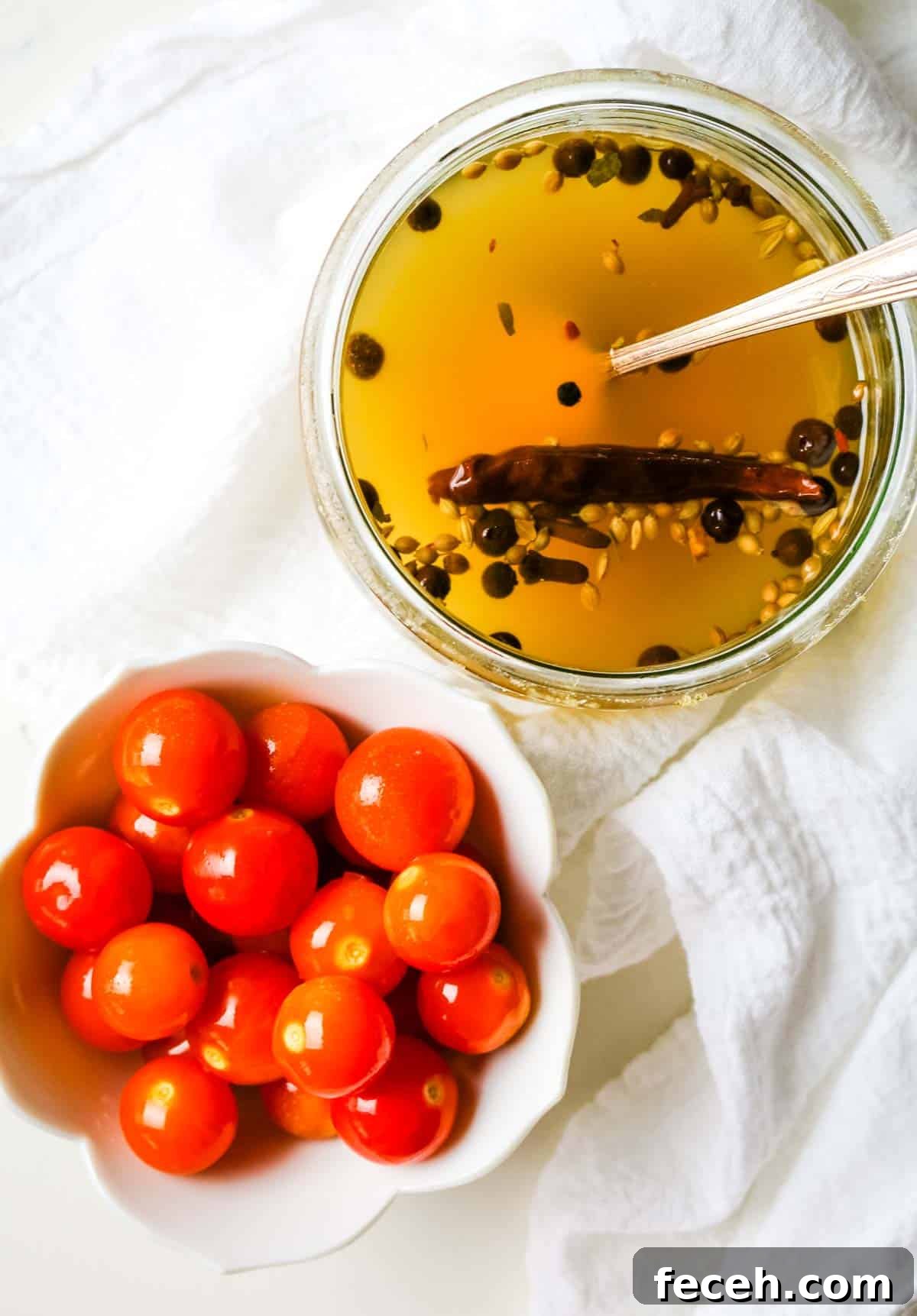
💭 Helpful Tips
- Time saver: use warm water to dissolve the salt quickly when making brine.
- Save money: preserve a large batch when tomatoes are abundant to enjoy later.
- Brine use: reserve extra brine for salad dressings or as a starter for future ferments.
- Food safety: discard any jar showing fuzzy, colored mold (pink, blue, green). Kahm yeast is a harmless, white film that can appear on lacto-ferments; it’s not dangerous but can affect flavor.
💭 Good to know: Use glass jars for fermentation to avoid plastic and potential BPA exposure.
👩🏽🍳 Step-by-Step Instructions
The printable recipe card is below for convenience.
This recipe requires: cherry tomatoes, pickling spice, unrefined salt, warm water, plus garlic and an optional hot pepper.
Step 1. Make the brine
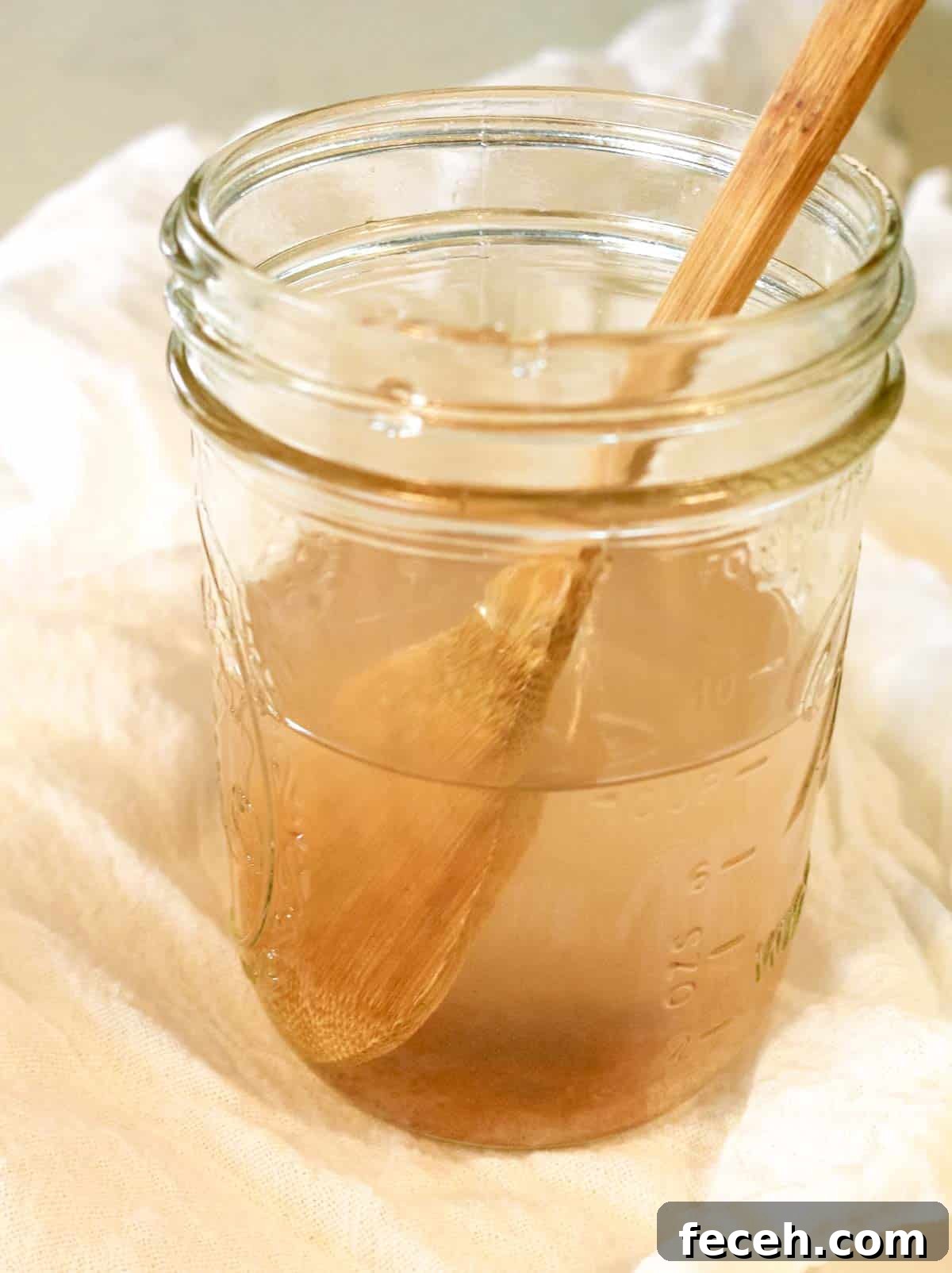
Dissolve the salt in a cup of warm water. A pint jar with cup markings is handy for measuring. Let the brine cool until it is warm or room temperature before using.
Step 2. Prepare the tomatoes
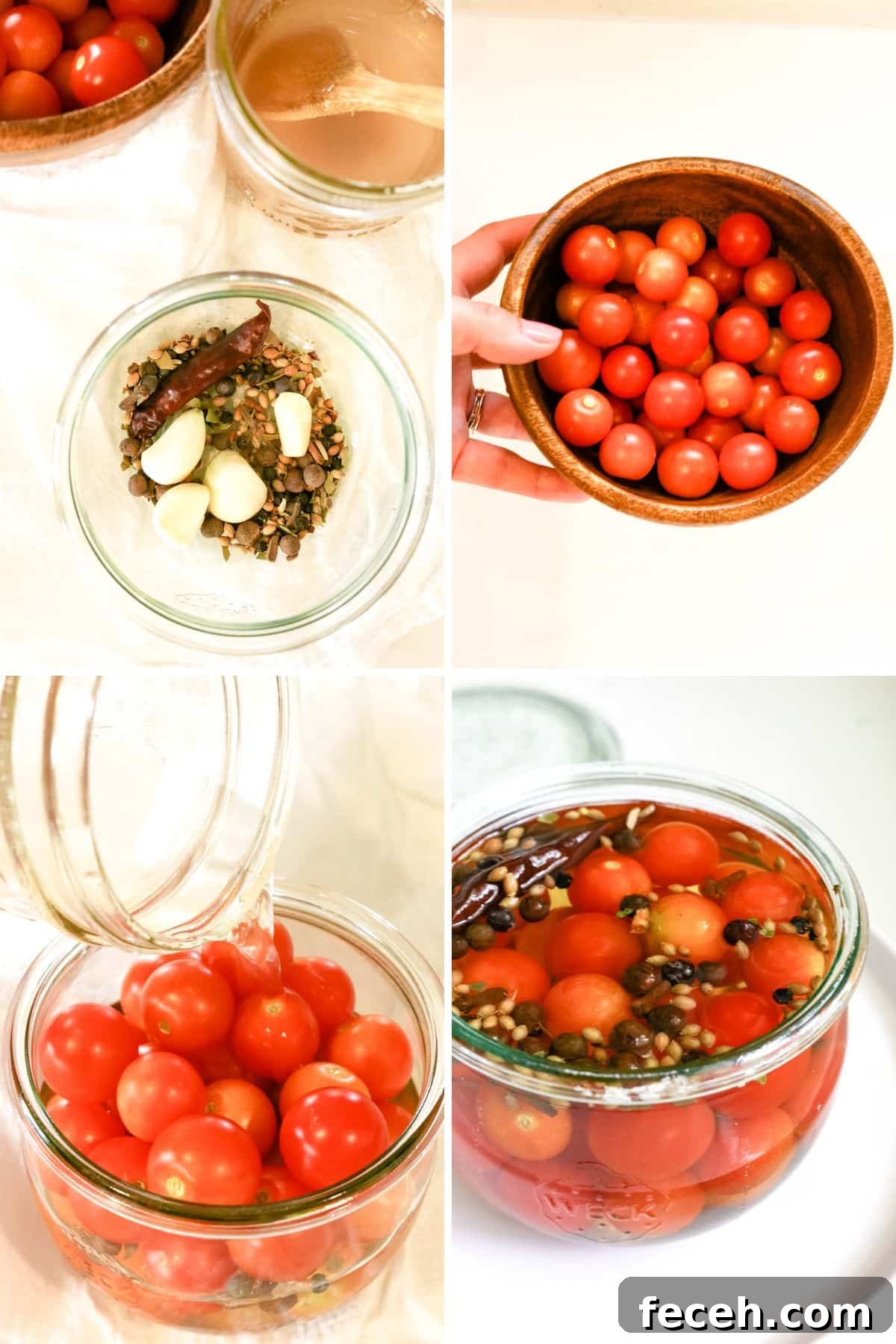
Place pickling spice and garlic cloves in the bottom of a wide-mouth jar (a quart jar works well). Add washed, fully dried tomatoes and any dried pepper for heat.
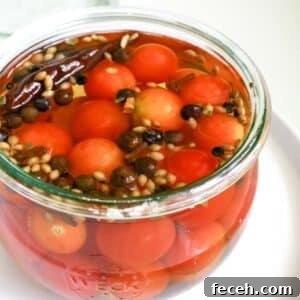
Pour the cooled brine over the tomatoes so they are fully submerged. Add a fermentation weight to keep them under the brine. Set the jar on a small plate to catch any overflow and keep it at room temperature out of direct sunlight.
Step 3. Ferment
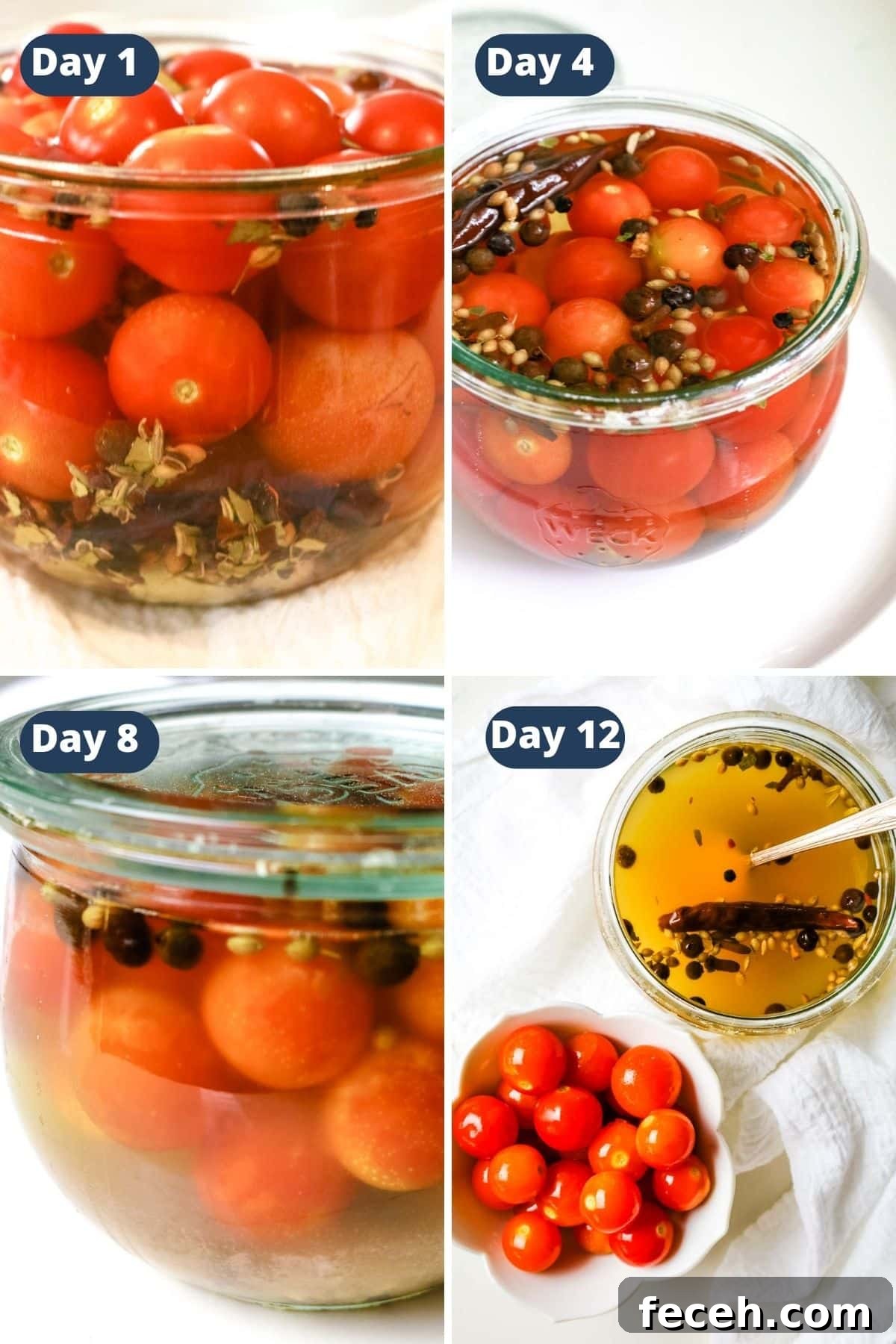
For the first five days, gently open the lid each day to release carbon dioxide. After about 10 days at room temperature the brine will turn cloudy and bubbling will subside—this indicates the tomatoes are fermented. At that point transfer the jar to the refrigerator.
💭 Did you know? The brine becomes cloudy as beneficial bacteria grow—this is normal and expected.
🔪 Helpful Tools
Basic tools that make fermenting easier: a wide-mouth jar, a fermentation glass weight, and measuring tools. If you already have these, you’re ready to go.
🥗 Serving Suggestions
Fermented cherry tomatoes are versatile—toss them into salads, serve on buttered sourdough, or spoon over grilled fish or chicken. They also make a lively condiment alongside roasted dishes or sandwiches.
❄ Storage Instructions
After the initial room-temperature fermentation, store fermented tomatoes in the refrigerator for up to six months. You can remove the fermentation weight once the jar is chilled.
💬 FAQs
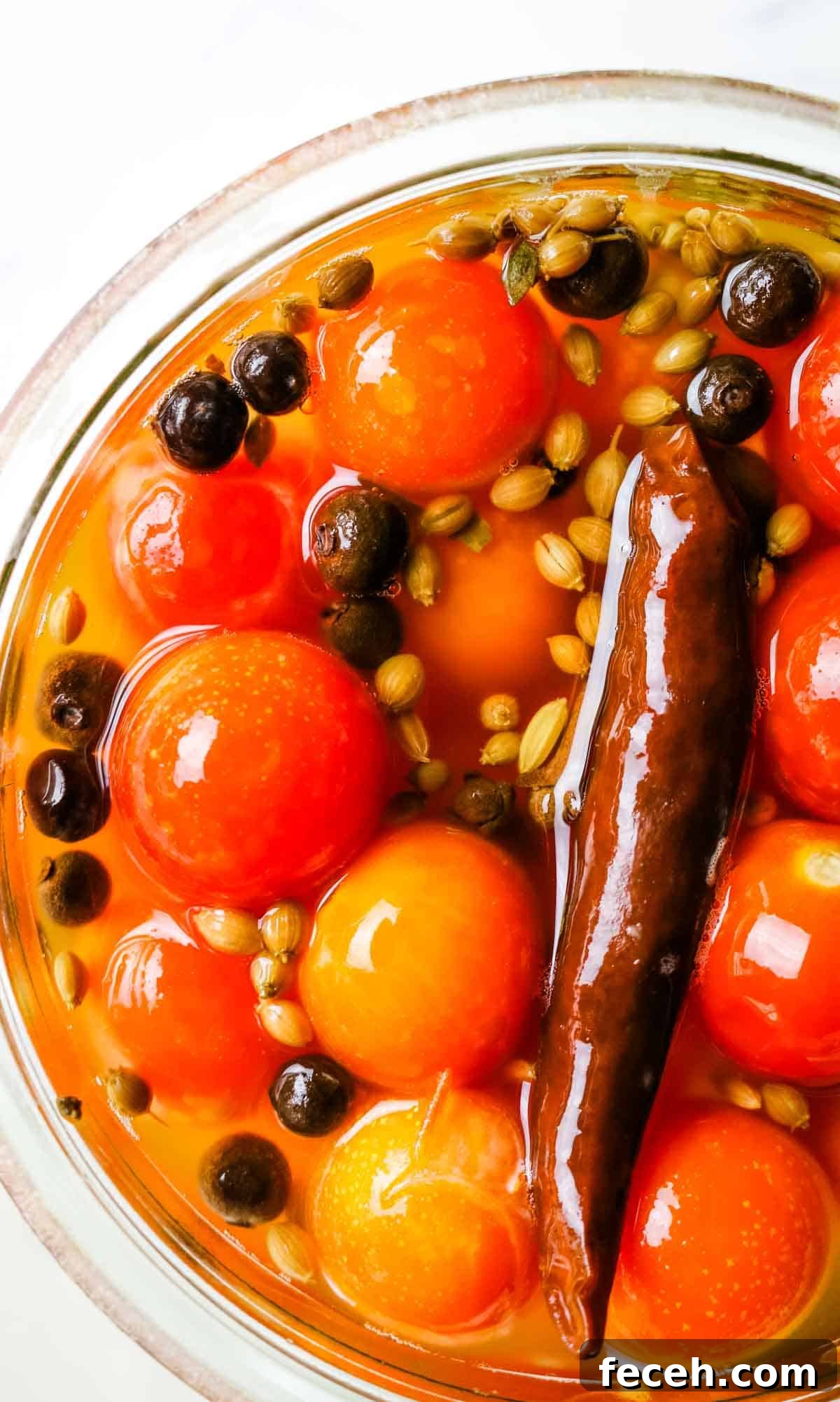
At typical room temperature it usually takes 8–14 days. Look for a cloudy brine and no active gassing when you open the jar. When fermentation has calmed, move the jar to the refrigerator.
No—an ordinary jar with a lid and a glass fermentation weight to keep the tomatoes submerged is sufficient.
Stored in the refrigerator, fermented tomatoes stay good for several months. They retain best texture and probiotic benefits for about 4–6 months.
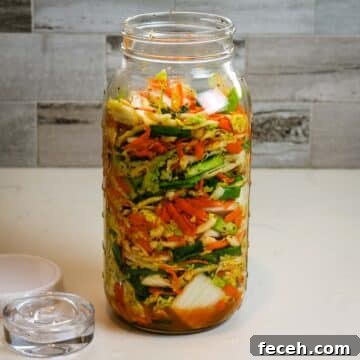
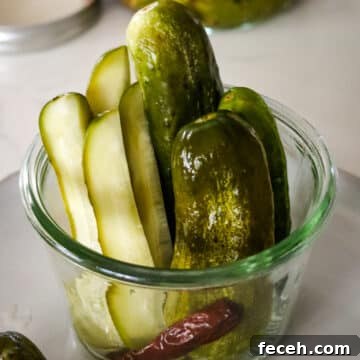
Looking for more lacto-fermented recipes? Try salsa, pickles, or kimchi to expand your fermented-food lineup.
-
Lacto-Fermented Salsa
-
Lacto-Fermented Jalapeños
-
Easy Kimchi
-
Lacto-Fermented Dill Pickles
Did you make this? Please leave a ⭐ rating in the recipe card below and share a review in the comments. Thank you!💚
Printable Recipe
Easy Fermented Cherry Tomatoes
Fermented cherry tomatoes are a great way to preserve summer tomatoes and add probiotic-rich flavor to meals.
Equipment
- Fermentation glass weight
- Wide-mouth mason jar
Ingredients
- 1 cup warm water
- 2 teaspoons unrefined salt
- 2 teaspoons pickling spice (see notes)
- 4 garlic cloves
- 2 cups cherry tomatoes (about 10 ounces)
Instructions
- Dissolve 2 teaspoons of salt in 1 cup of warm water. Set aside to cool.
- Add 2 teaspoons pickling spice and 4 garlic cloves to the bottom of a wide-mouth jar. Pack in 2 cups of washed, fully dried cherry or grape tomatoes.
- Pour the cooled brine over the tomatoes so they are submerged. Place a fermentation weight on top to keep them under the brine.
- Set the jar on a small plate at room temperature, out of direct sunlight, to ferment.
- During the first 5 days, gently open the lid daily to release carbon dioxide. After about 10 days the brine will be cloudy and bubbling should subside—transfer the jar to the refrigerator at that point.
Notes
- Recipe yields about 2 cups. A serving is roughly 1/4 cup.
- Keep the jar on a dish to catch any brine that seeps out during fermentation.
- Refrigerated fermented tomatoes keep well for up to 6 months; texture and probiotic quality are best within 4–6 months.
- To make your own pickling spice, blend black peppercorns, coriander seeds, mustard seeds, a few allspice berries, dill seed, and crushed bay leaf to total about 2 teaspoons.
Nutrition
Carbohydrates: 2 g |
Protein: 0.5 g |
Fat: 0.1 g |
Sodium: 588 mg |
Potassium: 93 mg |
Vitamin A: 185 IU |
Vitamin C: 9 mg
The nutrition information is an estimate and should not replace professional advice.
© Prepare and Nourish • Content and photographs are copyright protected. Sharing this recipe is encouraged—please do not copy full recipes verbatim to other sites.
Leave a comment and share a photo on Instagram—tag @prepareandnourish and use #prepareandnourish to be featured.