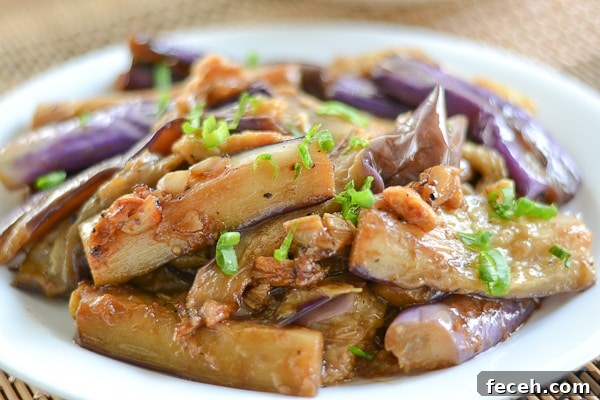
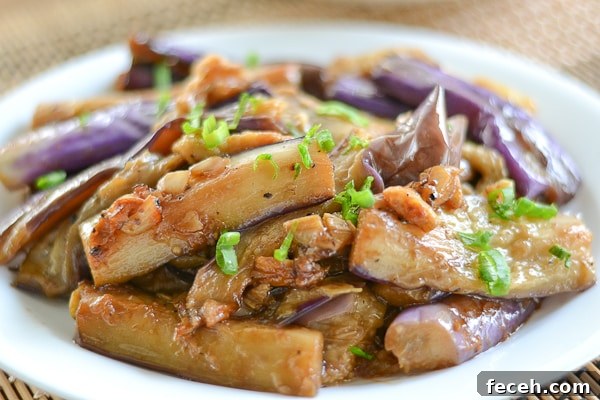
 Adobo is one of the most beloved dishes in Filipino cuisine. Traditionally made with meat or seafood, the signature sauce combines vinegar, soy sauce, garlic, black pepper, and bay leaf. While chicken and pork are the most common proteins, vegetables like water spinach (kangkong), okra, banana flowers (puso ng saging), and eggplants are popular vegetarian alternatives. This eggplant adobo recipe is a family favorite: eggplant slices are lightly fried first, then simmered in the adobo sauce until tender and infused with a pleasant tang.
Cooking Tips for Perfect Eggplant Adobo
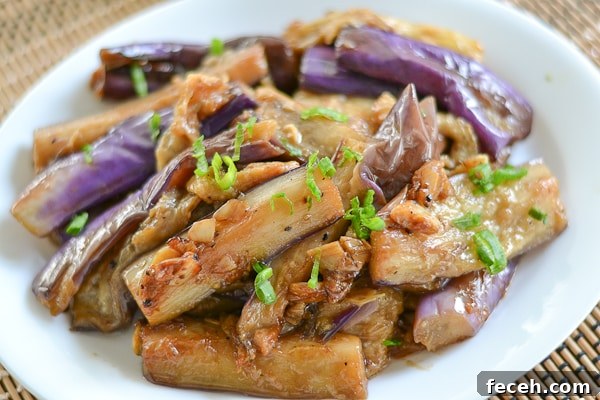
To get the best texture and flavor, choose the right eggplant. Japanese or Chinese eggplants are ideal because they are tender and have fewer seeds. If you use globe eggplants, slice them thinner so they cook evenly. Frying the eggplant before simmering in the sauce enhances flavor and helps the pieces hold their shape. Use a neutral oil with a high smoke point, such as canola or vegetable oil, and avoid overcrowding the pan; fry in batches if needed. Drain fried eggplants on paper towels to remove excess oil.
Adjust the balance of vinegar and soy sauce to suit your taste. A touch of sweetness—about a teaspoon of sugar—can round out the tanginess. For a richer variation, a splash of coconut milk works well. Simmer the eggplant gently in the sauce so it absorbs flavor without becoming mushy. Finish with a quick rest off the heat with the pan covered so the eggplant continues to tenderize in the residual heat.
Serving Suggestions and Pairings
Eggplant adobo is excellent with steamed white rice, which soaks up the savory-tangy sauce. Spoon the sauce over the rice for extra flavor. For a larger meal, serve alongside grilled meats or fish—the smoky notes contrast nicely with adobo’s acidity. As part of a vegetarian spread, pair it with a fresh salad or sautéed greens like spinach or bok choy. A squeeze of lime or lemon brightens the dish at the table.
Leftovers keep well and often taste better the next day after the flavors meld. Reheat gently on the stove and add a splash of water if needed. Use eggplant adobo as a filling for wraps or sandwiches, and add fresh herbs like cilantro or basil for brightness. For a heartier plate, serve with quinoa or brown rice to add texture and a nutty element.
Frequently Asked Questions
Can I use other types of eggplants?
Yes. Chinese and Japanese eggplants yield the best texture, but globe eggplants work if sliced thinly. Thicker slices may take longer to cook.
What can I serve with eggplant adobo?
Steamed rice is the classic pairing. You can also serve it with lumpia, grilled proteins, or a simple salad to balance the tangy flavor.
How do I store leftovers?
Store leftovers in an airtight container in the refrigerator for up to three days. Reheat gently on the stove or in the microwave, adding a little water if the sauce has thickened.
Can I make eggplant adobo ahead of time?
Yes. Preparing it a day ahead allows the flavors to meld, and it often tastes even better after resting overnight.
What are common mistakes to avoid?
Avoid overcrowding the pan when frying the eggplant; that causes steaming instead of browning. Add vinegar gradually and taste as you go to prevent the sauce from becoming too sharp.
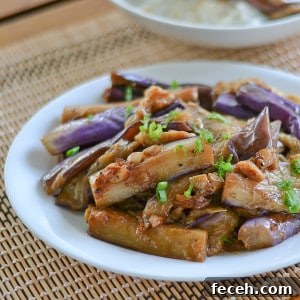
Eggplant Adobo
Liza A
Pin Recipe
Ingredients
- 5 medium Chinese eggplants ends trimmed
- ½ cup vegetable oil (or more as needed)
- 1/3 cup vinegar
- ¼ cup soy sauce
- ¼ tsp freshly ground pepper
- 5 cloves garlic chopped
- 1 tsp sugar
Instructions
-
Cut eggplants in half lengthwise, then into 2-inch pieces.
-
Heat vegetable oil in a wok or non-stick pan. Fry eggplant in batches until browned on both sides, adding more oil as needed. Drain on paper towels and set aside.
-
Discard excess oil from the pan, then add vinegar, soy sauce, ground pepper, garlic, and sugar. Bring to a boil, add the fried eggplant, lower heat to medium, cover and simmer 2–3 minutes until eggplant is soft. Gently stir to coat with sauce. Turn off the heat and leave the covered pan on the stove for a couple of minutes to allow the eggplant to finish cooking. Transfer to a serving plate.
-
Serve hot with steamed rice and enjoy.
Nutrition