
Imagine the comfort of a classic risotto: warm, creamy, earthy, and thoroughly satisfying. That’s exactly what this Butternut Squash Risotto delivers. Bacon, a splash of white wine, fresh herbs, aromatics, and pureed roasted butternut squash elevate simple rice into an elegant, comforting dish.

Don’t buy into the myth that risotto is difficult or takes hours. While some attention is needed, with a little practice you can have a delicious risotto in about twenty to thirty minutes without constantly hovering over the stove.
Risotto comes in many variations. A mushroom risotto is one of my favorites for its earthy depth, but this creamy butternut squash version is often the crowd-pleaser in our house.
What Exactly Is Risotto?
Risotto is a classic Italian rice dish made with starchy, short-grain rice. The traditional method involves cooking the rice by gradually adding hot broth and stirring, which encourages the rice to release starch and develop the silky, creamy texture risotto is known for. Skilled cooks in Italy can complete the process in twenty minutes, and even if you’re not a pro, you’ll finish in under thirty minutes with this recipe.

What Kind of Rice Is Best For Risotto?
Three short-grain rices are commonly used for risotto:
- Arborio
- Carnaroli
- Vialone Nano
Arborio is the most widely available in North America. It has a slightly larger grain and a bit less starch than the others, but it still makes a good risotto. Carnaroli is often called the “king” of risotto rice for its excellent starch content and creamy results. Vialone Nano, preferred in the Veneto region, absorbs a lot of liquid and makes a very creamy risotto as well. Carnaroli and Vialone Nano may require specialty stores or online ordering where you live.
Is This Butternut Squash Risotto Freezer-Friendly?
You can freeze risotto, but expect some texture changes — it won’t be as silky as freshly made. After cooling slightly, transfer warm risotto to a sealable container and freeze. Thaw overnight in the refrigerator, then reheat gently in the microwave (stopping to stir) or in a non-stick skillet on the stovetop. Add a splash of water, broth, or wine while reheating to help restore creaminess.
That said, risotto is best served fresh and hot — you might not have leftovers to freeze!
How to Make Butternut Squash Risotto
Roast about three cups of cubed butternut squash. Reserve 1/2 cup of roasted cubes for garnish and purée the rest in a food processor. Stir in a little cream, then set the purée aside. Keep six cups of chicken broth warm in a saucepan on a back burner throughout the risotto-making process.
Use a heavy-bottomed pot or Dutch oven for the risotto. One and a half cups of rice will expand substantially, so this recipe makes a generous batch—perfect for sharing.
Cook the bacon until crispy, then remove it to drain. Leave about three tablespoons of fat in the pan and sauté shallots until translucent, add garlic briefly, and stir in fresh sage. Reduce the heat to medium-low, add the rice, salt, and pepper, and toast the rice briefly so each grain is coated in fat. Pour in a cup of dry white wine and stir until absorbed.
Add hot chicken broth by the half-cup ladle, just enough to barely cover the rice each time. Stir frequently (you don’t need to stir every second, but keep the rice moving) so the grains release starch and the mixture becomes creamy. Keep the heat at medium-low; risotto develops its signature texture when cooked slowly and patiently.

How Long Does It Take to Cook Risotto?
Adding broth and stirring until the rice reaches a creamy, al dente texture typically takes about 20 minutes and will likely use most or all of the hot broth. When the rice is tender but still slightly firm at the center, reduce the heat and finish by gently stirring in butter, lemon juice, the reserved butternut purée, crispy bacon, and grated Parmesan. Cover briefly while you prepare the fried sage garnish.
Serve the risotto in bowls, top with the reserved roasted squash cubes and fried sage leaves, and enjoy immediately.
More Rice Recipes You Might Love
- Roasted Emmer and Winter Squash Risotto
- Einkorn Coconut Curry Risotto
- Farro, Mushroom and Leek Risotto

Butternut Squash Risotto
If you make this recipe, please leave a star rating and comment.
Pin
Comment
Ingredients
For the Butternut Squash:
- 3 cups butternut squash, (2 to 2-1/2 pounds) cut into 1-inch pieces
- 2 tablespoons olive oil
- 1 teaspoon salt
- 1 teaspoon ground black pepper
- 1 cup heavy cream
- 1/4 teaspoon ground cinnamon
- 1/2 teaspoon freshly grated nutmeg
For the Risotto:
- 6 cups chicken broth
- 1/2 pound thick-cut bacon, cut into small pieces
- 1 medium shallot, chopped
- 2 garlic cloves, minced or grated
- 1 tablespoon chopped fresh sage
- 1 1/2 cups Arborio rice
- 1 teaspoon salt
- 1 teaspoon ground white pepper, or black pepper
- 1 cup dry white wine
- 2 tablespoons butter
- 2-3 tablespoons fresh lemon juice
- 1 cup grated Parmesan cheese
For the Fried Sage Leaf Garnish:
- 1 ounce fresh sage
- 1/2 cup avocado oil, or any high smoke point oil
Instructions
For the Butternut Squash:
- Preheat the oven to 400°F.
- Toss the butternut cubes with olive oil, spread on a sheet pan, and season with salt and pepper.
- Roast for about 20 minutes, then cool to room temperature.
- Reserve 1/2 cup of the roasted cubes for garnish. Purée the remaining cubes in a food processor, then stir in the cream, cinnamon, and nutmeg. Set aside.
For the Risotto:
- Bring the chicken broth to a gentle simmer and keep it warm on a back burner.
- Cook the bacon in a heavy-bottomed pan over medium heat until crispy. Transfer to paper towels to drain.
- Pour off all but 3 tablespoons of bacon fat. Add shallots and cook 3–4 minutes until translucent. Add garlic and cook 30 seconds, then stir in chopped sage.
- Reduce heat to medium-low. Add the rice, salt, and pepper, stirring frequently so the rice is coated and toasted slightly.
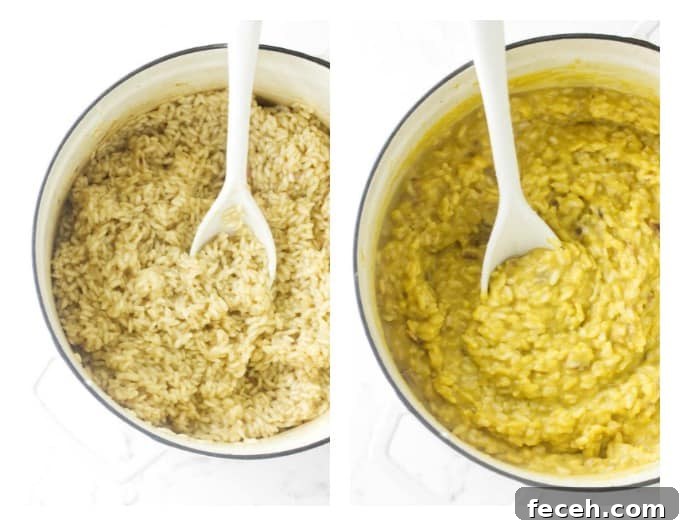
- Add the white wine and let it absorb. Then add a 1/2-cup ladle of hot chicken broth so it just covers the rice. Stir frequently, letting the liquid absorb before adding more. Repeat until the rice is al dente and the mixture is creamy, about 20 minutes.
- Stir in butter, lemon juice, the reserved butternut purée, crispy bacon, and Parmesan. Reduce heat to low and cover briefly while you prepare the sage garnish.
For the Fried Sage Leaf Garnish:
- Heat oil in a small skillet over medium-high. Using tongs, carefully add sage leaves and fry for about 15 seconds, turning once, until crisp.
- Remove to paper towels to drain.
To Serve:
- Divide risotto among serving bowls, top with reserved roasted squash cubes and fried sage leaves. Serve immediately.
Notes
- If the purée is thick, add a small amount of chicken broth to thin and smooth it.
- Keep the chicken broth warm on a back burner; it doesn’t need to boil while you make the risotto.
- Be cautious when frying sage leaves—moisture can cause oil to spit. Use tongs for safety.
- Do not use extra virgin olive oil for frying due to its low smoke point. Use light olive oil, peanut oil, or avocado oil instead.
- Store leftover risotto in the refrigerator for up to 3 days.
- Risotto can be frozen but the texture will change; thaw overnight in the fridge and reheat slowly, adding liquid as needed to restore creaminess.
Nutrition
Nutrition information is automatically calculated and should be used as an approximation.
 Like this recipe? Rate & comment below!