
When it comes to a show-stopping spread, a well-built charcuterie board is hard to beat. They’re simple to assemble, adaptable to what you already have, and offer a variety of bites that appeal to every guest. Below are practical tips and techniques to make a beautiful, Instagram-worthy charcuterie board fast.

I originally published this post on GoRVing.com. Additional information has been added.
Looking for tips on making a stunning charcuterie board in minutes?
You don’t need to be a chef to assemble an attractive cheese and meat board quickly. With a few simple rules — like working in threes, layering meats and cheeses, and balancing textures and flavors — you can build a board that looks intentional and tastes great. Here are our tried-and-true tips for assembling a striking charcuterie spread for any occasion.
Before you begin, take stock of what you already have. Planning your components ahead makes assembly faster and ensures everything pairs well together. After years of building boards for parties and events, these streamlined steps consistently deliver beautiful, crowd-pleasing results.
Table of Contents
- Looking for tips on making a stunning charcuterie board in minutes?
- What Is a Charcuterie Board?
- How to Make a Perfect Charcuterie Board
- Plan Your Beautiful Board Ahead of Time
- How to Arrange a Charcuterie Board
- Expert Tip
- What to Put on a Charcuterie Board
- What You Need to Make the Perfect Charcuterie Board
- Styling Tip
- More Tips and Tricks
- Helpful FAQs
- More Delicious Appetizers to Try
What Is a Charcuterie Board?
Charcuterie refers to cured meats, and a charcuterie board brings together an array of meats, cheeses, and complementary accouterments. It’s a versatile appetizer option for gatherings and holidays and elevates a classic cheese board into a full tasting experience by combining savory, sweet, crunchy, and creamy elements.

How to Make a Perfect Charcuterie Board
Good planning saves time and stress. Follow a few simple steps ahead of time and the final assembly will be quick and effortless.
Plan Your Beautiful Board Ahead of Time
- Plan: Write a short menu so you know which cheeses, meats, and accompaniments pair well together and what you need to purchase or prepare.
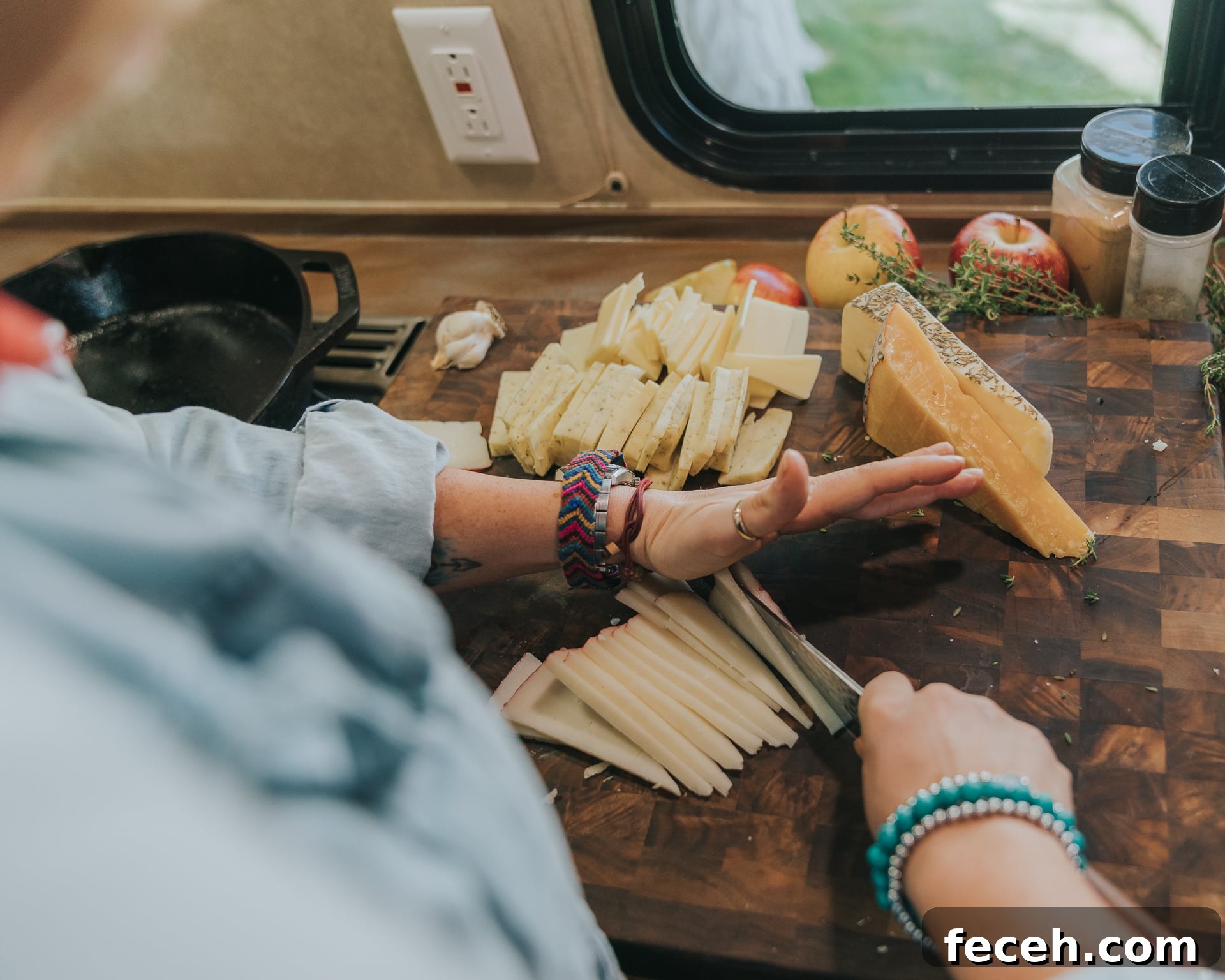
- Slice ahead: Slice cheeses and cured meats in advance and store them in airtight bags or containers to speed up assembly.
- Store individually: Put jams, honey, and other spreads in small jars or containers. Have a bowl or dish for each item, plus knives for cheeses and spoons or picks for condiments.
How to Arrange a Charcuterie Board
While you can include almost anything, a balanced board typically includes a selection of cheeses, an assortment of meats, a vehicle for eating (bread or crackers), a briny or pickled element, and something spreadable like jam or honey.
Expert Tip
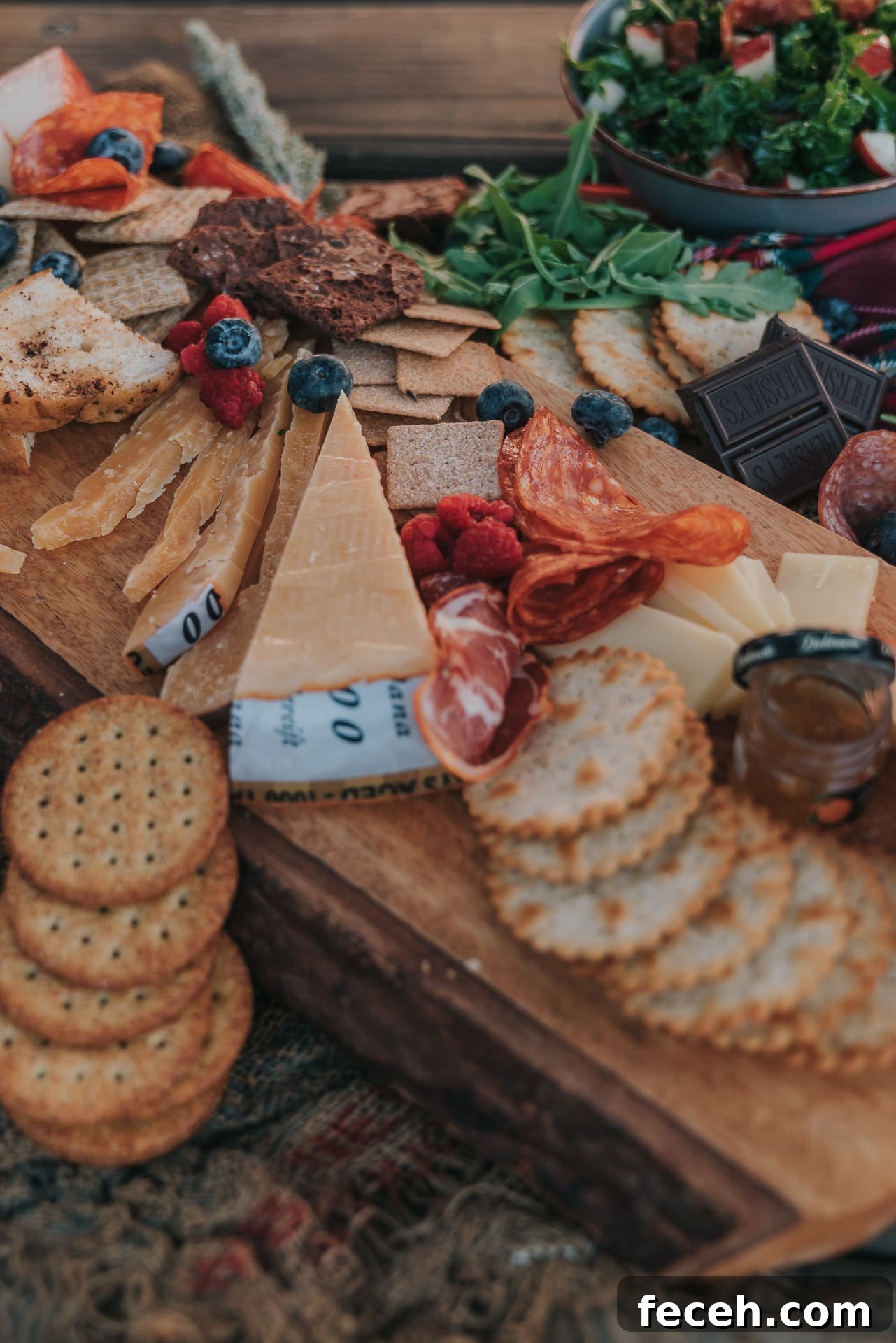
Work in groups of three to create a full, abundant-looking board. Choose three types of meats, three cheeses (for example: one soft, one mild, one bold), three fruits, and so on. This rule simplifies choices and ensures the board looks intentional and plentiful.
What to Put on a Charcuterie Board
A great board offers variety so every guest finds something they like. Aim for a mix of textures, flavors, and visual contrast.
- Cheese: Include soft, hard, and a crowd-pleaser. A mix of sharp, mild, and creamy cheeses works well. Consider including cow, sheep, and goat options for diversity.
- Meats: Think salami, prosciutto, pepperoni, summer sausage, basturma, or even chopped leftover grilled meats. Thin slices and small folds add visual appeal.
- Jelly, jam, honey: One sweet or spicy spread pairs beautifully with cheese and charcuterie.
- Savory dips: Spinach-artichoke dip, tzatziki, hummus, or a seafood spread if you want a bold option.
- Breads and crackers: Crisp crackers, sliced baguette, grilled naan, or pretzel chips provide different textures.
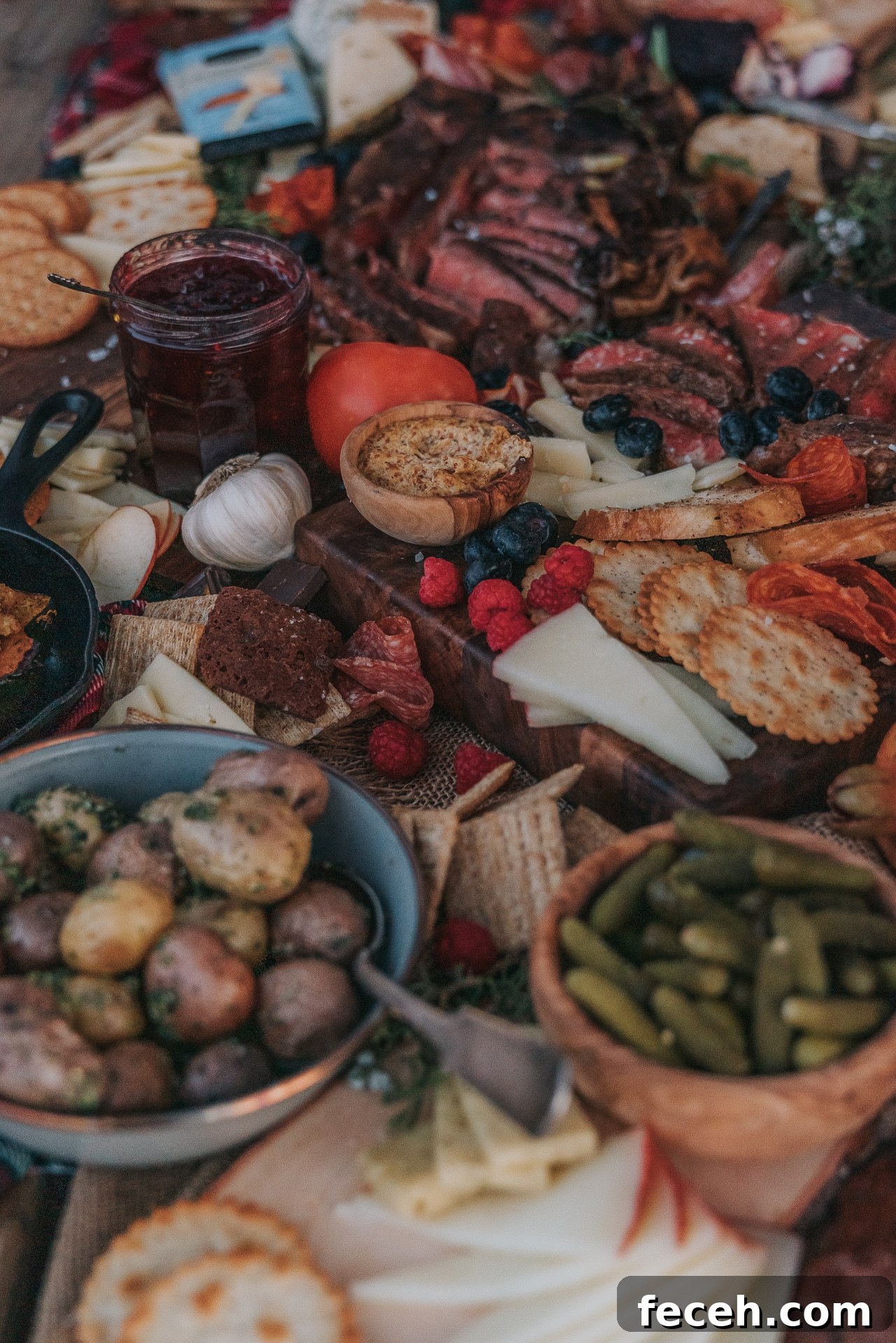
- Fruits and vegetables: Fresh berries, apple or pear slices, citrus segments, dried fruit, roasted vegetables, pickles, and gherkins add brightness and variety.
- Small bites: Nuts, chocolates, or small cookies help fill gaps and add finishing touches. Mini cupcake liners are useful for containing loose items.
- Leftovers: Use small portions of leftover grilled meats or vegetables to fill space and reduce waste.
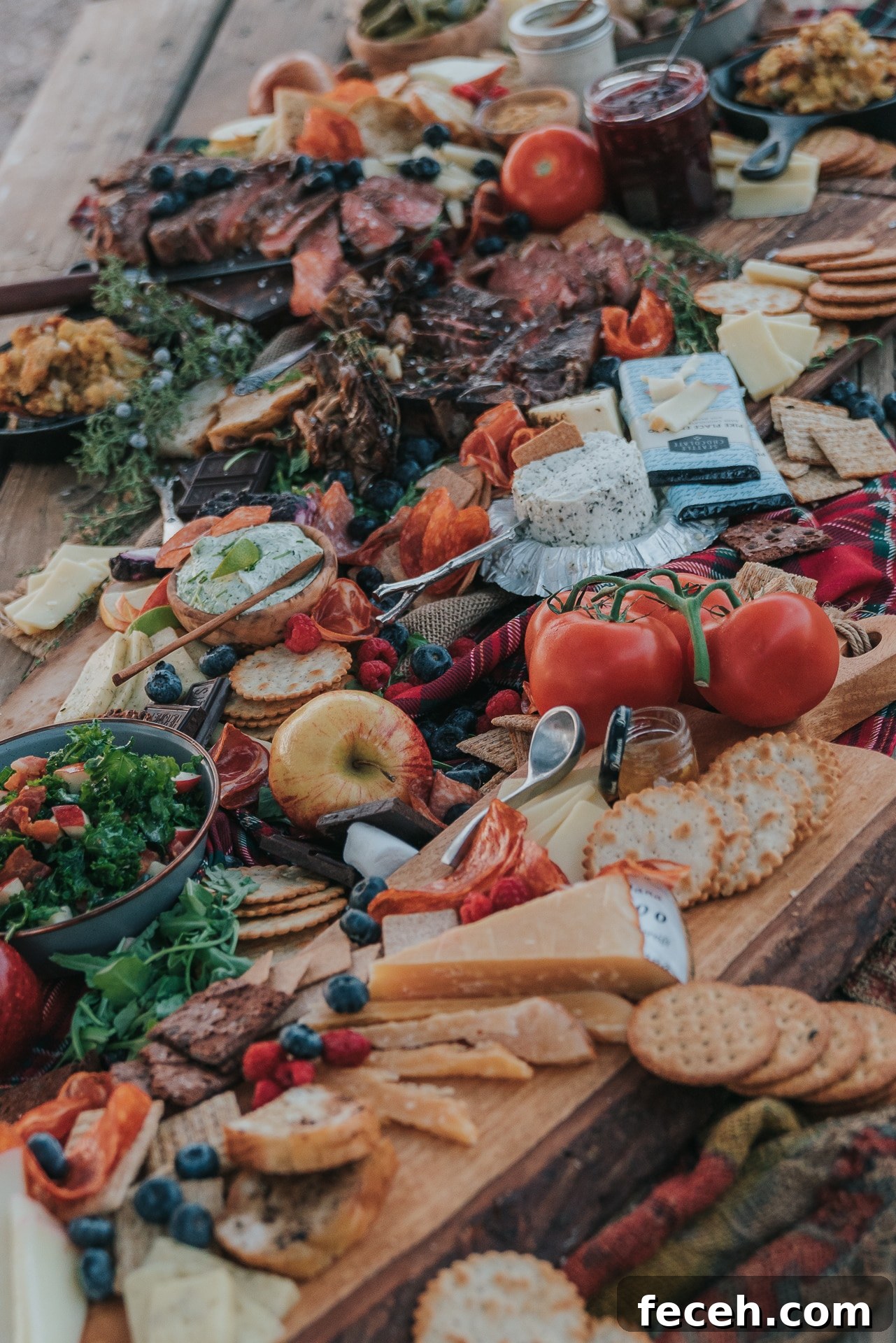
If you don’t have a single large board, combine platters, a lazy Susan, or stacked cake stands to create layers and accommodate larger groups. Lay everything out on the counter before assembling so the process takes no more than 10–15 minutes.

What You Need to Make the Perfect Charcuterie Board
Keep accessories simple to avoid overcomplicating the setup. At minimum, have:
- Toothpicks
- Serving utensils such as cheese knives
- Small bowls for dips, jams, and honey
- Napkins
- Plates
That’s all you need to serve a beautiful board. You can present items in their original containers for easy cleanup or transfer everything to separate dishes for a more polished look. Cutting boards and platters both work — once the food is arranged, guests focus on the spread, not the surface.
Styling Tip
Use fresh herbs, flowers, or sprigs to garnish and add visual interest. These small details make the board feel inviting and layered.

More Tips and Tricks for Beautiful Charcuterie Boards
- Choose a board that fits the amount of food — too large a surface makes the display look sparse.
- Use small bowls in varying sizes for dips, nuts, and condiments to add structure and contain runny items.
- Stack plates or boards to add height and depth for visual interest.
- Add a personal touch by including a favorite bite for your guests to discover.
Pair your board with simple cocktails or beverages and consider a few make-ahead items so you can enjoy the event rather than tending the table.
Helpful FAQs
Size depends on your guest list. For a small gathering, a compact board with a few cheeses and meats is fine. For larger groups, expand variety and quantity to include more textures and flavors.
Store components separately in airtight containers. Wrap cheeses and meats well, keep condiments in small jars, and refrigerate. When ready to serve, bring cheeses and spreads to room temperature for best flavor.
Most items are available at standard grocery stores. For specialty items, a local deli or specialty shop may offer unique cheeses or cured meats.
Prepare and slice components a few hours ahead and refrigerate. Keep condiments covered. Arrange the board just before serving, allowing cheeses and spreads to reach room temperature for optimal flavor.
More Delicious Appetizers to Try
Recipes With Pork
Deep Fried Mac n Cheese Balls
Appetizer Recipes
Buttermilk Brined Grilled Chicken Wings
Appetizer Recipes
Ginger Lime Sticky Wings
Beef Recipes