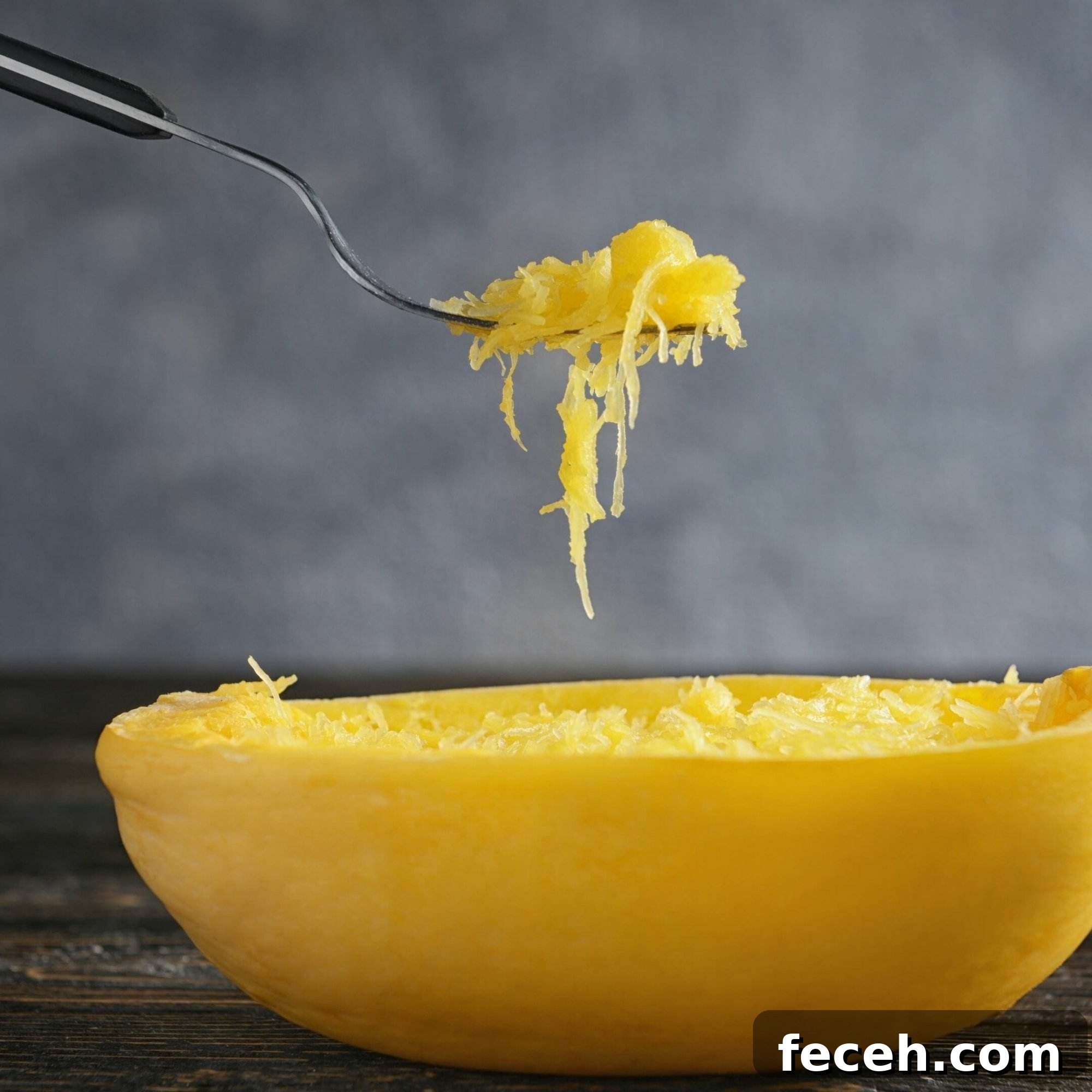
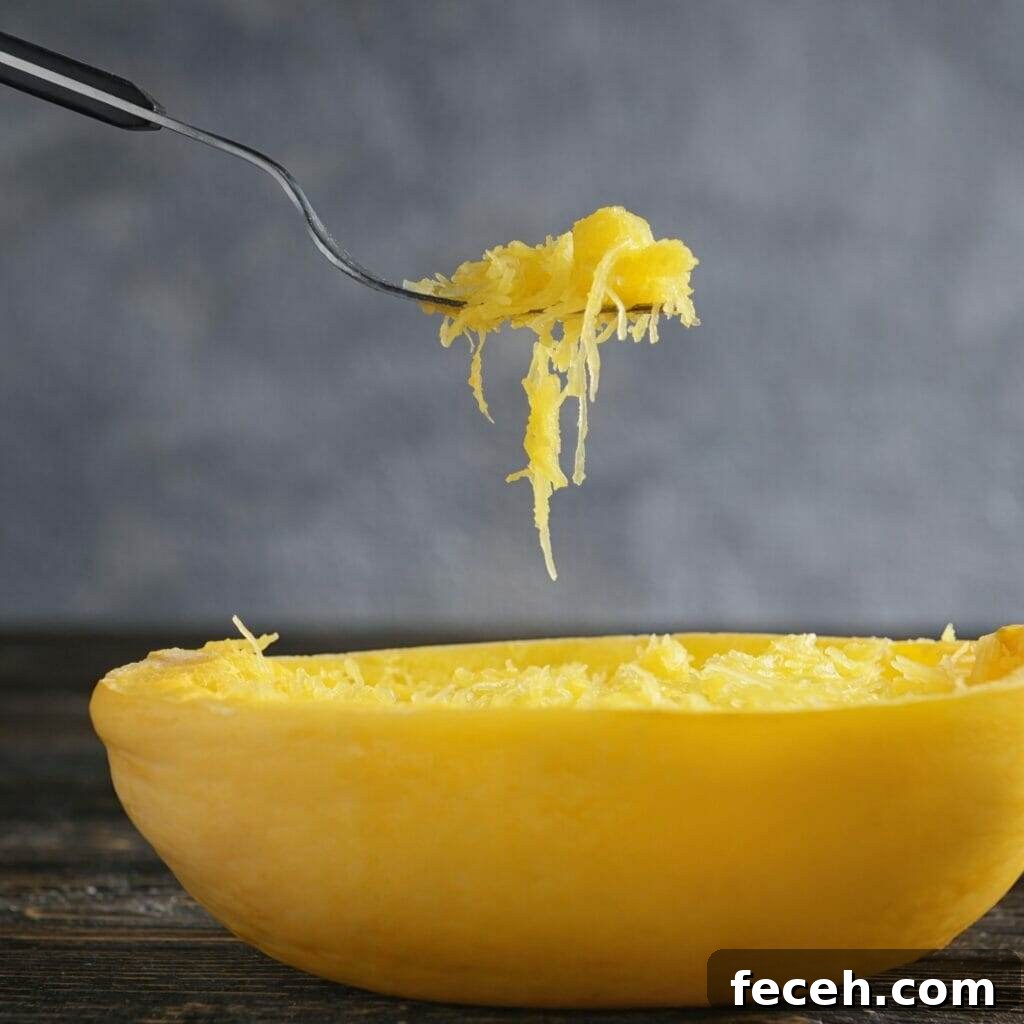
Spaghetti squash is one of the most intriguing winter squashes thanks to its stringy, spaghetti-like interior. The long, translucent strands have a mild flavor and pair beautifully with sauces, herbs and cheeses.
Also read:
Let’s be clear: spaghetti squash doesn’t taste exactly like pasta. Spaghetti is tender, while spaghetti squash has a slightly crisp, watery texture. They look similar and both work well with tomato sauce, roasted tomatoes, cheese, bacon and fresh herbs, which makes spaghetti squash a popular lower-carb, gluten-free alternative to pasta.
Spaghetti squash is nutritious too — it’s a good source of fiber, beta-carotene, folate, vitamin C and vitamin B6. Plenty of reasons to include it in your meal plan.
How to Select Spaghetti Squash
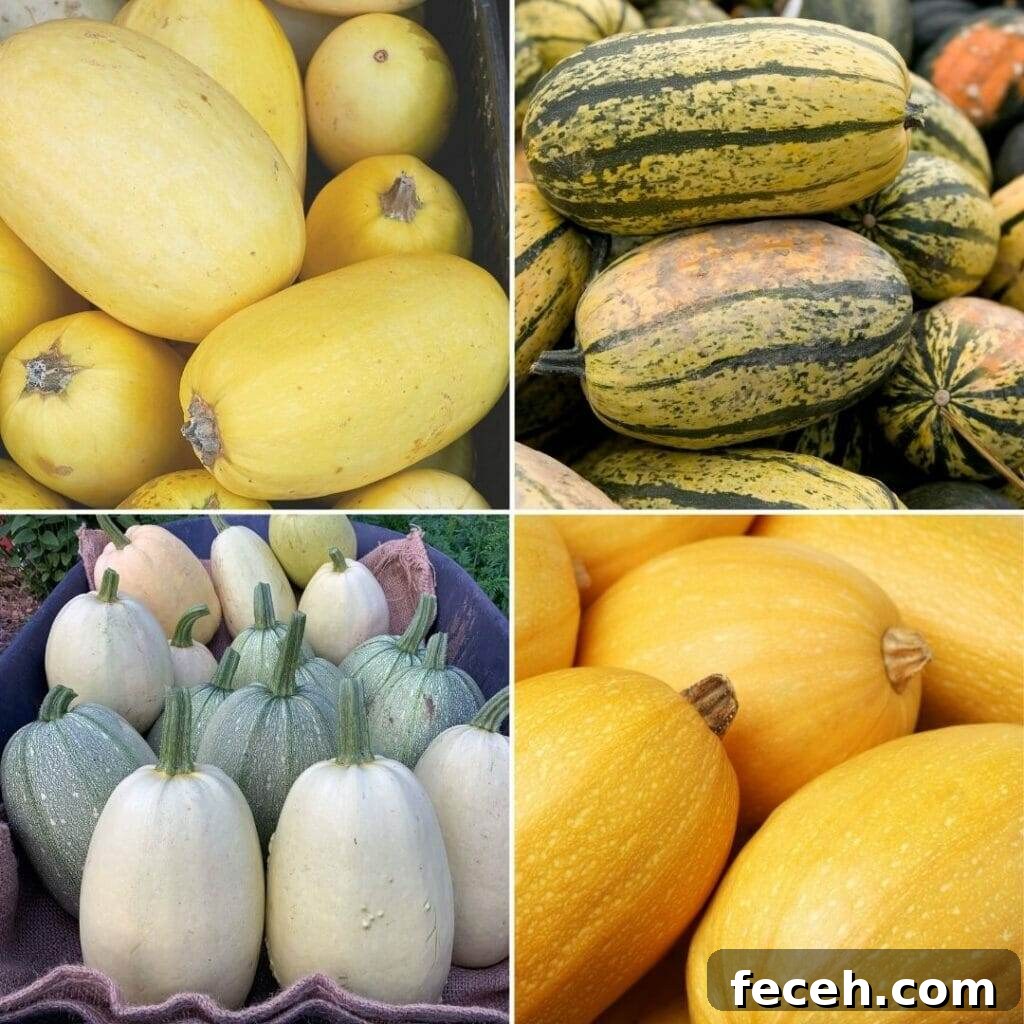
Most grocery stores carry the pale yellow variety, but farmers’ markets may offer orange, white or dark green varieties with stripes or speckles. All are fine to cook — the main difference is strand color.
Choose a ripe squash that is firm, dry and free of cracks. The rind should be dull, not shiny; shiny or green-tinged skin usually means the squash is underripe and may be watery. Pick the heaviest squash with the most uniform color and firm skin compared to the others.
How to Cut Spaghetti Squash
Cooking spaghetti squash is easy — cutting it can be the tricky part. Two safe methods are softening the rind first or using a towel and mallet to stabilize the squash.
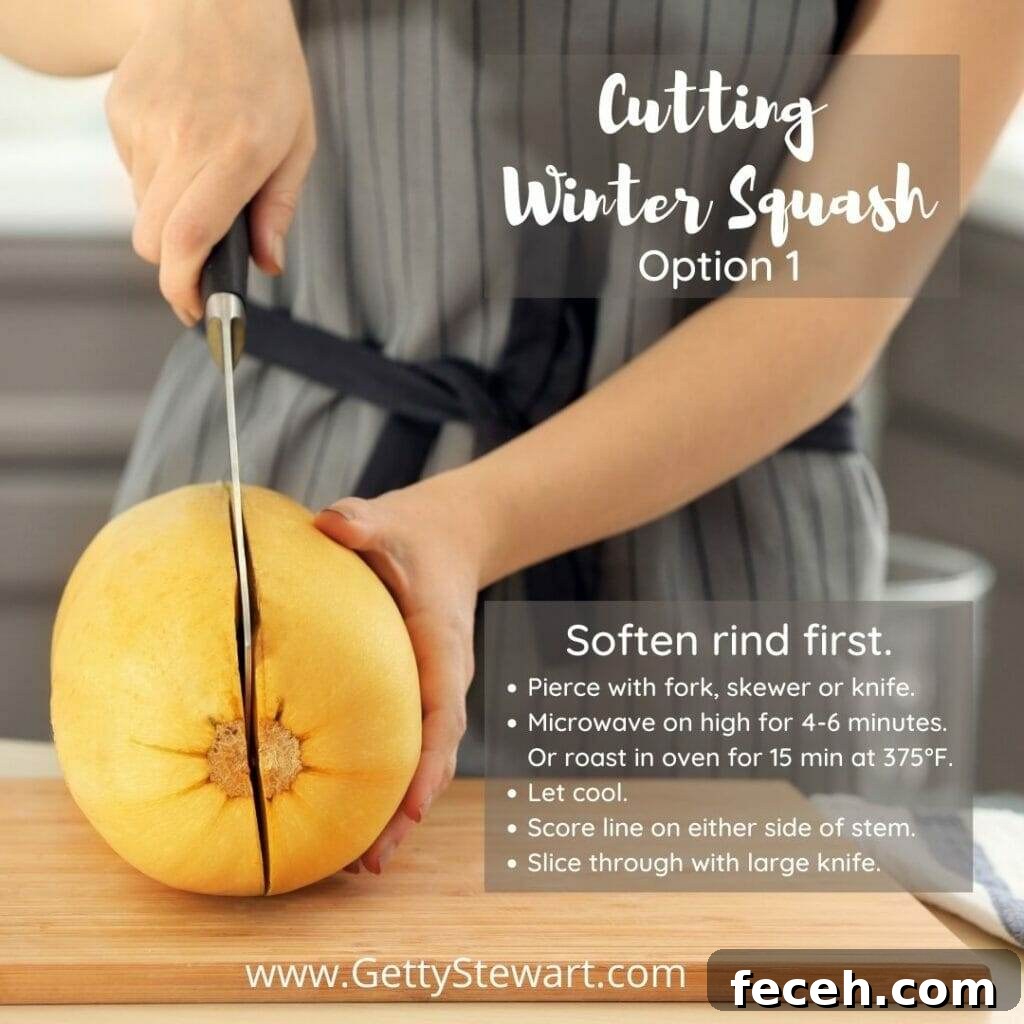
Option 1 – Soften the Rind
To make cutting safer, soften the rind in the microwave for 4–6 minutes on high. Always pierce at least 5–8 deep holes with a knife, fork or skewer before microwaving to allow steam to escape. Let the squash cool slightly before cutting; the softened rind will be easier to slice. You can use this same approach in the oven by baking the whole squash briefly to soften the skin.
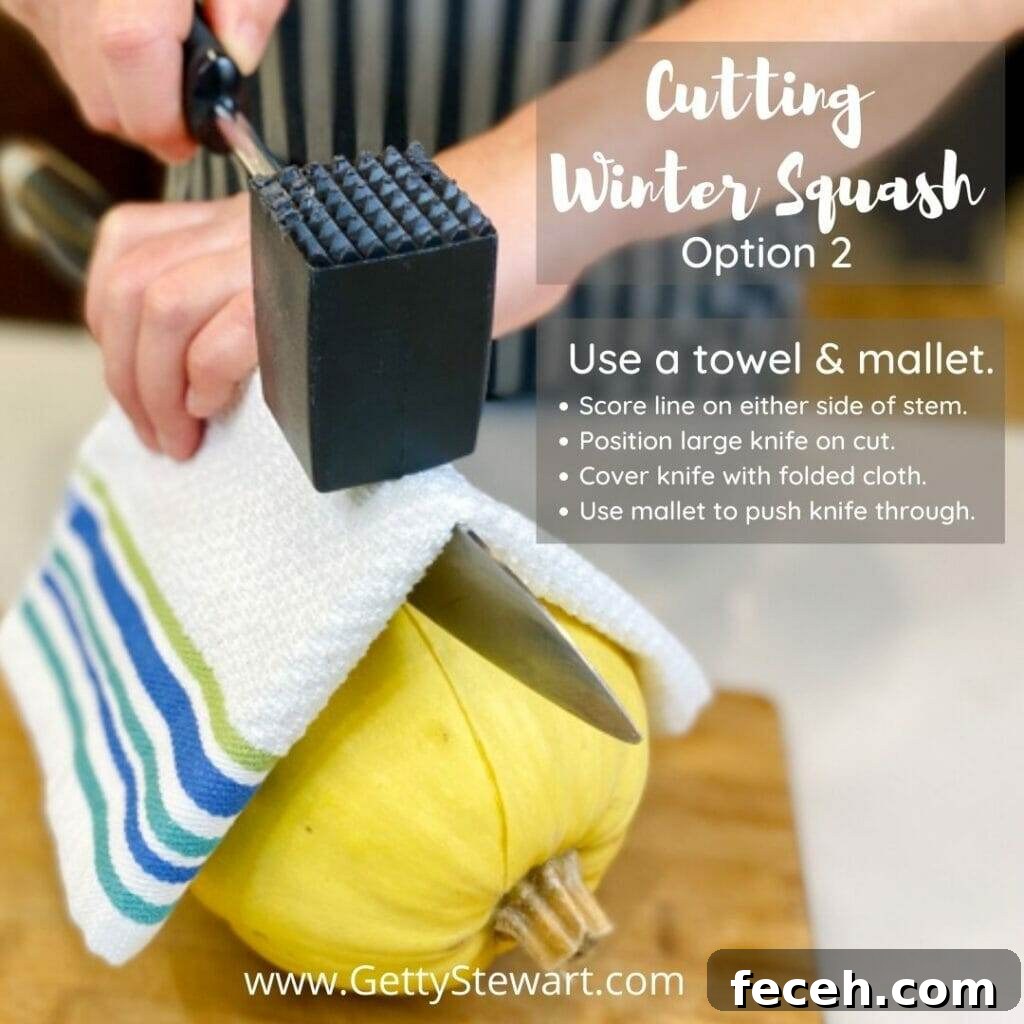
Option 2 – Use a Towel and Mallet
If you prefer not to preheat the squash, protect your hands and knife by using a towel and mallet. Score a shallow groove where you plan to cut with a paring knife to guide your large knife. Try cutting to either side of the stem to avoid the toughest part of the rind.
If you prefer not to cut raw squash at all, consider cooking it whole — just remember to pierce the skin deeply before cooking.
Video: 4 Ways to Cook Spaghetti Squash
Recipe – Cook Spaghetti Squash 4 Ways

How to Cook Spaghetti Squash
Ingredients
- 1 spaghetti squash
Instructions
In the Oven
-
Oven-roasting adds caramelization and helps evaporate liquid, giving drier strands.
-
Preheat oven to 204°C/400°F. Wash, cut and remove seeds.
-
Cut into round slices or halves, drizzle with oil, season and place cut side down on a baking sheet. Bake 40–45 minutes until a fork pierces the skin; slices take 30–40 minutes. No need to add water.
In the Microwave
-
Microwaving is fast and steams the squash without caramelization — ideal when you need cooked squash quickly.
-
Wash, cut and remove seeds. If cooking whole, pierce the skin all over.
-
Place cut side down in a shallow glass or ceramic dish with 1/2 cup (125 ml) water. Microwave on high 8 minutes, then check; continue in short intervals until tender, up to 15 minutes depending on size and microwave.
In the Instant Pot
-
Pressure cooking is a fast, efficient option whether you cook the squash whole or halved.
-
Wash, cut and remove seeds. If cooking whole, pierce the skin all over.
-
Place the squash on a trivet or in a steamer basket, cut side down. Add 1 cup (250 ml) water for a six-quart pot and 1 1/2 cups (375 ml) for an eight-quart pot. Seal and pressure cook: 8 minutes for cut squash, 15 minutes for whole squash. Use quick release when time is up.
In the Crockpot
-
The crockpot is an easy method for cooking whole squash if you plan ahead.
-
Wash and pierce the squash all over. Place in the crockpot with 1 cup water and ensure the lid fits securely.
-
For a small to medium squash (~3 lb), cook 3–4 hours on high or 5–6 hours on low. Add about an hour for larger squash; roughly 1 to 1 1/2 hours on high per pound.
Video
Nutrition Facts (per serving)
Can You Cook Whole Squash?
Yes. Cooking squash whole is a convenient option if you dislike cutting raw squash. Expect the cooked flesh to be slightly more watery because trapped steam keeps more moisture inside.
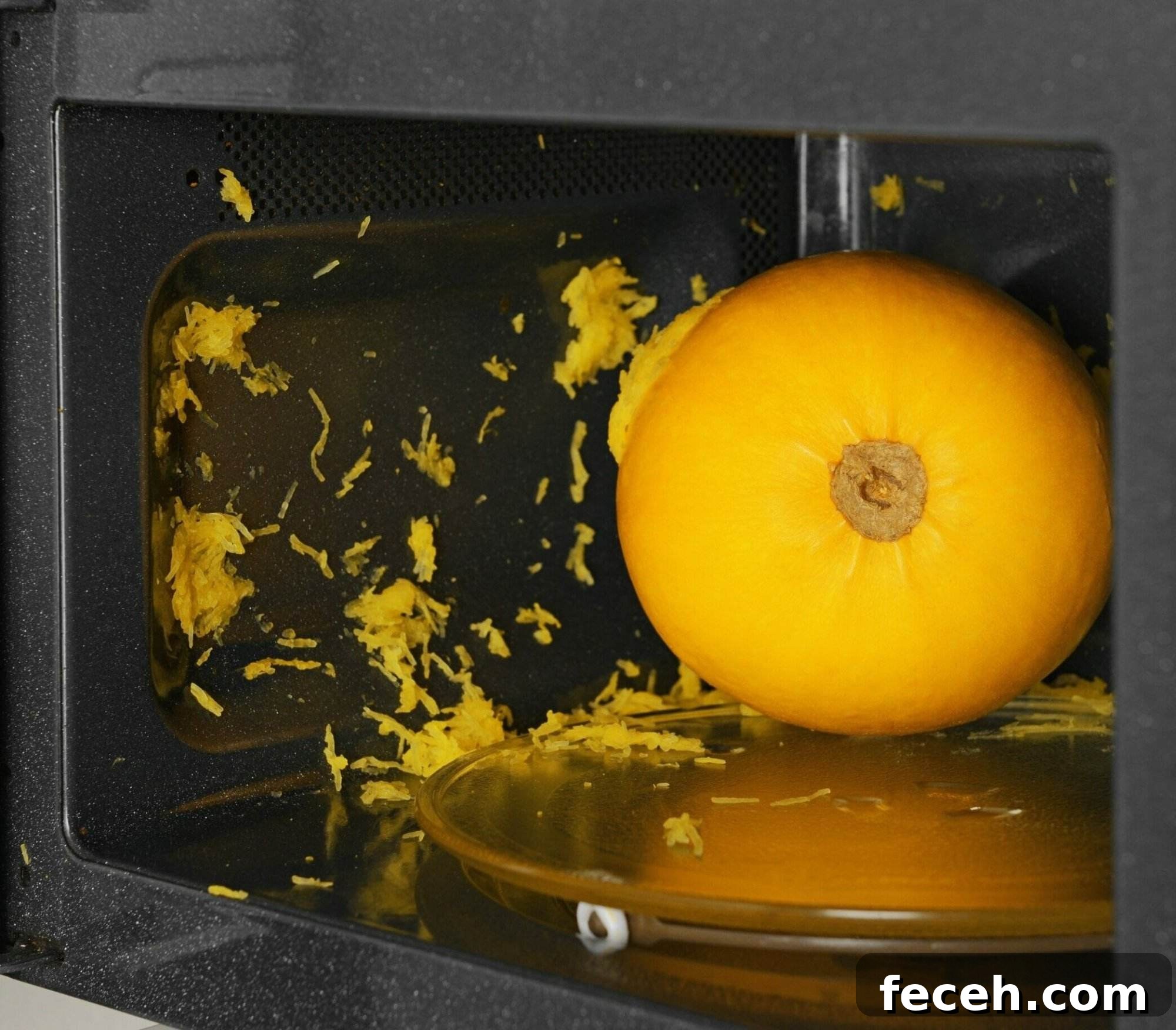
Whole squash can be cooked in the microwave, oven, Instant Pot or crockpot. Follow the same procedures above but allow extra time. Always pierce the skin deeply and all over with a knife, fork or skewer before cooking to release steam and prevent bursting.
Be careful when opening a cooked whole squash — it will be hot and steamy. Let it rest 20–30 minutes before cutting and removing seeds.
How To Get Long Strands
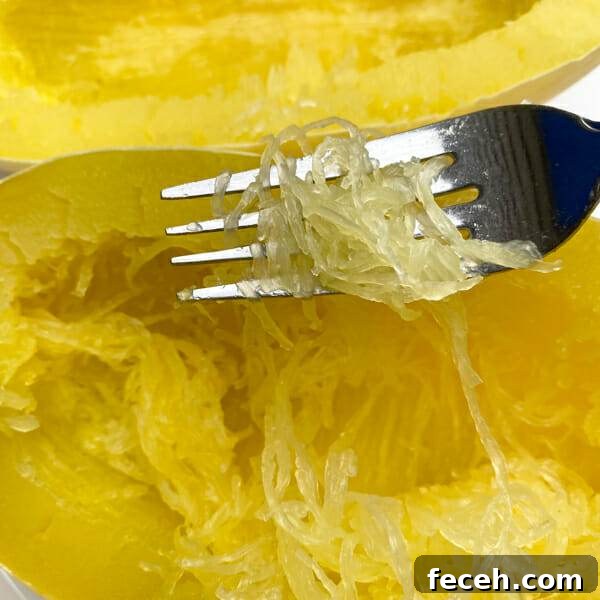
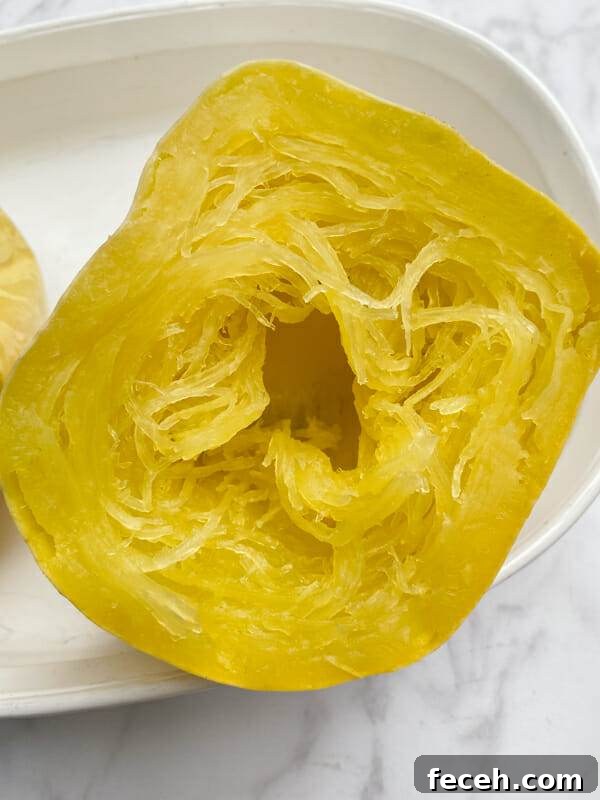
To obtain long strands, use a fork and work around the squash’s circumference. The strands naturally form in a circular pattern; following that pattern yields longer pieces. Strands are delicate and some will break, but that won’t affect the final dish.

How to Store Spaghetti Squash?
Well-cured, properly dried spaghetti squash can be stored for several months in a cool, dark place.
Cooked spaghetti squash keeps in an airtight container in the refrigerator for 3–5 days.
Can You Freeze Spaghetti Squash?
You can freeze well-drained, cooked spaghetti squash, but due to its high water content the texture may become limp after thawing.
To freeze: Cook the squash, drain it overnight in a colander or squeeze out as much liquid as possible, then pack into freezer-grade bags and freeze for up to three months. To use, thaw and reheat quickly by pan-frying, steaming or microwaving in short increments. Avoid overcooking.
Using Spaghetti Squash
Spaghetti squash works well as a side dish, a base for main courses or even as an appetizer. Many ingredients that pair with pasta also complement spaghetti squash — cheese, tomato sauce, roasted tomatoes and bacon are all excellent toppings.
Here are a few favorite recipe ideas:
- Cheesy Chicken Stuffed Spaghetti Squash
- Spaghetti Squash Mac & Cheese
- Crispy Spaghetti Squash Pancakes
- Parmesan Herb Spaghetti Squash
Looking for more Squash?

Get the ultimate Squash cookbook & resource
For a collection of recipes and practical tips, consider a focused squash cookbook that includes identification, storage, cutting methods and recipe ideas.
Now you tell me — what’s your favorite way to use spaghetti squash? Leave a comment here or share on social media; the author is active on Instagram and Facebook.