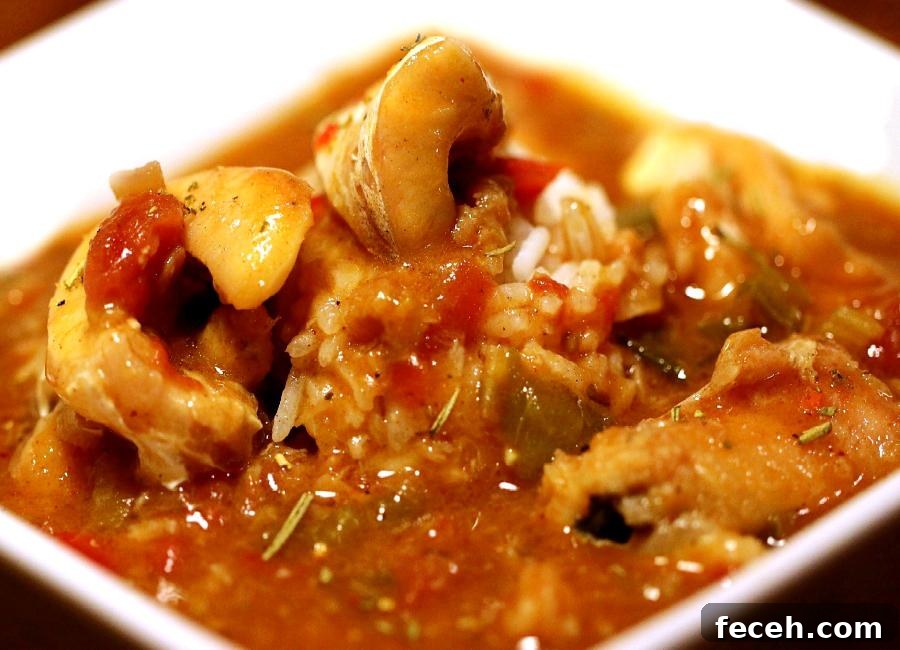
“Guest Chef” CHEF G’s CAJUN CATFISH COURTBOUILLION
A Louisiana courtbouillon (pronounced COO-be-yon) is very different from the French court bouillon. While the French version is an aromatic poaching liquid, the Louisiana Cajun courtbouillon is a thick, flavorful fish stew built on a dark roux. There is also a Creole style courtbouillon—often a whole fish, like redfish, stuffed with aromatics, topped with lemon slices, and braised in a tomato-based Creole sauce.
Before the recipe, a quick note on Creole vs. Cajun cuisine: both share French roots but have influences from Spain, Africa, Native America, the Caribbean, and parts of Europe. A key distinction lies in the roux. Creole roux uses butter and flour and tends to be light-brown or blonde. Cajun roux uses lard or oil and flour and is typically a deep, dark brown with a nutty aroma and flavor. Historically, scarcity of dairy in parts of rural Louisiana contributed to this difference.
Geography also shaped each cuisine. Creole cooking, centered around New Orleans, had access to coastal imports and diverse markets with European and Spanish influence. Cajun food developed among Acadian exiles adapting to swamps, bayous, and woodlands, making the most of wild game, fish, and local produce. As an old Cajun saying goes: “A Creole feeds one family with three chickens, and a Cajun feeds three families with one chicken.”
Back to courtbouillon: two traditional requirements make a classic catfish courtbouillon authentic and flavorful:
1. WILD CATFISH – Wild catfish (sometimes called Opelousas, yellow, or spotted catfish) has a firm, slightly gamey flavor that stands up well in the sauce. It’s preferable to pond- or farm-raised varieties.
2. A HEAVY CAST-IRON POT – A large, well-seasoned cast-iron pot is ideal. Traditional courtbouillon is not stirred; the heavy pot helps prevent scorching. Fish is added near the end and the pot is gently tilted or “twisted” rather than stirred so the delicate fillets don’t fall apart.
This version follows a common Cajun approach, scaled down for smaller portions. If you don’t have a Dutch oven, use a heavy-bottomed pot and cook over lower heat to avoid burning. Any burned bits will taint the stew, so patience and attention to the pot’s bottom are crucial. Like most tomato-based sauces, the flavor improves with time.
Understanding the origins and techniques behind regional dishes deepens appreciation and brings more passion to the kitchen—and that passion is where much of a dish’s flavor comes from.
BON APPÉTIT Y’ALL!
~Chef G
CATFISH COURTBOUILLION RECIPE
INGREDIENTS:
- 3–5 lbs catfish fillets, cut into 2-inch cubes (reserve 1/2 cup fish pieces to flavor the sauce)
- 1/2 cup oil
- 1/2 cup flour
- 1 cup chopped onions
- 1 cup chopped celery
- 1 cup chopped green bell pepper
- 1 tablespoon chopped garlic
- 1½ cups diced tomatoes
- 1/2 cup tomato sauce
- 1½ quarts fish stock
- Juice of one lemon
- 1/2 cup chopped green onions
- 2 bay leaves
- 1 tsp thyme
- 1 tsp dill
- 1 tbsp smoked paprika
- Salt and pepper to taste
- Cayenne pepper to taste (optional)
FOR FISH STOCK:
- 3 quarts water
- Fish pieces (heads, bones)
- 1 onion, quartered
- 1 stalk celery
- 2 bay leaves
- 1 tbsp peppercorns
PREPARATION:
Make the stock: place fish heads and bones in a large pot with 3 quarts water, onion, celery, bay leaves, and peppercorns. Bring to a boil, then simmer for 30 minutes, skimming any impurities. Strain and reserve 1½ quarts of stock for the courtbouillon.
In a large Dutch oven or heavy-bottomed pot, heat the oil over medium-high heat. Add the flour and whisk constantly until a dark brown roux forms. Reduce heat slightly if the roux threatens to burn. Add onions, celery, bell pepper, and garlic; sauté until vegetables are softened, about 3–5 minutes. Stir in the reserved fish pieces, diced tomatoes, and tomato sauce; cook until the fish begins to break down into the roux mixture.
Gradually add the fish stock, a ladle at a time, blending it into the roux and vegetables. Add lemon juice, bay leaves, thyme, dill, and smoked paprika. Bring to a boil, then lower to a simmer and cook about 30 minutes to develop flavor. Stir in green onions and season with salt, pepper, and cayenne if desired. Gently add the cubed catfish fillets and cook 3–4 minutes, until just done. Remove from heat, adjust seasoning if needed, and serve over steamed white rice.
Chef Derrill Guidry (Chef G) is a native of southwest Louisiana and a self-taught cook who now lives in Cincinnati. He began experimenting in the kitchen around age six and later traveled extensively, including while serving as a commissioned officer in the U.S. Army, retiring in 2011 after 21 years. From fine dining in Hong Kong to street markets in Saudi Arabia and meals near the Pyramids at Giza, Chef G has absorbed many flavors and techniques. His cooking blends sophistication with approachability, focusing on simple, satisfying dishes.
Chef G is currently developing his first cookbook while exploring Cincinnati’s culinary scene.
CONTACT: [email protected]
BLOG: http://thegspotculinary.com
PINTEREST: http://www.pinterest.com/spook06/my-foods-the-g-spot/
FB: https://m.facebook.com/profile.php?id=259194292533&ref=bookmark