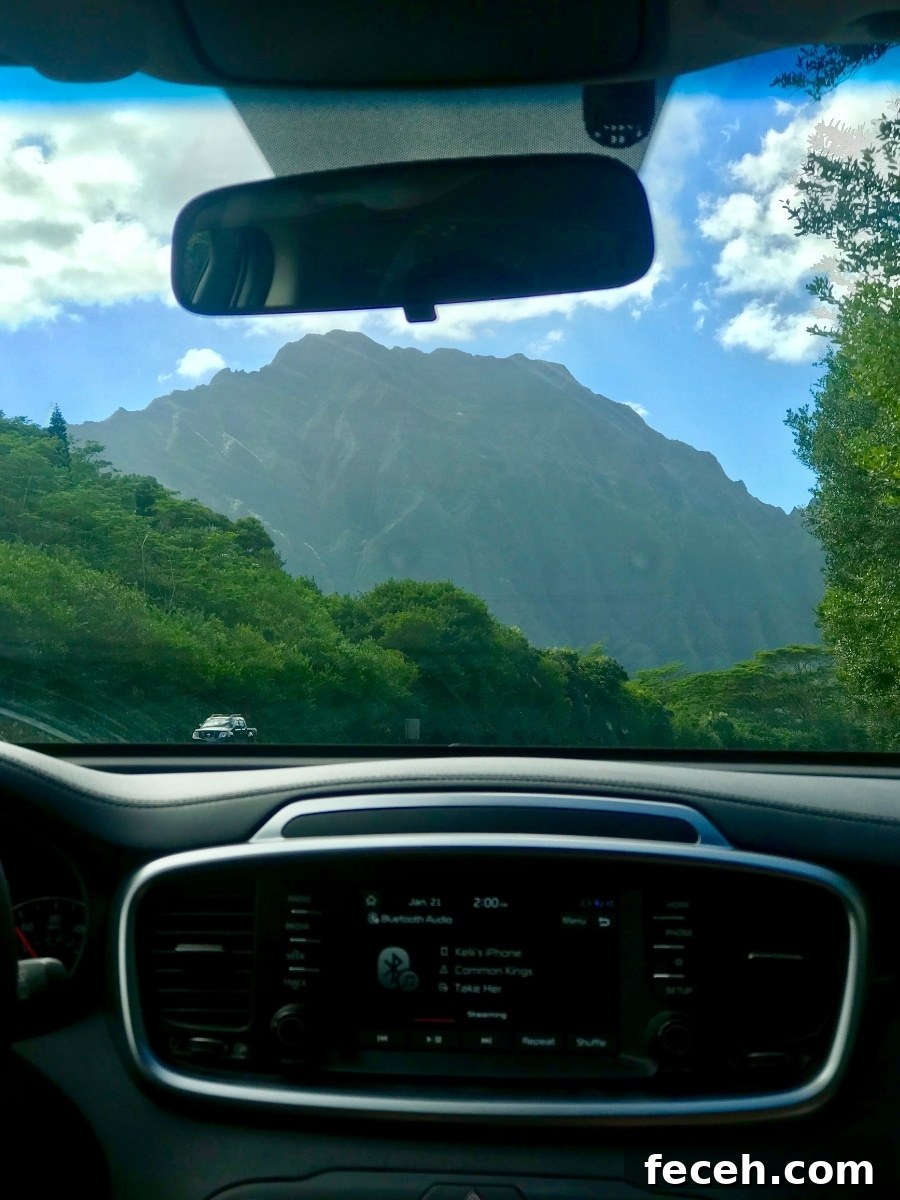
From winding coastal highways to busy city streets, driving in Hawaiʻi requires awareness and courtesy — here’s how to stay safe on the road.
Oʻahu is a compact island—about 44 miles (70 km) long and 30 miles (48 km) wide—making it easy to get around while offering a variety of transport options for visitors and locals alike.
TheBus is the island’s most affordable public transit option, with single fares typically costing around $3. For a relaxed sightseeing experience, consider the Waikīkī Trolley. Taxis, rideshares like Uber and Lyft, and Biki, the local bike-share program, are also widely available.
If you want a bit more adventure, mopeds, scooters and scoot coupes (two-person, three-wheel mopeds) are popular choices for short excursions. Many visitors staying in Waikīkī rent a car for day trips to explore the island beyond the urban core. Driving across Oʻahu delivers rewarding mauka-to-makai (mountain-to-ocean) views, but it also demands attention and respect for local road habits.
To ensure a safe, enjoyable trip, stay focused behind the wheel and follow these practical driving and pedestrian safety tips.
Drive Safe on Oʻahu
- Drive on the right: In Hawaiʻi vehicles drive on the right-hand side of the road and speed limits use miles per hour (mph). Familiarize yourself with local rules by consulting the Hawaiʻi Driver’s Manual.
- Car rental basics: Most rental companies in Hawaiʻi require drivers to be at least 21. Drivers aged 21–25 may face a young driver surcharge and restrictions on certain vehicle types. A credit card is usually required; cash rentals are uncommon.
- Drive with aloha: Follow local courtesy—observe speed limits, avoid tailgating and yield appropriately. On single-lane bridges, yield to oncoming traffic when required.
- Avoid unnecessary honking: Honking is generally reserved for emergencies or brief greetings among people who know each other. Stay calm and avoid using your horn unless necessary.
- Never drink and drive: Driving under the influence of alcohol or drugs is illegal and strictly enforced.
- Pull over to use your phone: Except for emergency calls to 911, using electronic devices while operating a vehicle is illegal. Do not hold your phone, text, or talk while driving.
- Seat belts and child restraints: Hawaiʻi law requires all front and rear passengers to wear seat belts. Children under 4 must use an appropriate child safety seat; children 4 to 8 must use a booster seat.
- Watch for pedestrians: Be alert for pedestrians who may be obscured by stopped vehicles on multi-lane roads. Give them space and always slow down near crosswalks.
- International drivers: Visitors may drive with a valid foreign driver’s license written in English for up to one year from the passport entry date. Learner or provisional permits are not accepted. If your license is not in English, obtain an International Driving Permit (IDP) as a translation; check with your rental company beforehand for specific requirements.
Adhere to Bicycle Etiquette
- Obey road rules: Bicyclists must follow the same traffic signs and signals as motorists. Review local road rules before riding.
- Ride with traffic: Use bicycle lanes where available and ride in the same direction as traffic. Avoid riding on sidewalks in business areas; where sidewalks are permitted, keep speeds under 10 mph (16 km/h) and yield to pedestrians.
- Helmet requirements: Helmets are required for bicyclists under 16 and for scooter or motorcycle riders under 17. Adults are not legally required to wear helmets but doing so is strongly recommended for safety.
Watch Out for Pedestrians
- Know pedestrian safety practices: Learn and follow local pedestrian guidance to stay safe when walking around Oʻahu.
- Avoid standing too close to curbs: Large vehicles or protruding mirrors can strike people standing near the curb—keep a safe distance.
- Use crosswalks: Jaywalking is illegal and can result in a fine. Always use marked crossings when available.
- Caution at uncontrolled crossings: A marked crosswalk does not guarantee that drivers will stop. Make eye contact with drivers when possible and proceed only when it is safe.
- Steps for a safe crossing: Stop, look left-right-left, listen, and cross only when the way is clear. Continue to watch for traffic while crossing.
- Follow signal prompts: Do not start walking when the crosswalk countdown is flashing. Cross when the walk signal (usually a walking person icon or white figure) is displayed.
- No phones while crossing: Hawaiʻi enforces distracted walking laws. Using a phone while crossing the street may result in a fine, so keep devices stowed until you reach the other side.
By following these road, bike and pedestrian safety tips, you’ll enjoy a safer, smoother journey as you explore Oʻahu’s stunning landscapes and vibrant communities — enjoy the ride!
Please Follow Us @WAIKIKIBEACHSTAYS
Read Next
- Hawaiʻi Land Safety Tips
- Hawaiʻi Ocean Safety Tips
- Hawaiʻi Travel Safety Tips