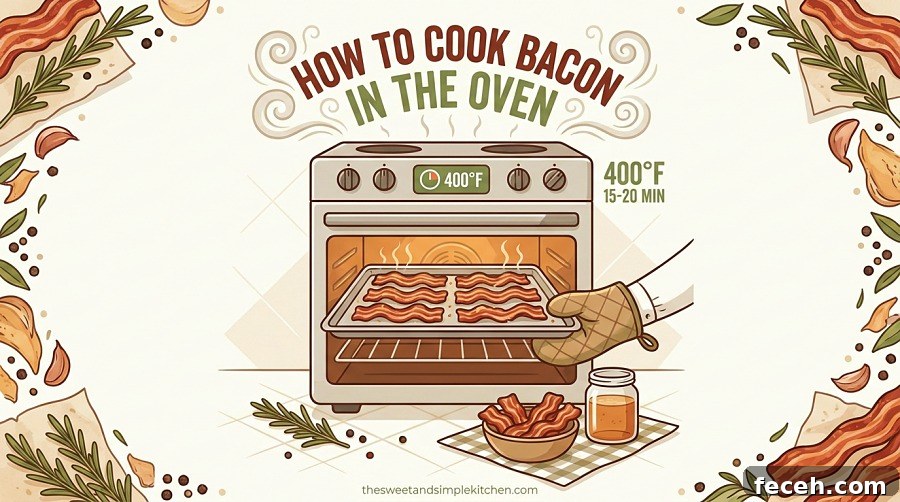
If you’ve ever stood at the stove dodging grease splatters only to end up with bacon that’s burnt at the edges and floppy in the middle, you’re not alone. After years of weekend brunches and feeding holiday crowds, I traded the skillet for the oven. The oven wins—every time.
To cook crispy bacon in the oven, line a rimmed baking sheet with parchment or foil, lay the strips in a single layer, and bake at 400°F (204°C) for 14–16 minutes for regular-cut bacon, 18–20 minutes for thick-cut. No flipping required. Drain on paper towels for a final crisp-up. That’s the whole method.
This guide covers the exact temperature, timing, and pan setup that produces golden, shatter-crisp bacon without stovetop drama. I’ll also explain why the oven delivers better texture, when to use a wire rack, and how to handle thick-cut, thin-cut, peppered, candied, or maple-glazed bacon so you get consistent results.
Table of Contents
At-a-Glance Cheat Sheet
| Bacon Type | Oven Temp | Time | Notes |
|---|---|---|---|
| Thin-cut | 400°F | 12–14 min | Watch closely after 10 min |
| Regular-cut | 400°F | 14–16 min | Best for most packaged bacon |
| Thick-cut | 400°F | 18–20 min | Add 2–3 min for extra-crisp |
| Thick-cut (cold start) | Set to 425°F | 22–25 min | Renders fat slowly, less curl |
| Turkey bacon | 400°F | 10–12 min | Less fat — dries out fast |
| On a wire rack | 400°F | Add 2–3 min | All-around crispness |
Why Bake Bacon Instead of Frying It?
The oven delivers four clear advantages over the stovetop:
- Even cooking from all sides — circulating heat browns each strip uniformly instead of leaving one end floppy.
- No grease splatter — fat renders into the pan rather than jumping onto your stovetop and walls.
- Hands-free cooking — set the timer and attend to other tasks.
- Big-batch capacity — a single sheet pan can handle a pound of bacon, and two pans will feed a crowd.
That’s why many diners and brunch spots use the oven: it reliably produces flat, restaurant-style strips—straight, crisp, and evenly browned.
A Quick Bit of Science (Why Bacon Tastes So Good in the Oven)
The rich aroma and deep flavor come from the Maillard reaction, a chemical process that develops between about 280–330°F (140–165°C). Baking bacon at 400°F keeps the meat in that flavor-building window longer than a hot skillet flame typically does, so oven bacon often tastes deeper and more complex. As fat renders slowly and browns, it produces dozens of aroma compounds; the oven’s even heat encourages those compounds to develop without scorching.
What You’ll Need
Most of this is likely already in your kitchen.
Equipment
- One large rimmed baking sheet (a half-sheet, about 18×13 inches, fits a full pound)
- Parchment paper or heavy-duty aluminum foil
- Optional: an oven-safe wire rack that fits inside the sheet pan
- Tongs
- Paper towels and a plate for draining
- A heat-safe jar if you plan to save the bacon grease
Ingredients
- 1 package of bacon (roughly 12 ounces, 8–14 slices depending on thickness)
- No oil or butter needed—the bacon renders its own fat.
Pro shopping tip: Choose bacon with clear pink meat and white fat, ideally a thick-cut smoked variety for maximum flavor. Quality affects the final result more than technique.
How to Cook Bacon in the Oven — Step by Step
This straightforward method works in any standard oven and with any brand of bacon.
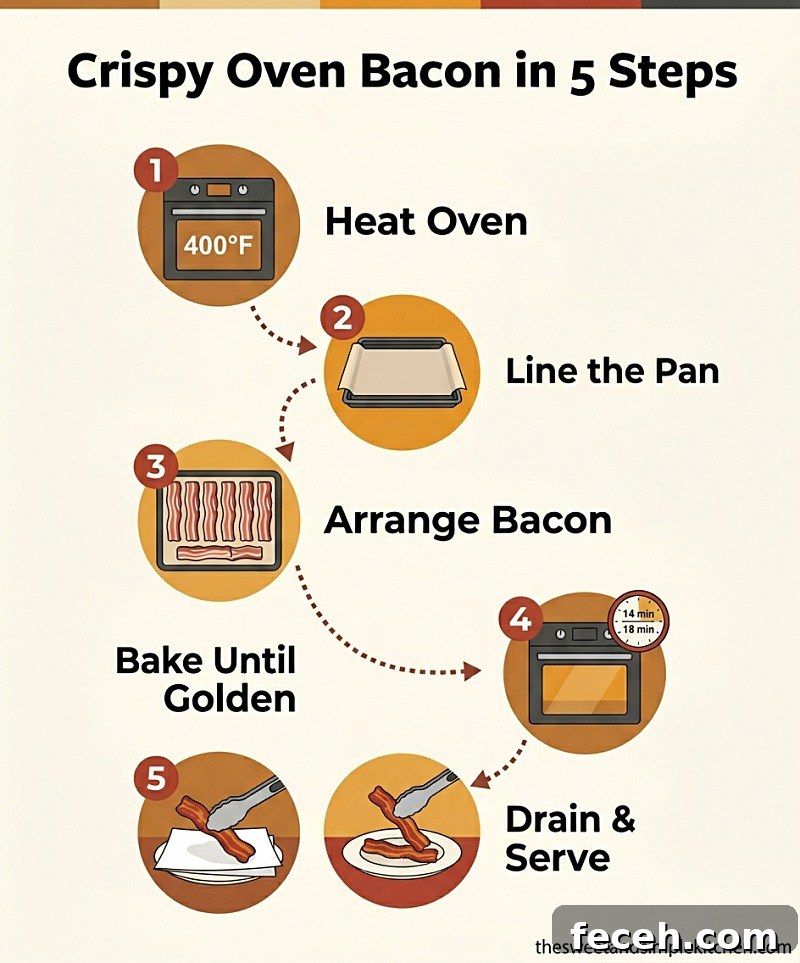
Step 1: Heat the Oven to 400°F (204°C)
Place a rack in the center position. If using two pans, place them in the upper-third and lower-third positions and rotate halfway through. 400°F is the sweet spot—hot enough for good browning without scorching. You can adjust between 375°F and 425°F depending on how fast or gentle you want the cook to be.
Step 2: Line the Baking Sheet
Line a rimmed sheet pan with parchment or heavy-duty foil, letting the corners overhang. The liner catches grease and makes cleanup easy. Foil is sturdier for saving grease; parchment is nonstick and convenient. Always use a rimmed pan to avoid greasy oven spills.
Step 3: Arrange the Bacon
Lay strips in a single layer. They can touch lightly but should not overlap—bacon shrinks as it cooks, and overlapping causes uneven cooking and fused strips.
Step 4: Bake
Slide the pan onto the center rack and bake:
- Regular-cut: 14–16 minutes
- Thick-cut: 18–20 minutes
- Thin-cut: 12–14 minutes
Start checking at 12 minutes. Look for deep golden-brown strips with translucent, bubbly fat. The bacon will crisp a bit as it cools, so it’s safer to pull slightly early than to overcook.
Step 5: Drain and Serve
Use tongs to transfer bacon to a paper-towel-lined plate and let it rest 1–2 minutes to finish crisping. Serve immediately or store as directed below.
Should You Use a Wire Rack?
It depends on your texture preference.
Use a rack if:
- You want uniformly crisp bacon with no chewy spots
- You’re cooking thick-cut and want full fat rendering
- You don’t mind washing the rack afterward
Skip the rack if:
- You prefer a slightly tender center
- You want the easiest cleanup
A rack allows air to circulate under the strips so both sides crisp evenly; the trade-off is slightly more cleanup. If you use a rack, spray it lightly with nonstick spray and soak it promptly after cooking.
The Cold-Oven Method (Worth Trying)
For flatter, less-curled strips, try starting in a cold oven. Place the lined pan with raw bacon in a cold oven, then set to 400–425°F. The gradual heat-up renders fat slowly and produces even crispness with less curling.
Cold-oven timing: set to 425°F and check at about 20 minutes for regular-cut and 25 minutes for thick-cut. Total cook time is roughly 5 minutes longer than the preheated method, but the texture can be superior—especially for thick-cut bacon.
Cooking Times Decoded: A Deeper Look
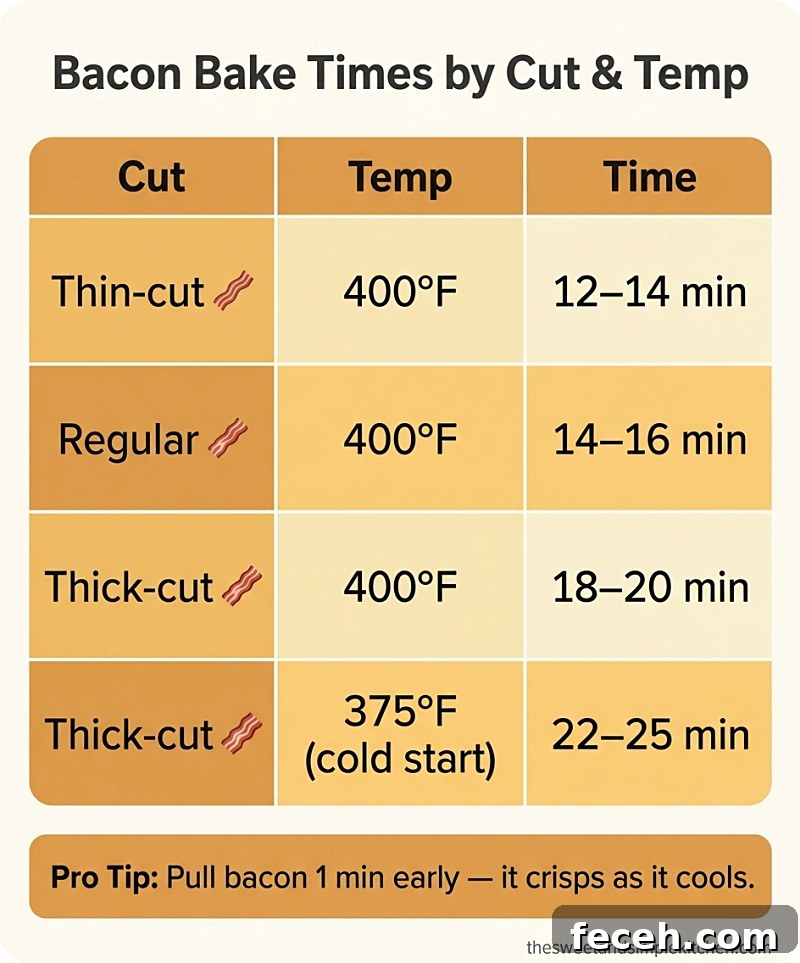
Bake times vary with thickness, your oven’s actual temperature, and desired crispness. Use the chart above as a starting point and adjust after one or two trials. A simple tip: write the time and temp that worked on a sticky note in your kitchen for future reference.
Crispy vs. Chewy: How to Get Either
Oven bacon lets you dial texture precisely:
- Chewy: Pull when strips are just turning golden and fat is still slightly translucent—about 1–2 minutes earlier.
- Standard crisp: Deep golden-brown, fat mostly rendered, edges rippling.
- Shatteringly crispy: Dark amber with fat fully rendered; watch closely in the final minutes to avoid burning.
If preferences vary at the table, pull a few strips early for the chewy eaters and leave the rest to crisp.
Is My Bacon Cooked Through? (Food Safety, Briefly)
Bacon should be cooked completely before eating. Visual cues are reliable: raw pink meat turns rich brown, white fat becomes translucent gold, and strips firm up. Cured bacon can retain a slight pink color even when fully cooked; trust texture as your primary indicator.
7 Common Mistakes That Wreck Oven Bacon
- Overlapping strips. They fuse and cook unevenly.
- Using a flat sheet without rims. Grease can spill and cause smoke.
- Skipping the liner. Cleanup becomes a chore.
- Walking away too long. Start checking at 12 minutes—the last few minutes matter.
- Pouring hot grease down the drain. Let it cool and store or dispose properly.
- Cooking from frozen. Thaw in the fridge for even cooking.
- Not letting it rest. Bacon crisps as it cools—give it a minute.
Pro Tips From My Kitchen
- For flat strips: Press gently with a fork in the first two minutes or use the cold-oven start.
- For more flavor: Sprinkle cracked black pepper or brown sugar (about 1 teaspoon per 4 strips) partway through baking.
- For maple-glazed bacon: Brush with maple syrup at the 10-minute mark to avoid burning.
- Meal prep: Bake a pound on Sunday—crumble for salads or keep whole for sandwiches.
- Save the grease: Strain warm rendered fat into a jar and refrigerate—it’s great for roasting vegetables and cooking eggs.
How to Store, Freeze, and Reheat Cooked Bacon
Refrigerator: Cool completely, store in an airtight container or zip-top bag for 4–5 days. Remove excess air.
Freezer: Freeze strips flat on a parchment-lined pan for 1–2 hours, then transfer to a freezer bag; keeps about one month for best quality.
Reheating options:
- Oven (best): 350°F for 3–5 minutes on a foil-lined sheet to restore crispness.
- Air fryer: 350°F for 2–3 minutes.
- Microwave: 10–15 seconds per strip on a paper towel for a quick reheat.
- Skillet: Cold pan, medium-low heat, 1–2 minutes per side.
Variations Worth Trying
- Peppered bacon: Coat with coarse cracked pepper before baking.
- Brown sugar bacon: Sprinkle ½ teaspoon brown sugar per strip after about 8 minutes.
- Spicy candied bacon: Brown sugar plus cayenne and black pepper for sweet-heat-savoury balance.
- Maple-bourbon glaze: Brush with maple syrup and a splash of bourbon at the 10-minute mark.
- Bacon-wrapped items: Partially bake strips 6–8 minutes, then wrap around dates, asparagus, or chicken before finishing in the oven so they crisp fully.
Frequently Asked Questions
Do I need to flip bacon in the oven?
No. Oven circulation cooks both sides evenly. Rotating the pan halfway through can help in ovens with hot spots, but flipping individual strips isn’t necessary.
What temperature should I use to cook bacon in the oven?
400°F (204°C) is the ideal balance for color and rendering. Adjust between 375°F and 425°F depending on desired speed and texture.
How long does bacon take to cook at 400°F?
Regular-cut: 14–16 minutes. Thick-cut: 18–20 minutes. Thin-cut: 12–14 minutes. Begin checking at 12 minutes.
Can I cook bacon in a cold oven?
Yes. Place the lined pan in a cold oven, then set the temperature to 400–425°F. The gentle heat-up renders fat more evenly and reduces curling; total time is roughly 5 minutes longer than the preheated method.
Should I use parchment paper or foil?
Both work well. Foil is more robust for catching and saving grease; parchment is nonstick. Heavy-duty foil with corners folded up is a practical default.
Why is my oven bacon not crispy?
Common causes: overlapping strips, a cool-running oven, or pulling bacon too early. Remember bacon continues to crisp slightly as it cools.
Can I cook frozen bacon in the oven?
It’s safe but not ideal—frozen bacon cooks unevenly. Thaw in the refrigerator overnight for best results.
How do I keep bacon from curling in the oven?
Two effective methods: bake on a wire rack to support both sides, or use the cold-oven start so fat renders slowly and the lean meat doesn’t tighten abruptly.
Is it OK to save the bacon grease?
Yes. Strain warm grease into a heatproof jar, cool, and refrigerate. It’s useful for roasting vegetables, frying eggs, or starting soups and can keep in the fridge for months.
How long does cooked bacon last in the fridge?
Cooked bacon lasts 4–5 days in an airtight container in the refrigerator. In the freezer, quality is best for about one month.
Can you cook bacon in a convection oven?
Yes—convection speeds cooking and increases crispness. Reduce the temperature by 25°F (so 375°F instead of 400°F) and check a few minutes earlier.
What’s the safe internal temperature for cooked bacon?
Pork should reach at least 145°F (63°C) for safety. Crisp oven bacon will exceed that temperature; visual and texture cues are reliable indicators.
A Few Recipes That Use Oven-Baked Bacon Beautifully
Once you’ve baked a pound of bacon, use it in countless ways: crumble over baked potatoes, layer on a BLT, stir into pasta with a parmesan-cream sauce, top a wedge salad, or wrap par-cooked strips around dates stuffed with goat cheese for an appetizer. Cook once and use throughout the week.
Final Thoughts: Why You’ll Never Go Back
After a few successful oven bakes, the stovetop will feel like extra work. No splatter, no flipping, no babysitting—just a sheet pan, a timer, and consistently great bacon. The next time someone in your house asks how to cook bacon without a mess, you’ll have the answer. Welcome to the club.
Save this guide—it’s the only oven-bacon method you’ll need for big-batch breakfasts or holiday brunches.