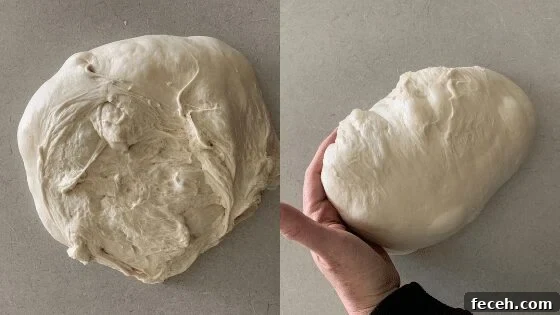
Sourdough hydration may sound complicated, but it’s simpler than it seems. Even if you’re new to sourdough, you can learn to calculate and adjust hydration for your recipes—often without a calculator.
Below is a clear, practical guide to understanding hydration, how it affects your loaves, and tips for adjusting water content. A short FAQ at the end answers common questions to help you gain confidence with hydration and dough handling.
What is Sourdough Hydration and Why is it Important?
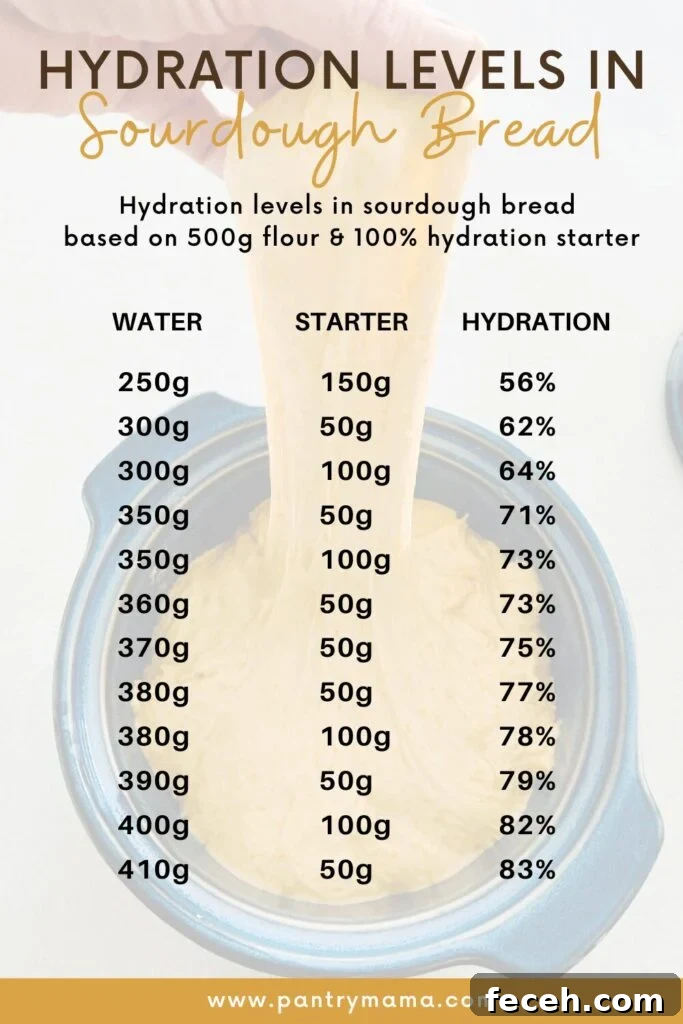
Sourdough hydration is simply the ratio of water to flour in a recipe, expressed as a percentage. Knowing the hydration of your dough helps you predict how the dough will feel, how easy it will be to shape, and how the final crumb and crust will turn out.
Basic calculation for hydration:
(Weight of water ÷ Weight of flour) × 100
For example: 350 g water ÷ 500 g flour × 100 = 70% hydration.
Include the water and flour from your starter when calculating overall hydration. For example:
Water
25 g from starter
350 g from recipe
TOTAL 375 g
Flour
25 g from starter
500 g from recipe
TOTAL 525 g
375 g water ÷ 525 g flour = 0.714 → 0.714 × 100 = 71.4%
There are online tools that automate these calculations, but understanding how hydration works will help you interpret recipes and adjust them to get the results you want.
Start With a Lower Hydration and Work Up
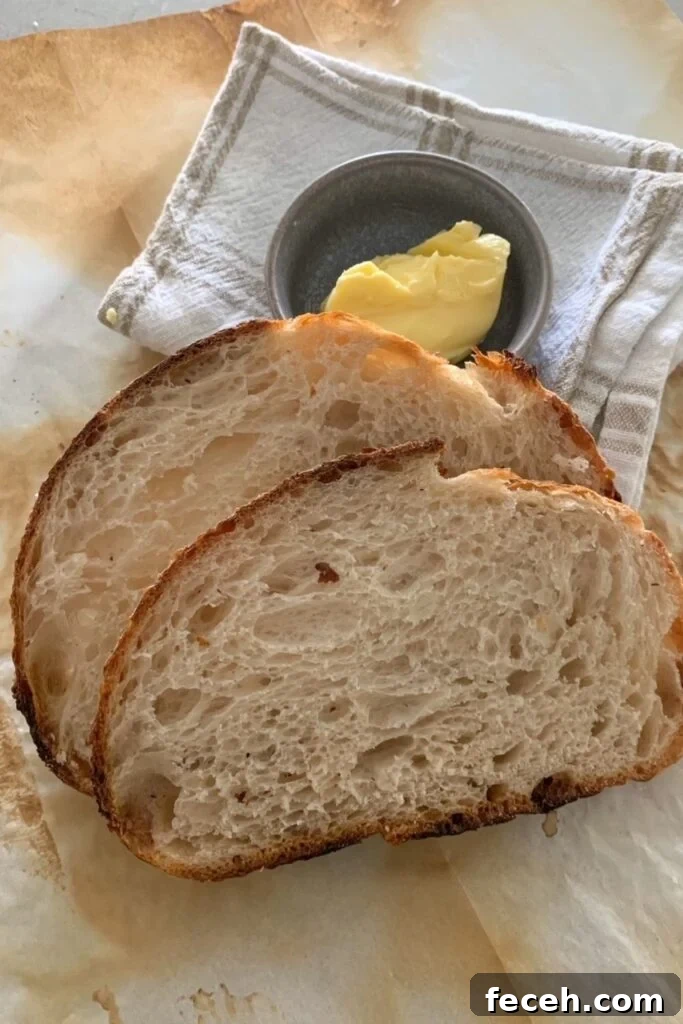
Lower-hydration doughs are generally easier to handle and are a good starting point for beginners. A typical beginner recipe sits around 67–70% hydration, which gives manageable dough and reliable results.
After you’ve mastered the basics, you can gradually increase hydration to achieve different textures. If you’re happy with your current loaves, there’s no need to change them—raising hydration is optional and often more of a personal challenge than a necessity.
As you experiment, keep in mind that the amount of starter can change fermentation speed, so you may adjust starter percentages depending on ambient temperature and timing.
Benefits of Higher Hydration Sourdough
Higher hydration doughs can be trickier to handle, but they offer several advantages when managed correctly:
- Thinner, crisper crusts: Higher water content tends to produce a crust that’s less chewy and more delicate.
- Faster fermentation: More water generally accelerates fermentation, so timing and starter amount become more important.
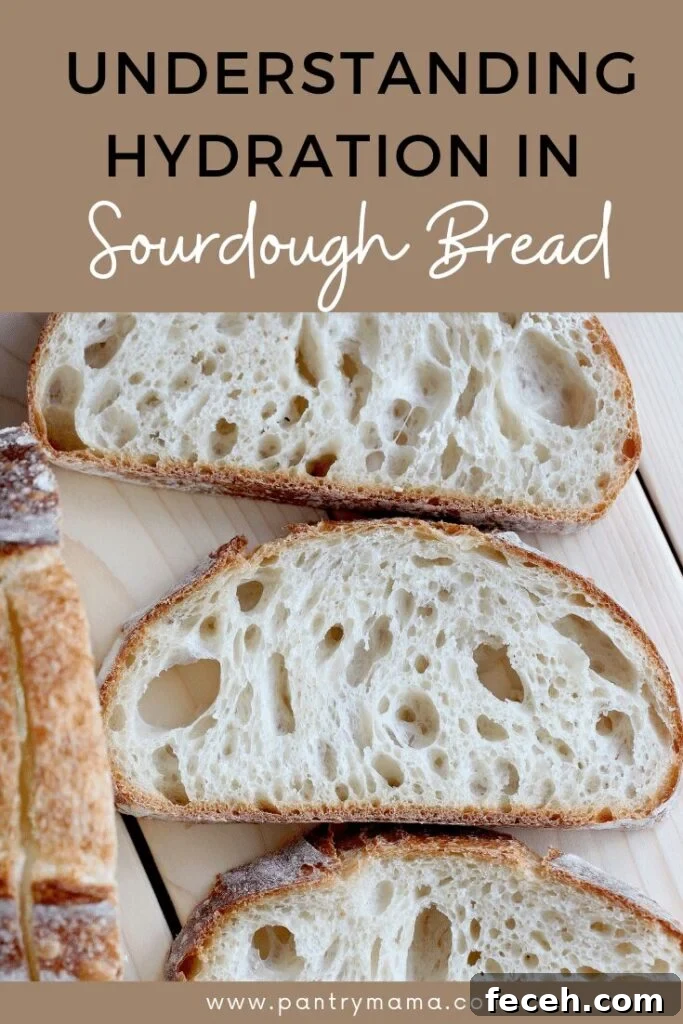
- Potential for a more open crumb: High hydration can help achieve a more open, airy crumb when combined with proper fermentation and handling.
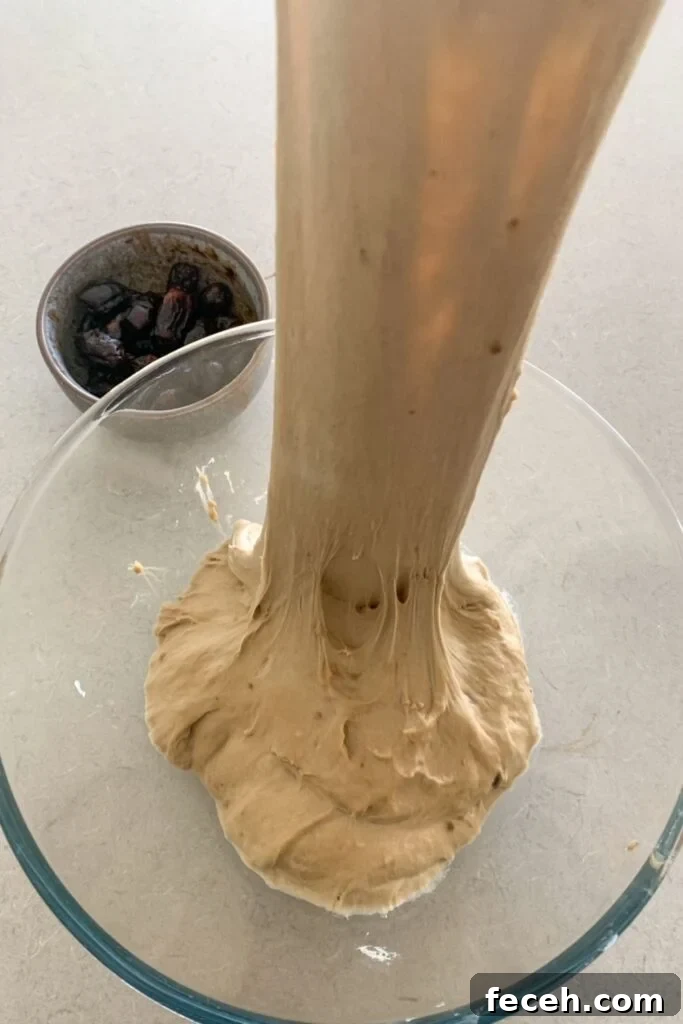
- Greater extensibility: Wetter doughs are stretchier and ideal for techniques like lamination and coil folds, useful when incorporating add-ins or shaping.
- Creative challenge: If you enjoy testing techniques, higher hydration offers a rewarding challenge for experienced bakers.
Tips for Dealing With Higher Hydration Dough
If you want to try wetter doughs, increase hydration gradually—don’t jump from 70% to 85% overnight. Take small steps so you can adapt shaping and fermentation techniques.
Be aware that flours differ: lower-protein flours may struggle to form the gluten network needed for high hydration doughs. Use a strong, high-protein flour for better structure and elasticity.
Practical handling tips:
- Use wet hands to prevent sticking when shaping and folding.
- Use gentle gluten development methods such as lamination, coil folds, and stretch-and-folds rather than aggressive kneading.
- Adjust the amount of starter or fermentation time to avoid overproofing, since wetter dough ferments faster.
Ultimately, bake what you enjoy. If a lower-hydration loaf tastes great and is pleasant to bake, it’s the right choice for you. Experimenting with higher hydration can be fun and educational, but it’s optional.
Frequently Asked Questions
There’s no single correct hydration. Choose the hydration that yields a dough you can handle and bread you enjoy. Broadly, many successful sourdoughs fall between 70% and 90%. Lower hydations (below 70%) are often easier for beginners but can produce denser crumb depending on the flour used.
A 100% hydration starter contains equal weights of flour and water. For example, feeding 50 g flour and 50 g water yields 100% hydration. You’ll sometimes see feeding ratios like 1:1:1 or 1:2:2; the key is that flour and water are equal by weight.
Divide the total weight of water by the total weight of flour, then multiply by 100 to get the hydration percentage.
Higher hydration typically produces more elastic, extensible dough, speeds fermentation, and can give a thinner crust and a more open crumb when fermentation and handling are correct.
Dense loaves are commonly caused by under fermentation. Low hydration can also contribute. Solutions include extending bulk fermentation, feeding a stronger starter, or increasing hydration while ensuring proper gluten development.
Further Reading
To deepen your understanding, consider learning about baker’s math and baker’s percentages, how starter amounts affect fermentation, and recipes that introduce wetter doughs such as whole wheat and pumpkin sourdough breads. These topics will help you adapt hydration to your ingredients and schedule.