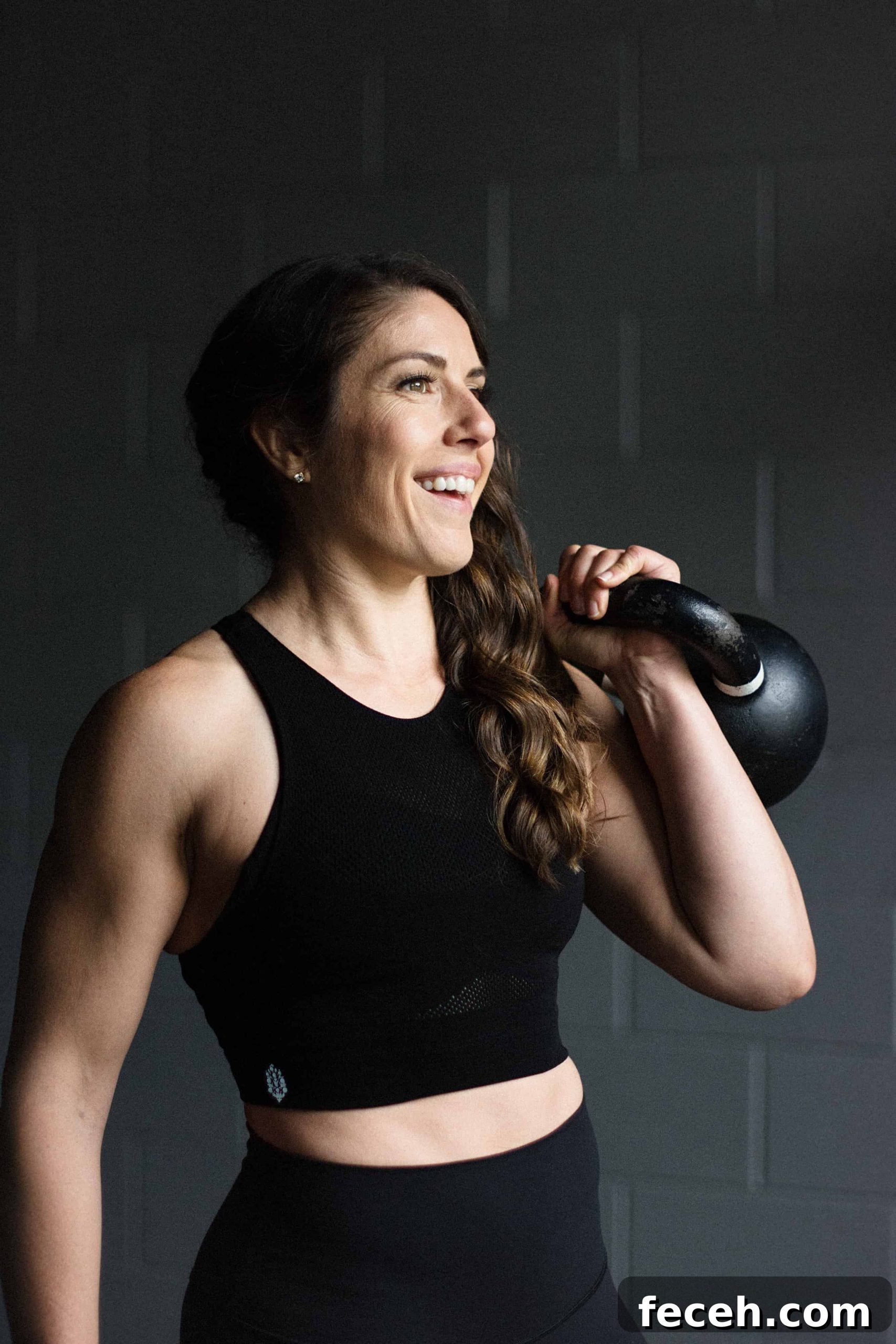
There are six common questions I hear all the time about lifting weights. I compiled them into an episode with straightforward answers so you can return to this resource whenever you need clarity.
If you want clear, practical answers to frequent strength-training questions, this episode is for you.
Click play to listen right on this page, no app needed:
Or listen on your favorite app: iTunes (Apple Podcasts) | Spotify | Stitcher
Key Takeaways
If you want to embrace the benefits of strength training, focus on these principles:
- Understand that “heavy” is relative—use a load that challenges you.
- Set goals based on function and capability, not just the number on the scale.
- Prioritize recovery and mix in non-weight exercises to support long-term progress.
It’s All Relative
Questions such as “Am I lifting heavy enough?” “Am I too old to start?” or “How soon will I see results?” don’t have one-size-fits-all answers. Every body responds differently even to the same program. The right approach blends resistance training with mobility, conditioning, and recovery based on your unique needs. “Heavy” shifts as you improve, so focus on consistency and progressive overload to make long-term gains.
The Many Benefits of Strength Training for Women
Strength training offers far more than aesthetic changes. It helps you stop fixating on the scale, supports healthy muscle mass, improves bone density, and boosts metabolism. Those are meaningful health outcomes that aren’t captured by a simple weight measurement. Lifting also reconnects you to what your body can do, fostering confidence and competence.
Have you asked any of these common questions before? How does this guidance compare with what you’ve heard? Share your experience in the comments.
In This Episode
- How to know if you are lifting heavy enough (3:40)
- How often you should be lifting every week (7:29)
- How to know if lifting weights will help you feel better about yourself (9:53)
- Why you should still lift weights even if you do other sports (14:17)
- Why it is never too late to start lifting weights (17:52)
- How long it will take for you to experience results (22:20)
Quotes
“Generally speaking, you want to think about grooving in the main functional movement patterns, which are push, pull, hinge, squat, and weighted carries; those are what the Made Strong program is built off of.” (8:24)
“Lifting weights gives you something besides shrinking your body, or the bathroom scale, to focus on.” (11:59)
“If you lift weights two or three times a week, it will make you better at that sport, period.” (15:07)
“To efficiently build and maintain your muscle and bones and keep your metabolism humming along… the answer is lift weights.” (21:52)
“Please focus on some kind of goal that goes beyond what you weigh or exactly having some kind of aesthetic look. It’s going to be far easier to sustain work toward what you can do—developing a new skill or building strength in a specific lift—than chasing a scale number.” (26:26)
Featured on the Show
Sign Up For Private Coaching Here
Follow Steph on social media for updates and community support.
I’d love it if you could take a minute to leave a rating and review on iTunes.
Related Episodes
Ep 332: 3 Mistakes Keeping You From Getting Stronger In The Gym
Ep 331: Strength Training & Your Relationship with Exercise
Ep 327: Getting Back to Exercise Without Feeling Wrecked
Are You Lifting Heavy Enough (and Other Common Strength Training Questions) FULL TRANSCRIPT
Steph Gaudreau
As a strength coach I get asked six questions over and over. This episode answers those questions in one place so you can refer back whenever you need. The Listen To Your Body podcast explores body, mind, and soul health to help you move and eat more intuitively, hear your body’s signals, and trust yourself more deeply. I’m Steph Gaudreau, a certified intuitive eating counselor, nutritional therapy practitioner, and strength coach. Expect expert interviews and solo episodes that help you build trust with food, movement, and your body. Now, on to the show.
Welcome. Today I’m diving into six very common questions about lifting weights. These focus on training—nutrition that supports lifting deserves its own discussion later. If you want one-on-one strength and nutrition coaching, check the private coaching option on my website. I’ll also be running a group program this summer covering strength and fueling without rigid tracking—sign up for the waitlist on my site.
Question 1: How do I know if I’m lifting heavy enough? Use weight that creates a challenge, especially in the final reps of a set. “Heavy” is relative—what feels heavy for someone with years of experience differs from a beginner. Choose a load where the last two or three reps are hard but doable with good form. If sets feel crushing from the start, it’s too heavy. If you breeze through and can chat the whole time, it’s too light. Adjust weight and reps over time—this gradual increase is progressive overload.
Question 2: How often should I lift each week? Think consistency over time. Missing an occasional session won’t derail you. Aim to cover fundamental movement patterns—push, pull, hinge, squat, and carries—about three times per week if possible. Two to three strength sessions per week with progressive overload produces meaningful results for most people. It doesn’t need to be complicated or daily to be effective.
Question 3: Will lifting weights help me feel better about myself? For many people, yes. Lifting provides goals unrelated to shrinking your body or the scale—skills like hitting a new lift or doing a movement you couldn’t before build confidence. That said, exercise isn’t therapy; it can support mental health but doesn’t replace professional therapeutic work. Strength training is powerful in helping people shift focus from aesthetics to capability and resilience.
Question 4: I do other sports—do I still need to lift? Yes. Two to three strength sessions per week will improve performance in most sports, from team sports to endurance events. Endurance athletes especially benefit because long-duration training can be catabolic; lifting helps preserve muscle mass, improve power, and often enhances overall performance. Properly programmed strength work complements sport-specific training.
Question 5: I’m in my 40s. Is it too late to start? Absolutely not. It’s never too late. After age 30 we begin losing muscle and bone density without intervention. Strength training is one of the most effective ways to counteract sarcopenia and support bone health. With appropriate coaching and programming—especially around past injuries—people in their 40s, 50s, and beyond can make substantial gains.
Question 6: How long until I see results? It depends, but beginners typically see quick improvements (novice gains). To sustain progress you must be consistent and avoid going too hard too fast—overdoing it can lead to injury, burnout, or poor recovery. Two strength sessions per week are better than one for building muscle, according to reviews of multiple studies. If you’re not seeing progress, consider recovery, nutrition, programming, and whether you’re progressively overloading.
To recap: choose a challenging but manageable load, train two to three times per week focusing on core movement patterns, use strength training to expand focus beyond aesthetics, include lifting alongside other sports, start anytime—even in your 40s—and expect faster early gains if you’re consistent and progressive over time. If you want help with fuel and programming, join the waitlist for my upcoming group program via my website.
Thanks for listening. I hope these answers gave you useful direction. Tune in next week for an interview you’ll enjoy. Until then, have a fantastic and badass week.